Email support
syjx@shengyangringrollingmachine.com

2026-01-09
This is a question that constantly comes up in conversations with customers from the CIS. Many people still imagine Chinese equipment as something homogeneous - either cheap and unreliable, or, conversely, suddenly super-technological and expensive. The reality, as always, is somewhere in the middle and greatly depends on which particular “cuisine” you go into. take a peek. When they say “Chinese manufacturer of ring rolling machines?”, they often simply mean the country of origin, but behind this there is a whole spectrum: from workshops that assemble machines almost on their own, to serious factories with their own design bureaus, where engineers can discuss the intricacies of calibrating rollers for a specific alloy. My personal opinion, formed over the years of working with this equipment: the main thing is not to look for “just a Chinese machine?”, but to understand who is behind it and what it is really capable of.
If we discard general words, then Chinese manufacturers in this segment are conditionally divided into three camps. The first is large state or semi-state machine-building holdings. Their equipment often looks solid on paper, but can be redundant in functionality for the average workshop, and interaction with them sometimes resembles the movement of a huge tanker. The second camp is precisely those numerous private factories. Here everything is very different: you can run into outright consumer goods, where savings are made on everything, including the CNC system and bearing units. But there are exceptions - enterprises that have been polishing one line of machines for decades, bringing it to a very decent level of reliability. The third option is relatively young but ambitious companies that rely on modern design, digitalization and active work with foreign markets. The latter, in my opinion, are worth taking a closer look at if you need a balance between price and technological adequacy.
By the way, about digitalization. Many Chinese manufacturers are now actively implementingring rolling machinesmonitoring systems and elements of "Industry 4.0". But there is a nuance here: often the software and interface remain crude and are completely tailored for the domestic market. Translation into Russian or English can be done crookedly, and remote diagnostics can run into the “great firewall of China”. This is a point that must be clarified before purchasing.
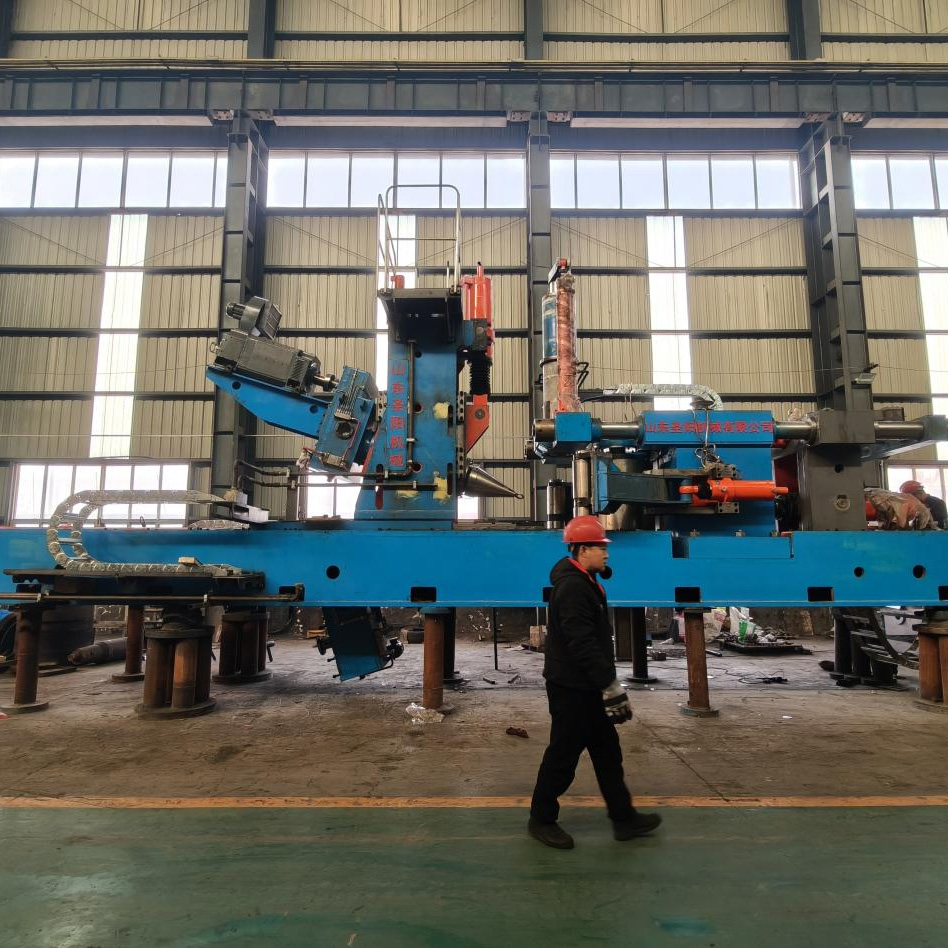
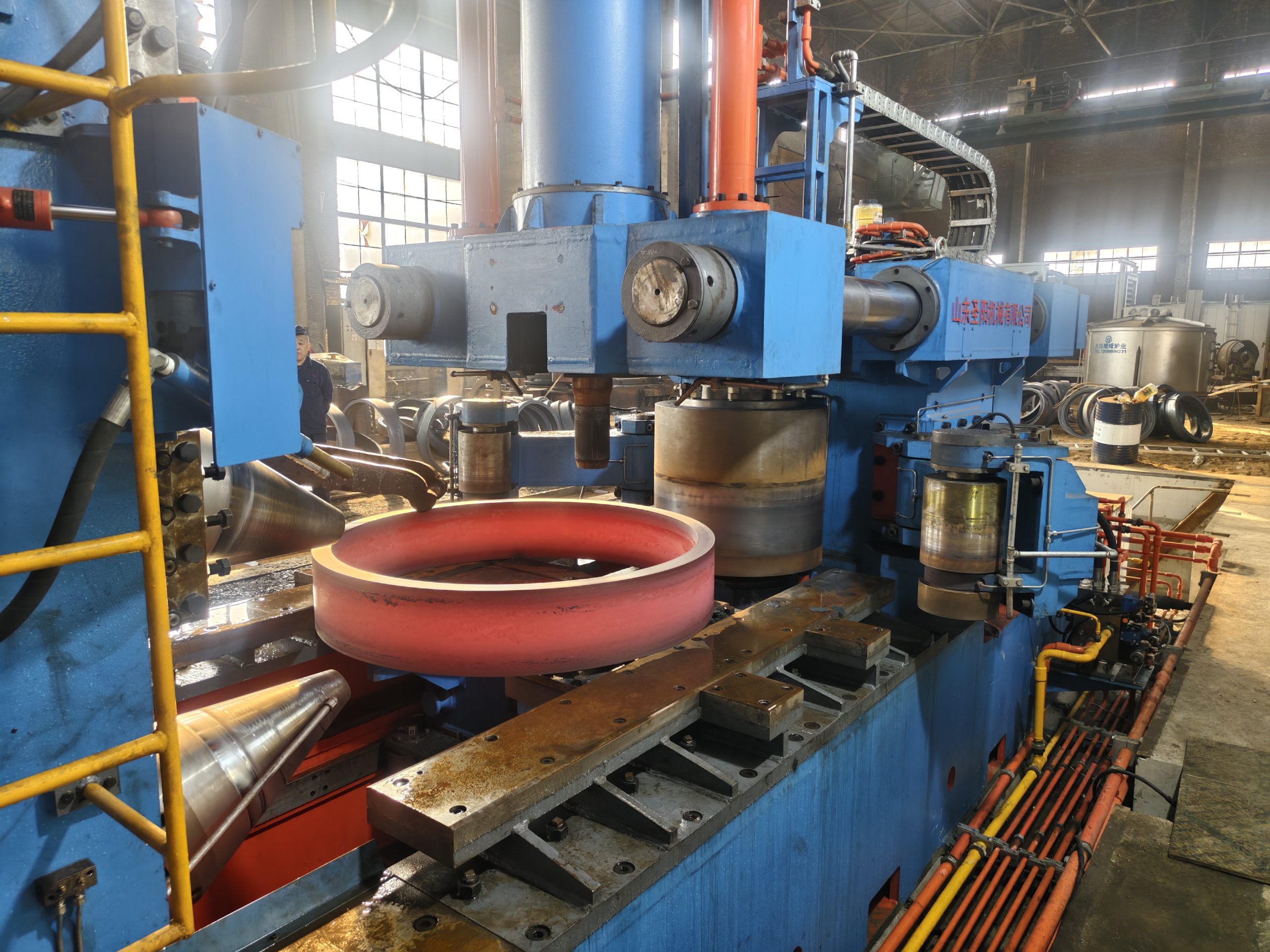
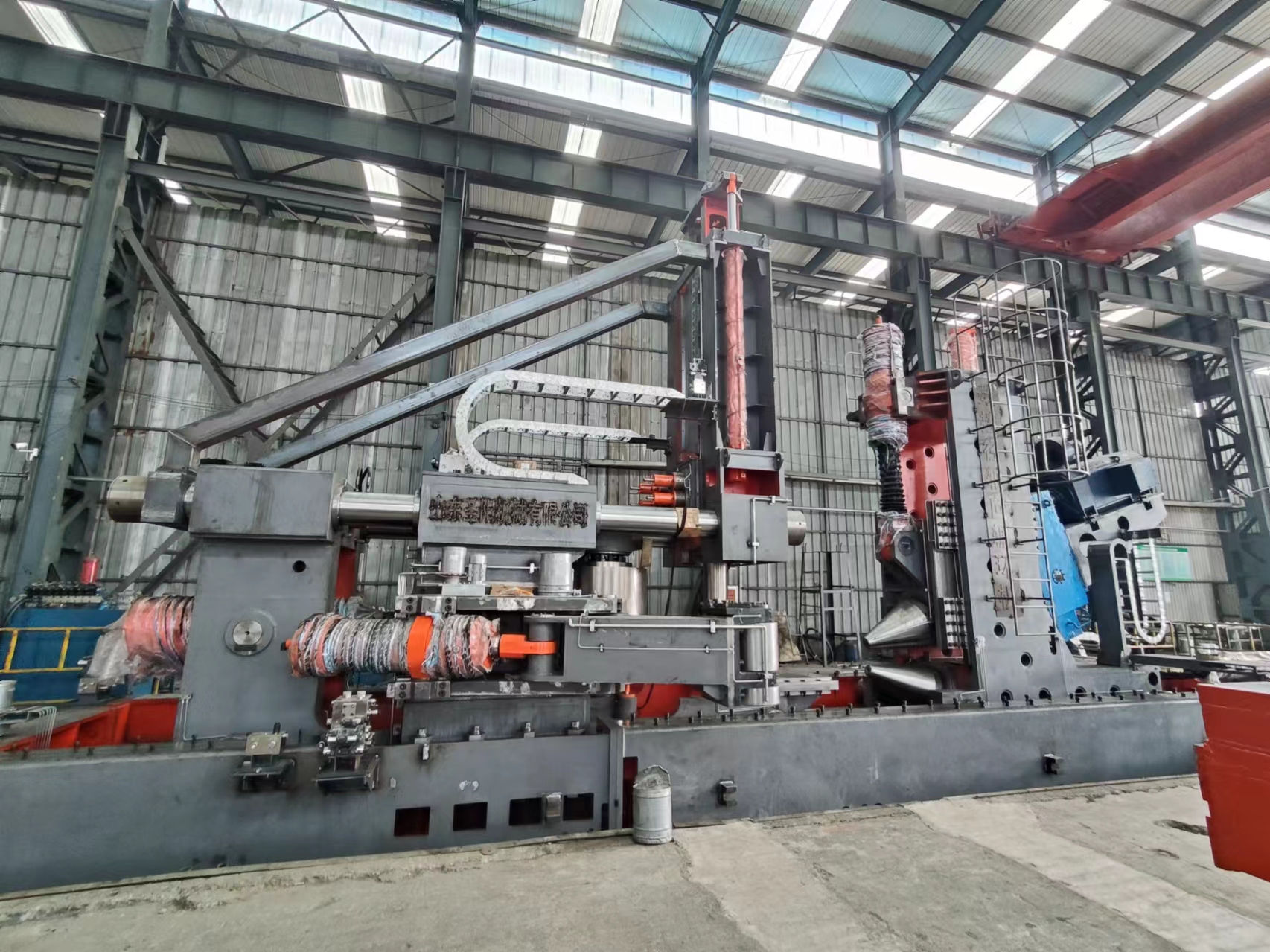
An example of such a modern approach is Shandong Shenyang Mechanical Equipment LLC. If you go to their website https://www.shengyangjxgroup.ru, you can see that they position themselves as a high-tech enterprise. These are not just words in the header of the site - the assortment shows the development of lines, an emphasis on automation of the rolling process. But, again, a website is one thing, and real reviews from production facilities are another. It is important to look beyond the picture.
When assessing anyring rolling machine, regardless of the country of origin, I always advise customers to concentrate on a few “narrow” ones. places. The first is the main drive and feed system. Cheap options often suffer from the use of conventional asynchronous motors with simple frequency converters, which leads to slippage and inaccuracy when rolling critical rings. A good sign is servos or high-quality vector inverters from well-known brands (even if these are Chinese analogues of Siemens or Yaskawa, but assembled in official factories).
The second critical component is the main roller guides and bearings. This is where savings kill the machine the fastest. I saw samples where the assembly of a loaded angular contact roller had ordinary rolling bearings instead of precision ones. The result was that the backlash appeared after three months of active work, and the whole process went awry. A high-quality Chinese manufacturer will not waste time on this, because they understand that reputation is more valuable.
Third is the management system. A remote control with a touch screen is almost standard. But what's inside? A self-written platform or a world-recognized system, for example, Siemens Sinumerik or at least Beckhoff? The latter, of course, makes the machine more expensive, but it provides a guarantee of compatibility, availability of documentation and the possibility of modernization. Some Chinese companies, such as Shandong Shenyang Mechanical Equipment LLC, offer flexible options - you can choose a basic configuration with a local controller, or you can order a turnkey one with European automation. This is a reasonable approach.
I’ll tell you about one of our not very successful experiences about five years ago. The customer needed a machine for rolling medium-diameter stainless steel rings. They chose, as it seemed then, a promisingChinese manufacturerat a good price. The machine has arrived, externally it is monolithic, the paint is shiny. Adjustment, first idle runs - everything is fine. But as soon as we reached operating mode with heating of the workpiece, problems began. The hydraulic cooling system turned out to be designed to minimum tolerances for a temperate climate. In our workshop in the summer it was +30, and the oil began to overheat, the machine crashed every two hours.
I had to redo the heat exchanger myself and install an additional external cooler. The engineers on the other side shrugged their shoulders, saying that the workshop temperature was not specified in the technical specifications. Formally, they were right, but in essence, this is an example of how a general design flaw (unreserved power of the cooling system) comes out in real conditions. Since then, in our commercial offers we have always included climatic modifications as a separate clause and have included reserves for all systems.
This case, by the way, well illustrates the difference between simple assembly and engineering culture. Now those manufacturers who really want to work on the foreign market ask these questions themselves. They have already passed the copying stage and are learning to design taking into account different operating conditions.
This is perhaps the most painful question. Buying a machine is half the battle. What will happen when in a year or a year and a half you need to replace the sensor or repair the spindle? The ideal option is when the manufacturer has a representative office or a reliable partner in your country who keeps a warehouse of the most consumables. But this doesn't happen often.
Many Chinese companies are now creating Russian-language websites, like https://www.shengyangjxgroup.ru, and hiring managers who speak Russian. This is a big plus. But it is important to check how the logistics of spare parts is organized. Are they willing to airmail a critical part to you in 3-5 days? Or will it be a sea delivery for 2-3 months? This is often not specified in the contract, but during negotiations it is necessary to put pressure on these points.
Another life hack is to ask for a list of the most frequently failing components with part numbers and manufacturer names. If it's standard SKF/FAG bearings, SEW gearboxes or Parker cylinders, great, you can find them locally. If everything is ?no name? - this is a reason to think about future risks. Goodmanufacturer of ring rolling machinesis not afraid of such transparency.
So is it worth getting involved with a Chinese ring rolling machine? My answer is yes, but wisely. Don't chase the lowest price in the catalogue. Request a video of the operation of a specific machine (not a staged one, but a long one, with the loading and unloading process). Ask for contacts of real clients in countries with similar conditions - not in Germany, but, for example, in Turkey or Kazakhstan. Contact them yourself and ask about the pitfalls.
Pay attention to companies that specialize specifically in ring rolling equipment, and do not produce everything in a row - milling, turning, bending machines. Specialization is a sign of depth of knowledge. Those who claim high technology, as in the description of Shandong Shenyang Mechanical Equipment LLC, must be prepared to explain in detail what exactly this technology consists of: an original mathematical model of deformation, a system for active control of ring geometry in real time, or something else.
Ultimately, the choiceChinese manufacturer of ring rolling machinesis a calculated compromise. You're unlikely to get the level of a German car for a third of the price. But you can easily get a high-quality, technologically advanced device for half the price of a European analogue, which will reliably do its job and pay for itself in a reasonable time. The main thing is to do your homework, ask uncomfortable questions and look not at the wrapper, but at the essence. Good luck.