Email support
syjx@shengyangringrollingmachine.com

2026-01-09
If you search for this query, you immediately run into a sea of offers. But the catch is that many people confuse simply rolling mills for rings with exactlyradial ring rolling machines. The difference is fundamental, and they “burn” on it. those who want to save money without going into details. I’ll say right away: China now is not about cheap copies, but about a real alternative to European giants in the segment of medium and some heavy models. But with huge nuances.
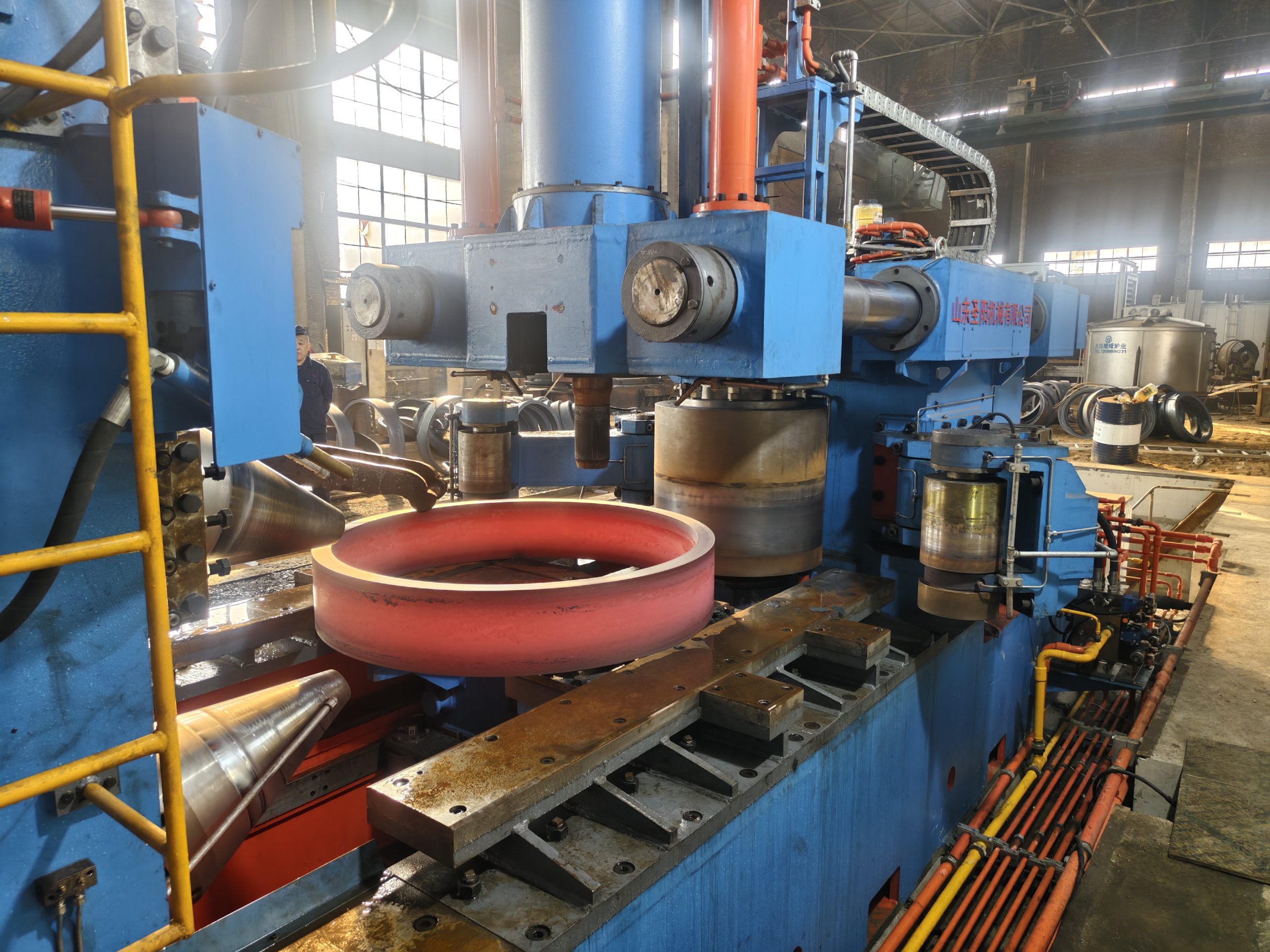
Often, under the brand name of a radial ring mill, they offer ordinary ring rolling machines, without full radial upsetting. It's like buying a car with all-wheel drive, but getting a front-wheel drive one - it seems to drive, but it gets stuck in the mud. The key unit is the control system for the synchronous movement of the main and support rolls plus a radial movement mechanism. If you see in the description only the diameter of the ring and the rolling force, this is the first sign.
For example, about five years ago we looked at a machine from a provincial plant. Everything in the data sheet is beautiful: D1250 mm, force 800 kN. We arrived and looked - the radial drive is purely mechanical, screw-type, without force feedback. For simple rings made of carbon steel it will still work, but for precision bearing or aerospace alloys it will not work. The manufacturer honestly said: “It’s not suitable for your tasks, we don’t do such complex ones.” I respect this approach, but it is rare.
Hence the conclusion: you need to look not at the general name, but at the specific model and its kinematic diagram. And always request a video of work with exactly the material and profile that you need. Many Chinese factories are happy to provide this.
It is worth focusing on several historical engineering clusters. Xi'an, Wuxi, Shenyang are traditional centers where such machines have been made for a long time, often on the basis of old state factories. The staff and the school have been preserved there. But there is a gradation there too.
There are large state or semi-state holdings that make turnkey machines. for its own heavy industry. Their products are difficult to simply buy for export; they work under government orders. And there are more flexible private enterprises that have entered the foreign market. They are just presented on the Internet.
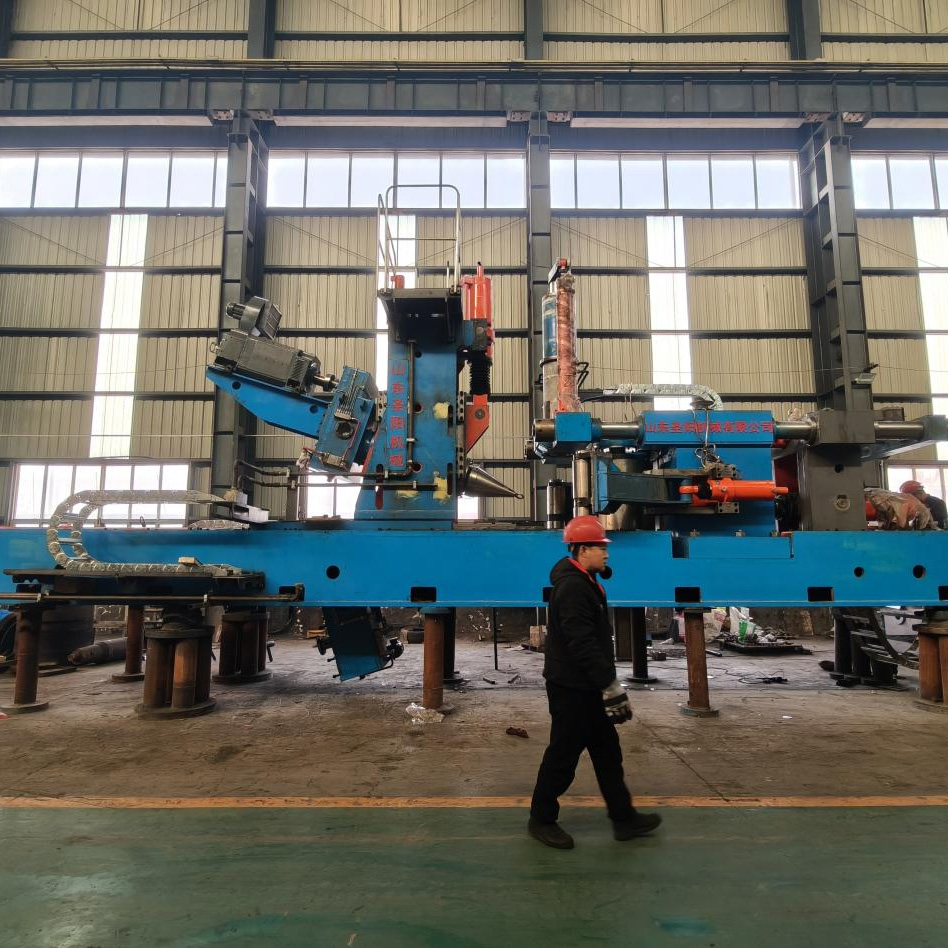
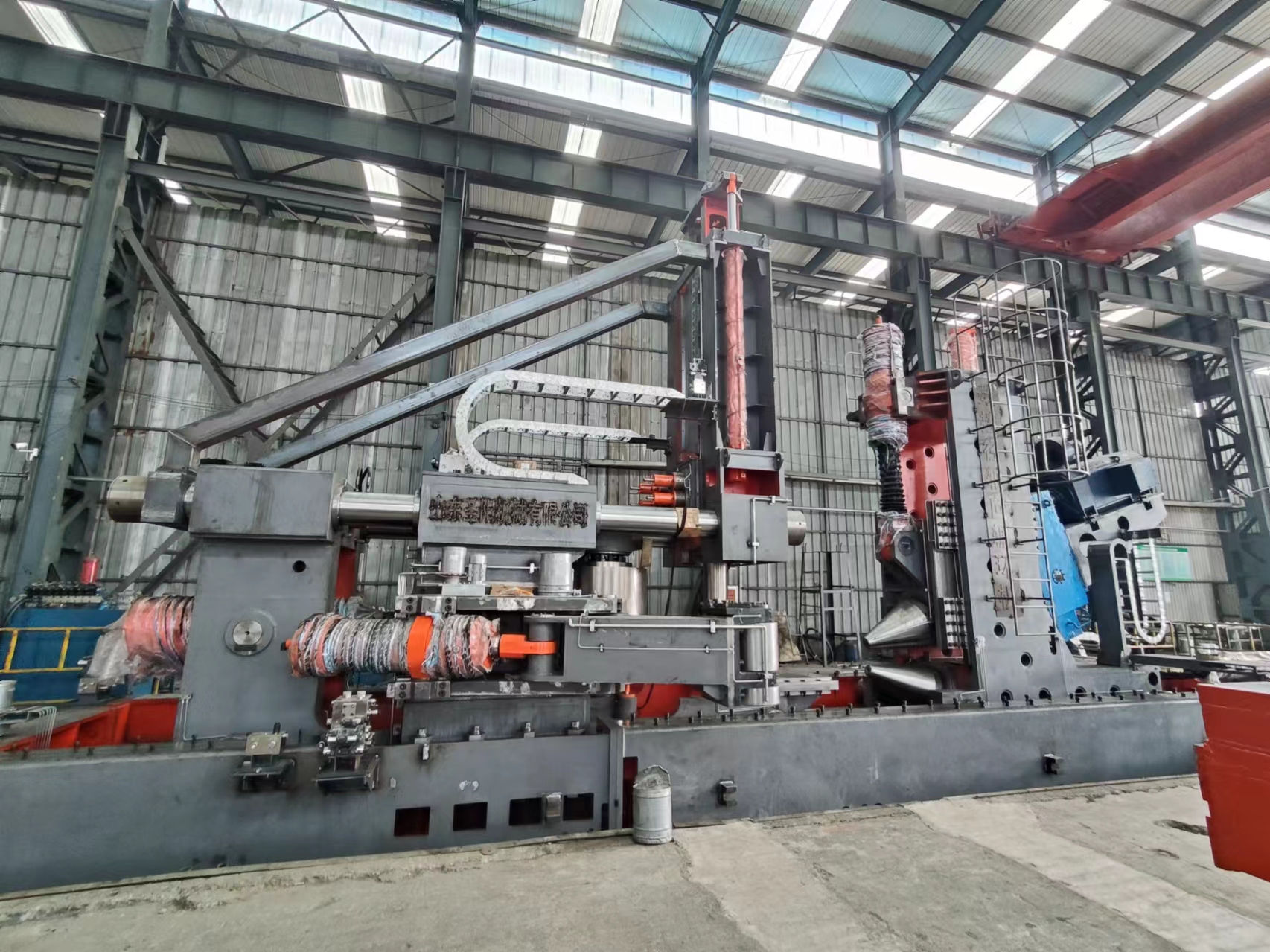
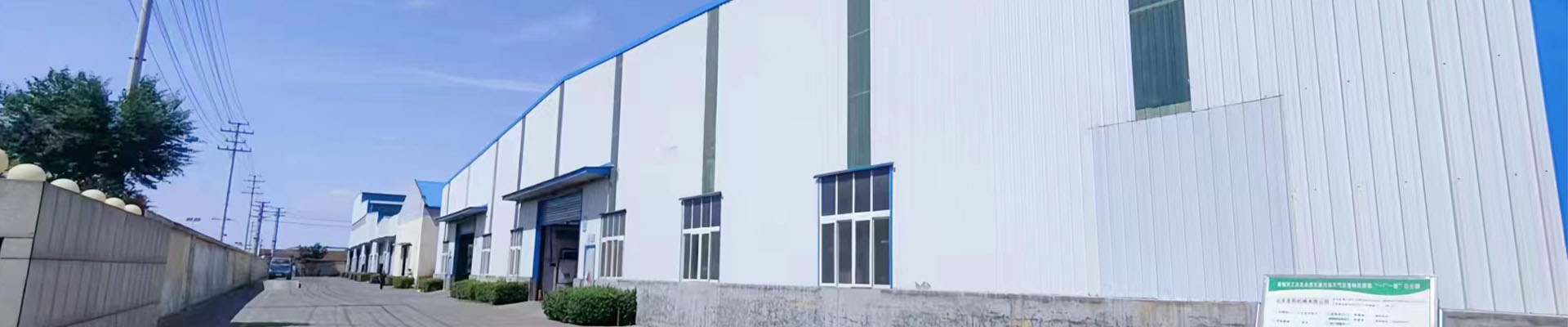
Here, for example,Shandong Shenyang Mechanical Equipment Co.,Ltd(their website isshengyangjxgroup.ru). Their product range includes radial ring rolling machines. From the description it is clear that thishigh-tech enterprise, which positions itself precisely as a manufacturer, and not a reseller. This is an important point. On their website you can usually find fairly detailed specifications, diagrams and, critically, a list of completed projects. Don’t be lazy, look for references to deliveries to the CIS - this is a good indicator of the equipment’s adaptability to our service conditions.
But even with such companies, negotiations are a process. Their engineers often think in terms of their standard model range. We need to clearly formulate the task: not “we need a ring with a diameter of a meter?”, but “we need to roll a workpiece made of 40HNMA, with an initial temperature of 1050°C, with a decrease in height by 30% per pass, with ovality accuracy no worse...?. Then the dialogue becomes substantive.
The price you will be quoted first is almost always the base configuration. And it may not contain something without which the machine will be just a piece of metal. The first is the CNC system. The Chinese often install their domestic systems, for example, Huazhong or GSK. They're reliable for most tasks, but the software and interface can be... quirky. The translation is often machine-based, the programming logic is different from Siemens or Fanuc. Be prepared to either train the operator from scratch, or pay extra for an imported system.
The second is equipment. Tool rolls, mandrels, feed mechanisms. The database contains the simplest options, often for one standard size. The cost of an additional set of equipment can reach 15-20% of the cost of the machine. This point needs to be worked out immediately in the specification.
The third stone is the electrical part. Automatic switches, frequency converters, sensors. Increasingly, quality brands like Delixi, Chint, Inovance are being installed. This is already a good level. But it's worth clarifying. It happens that in order to save on “invisible” things. components are set to no-name, and then it comes out as constant minor failures.
This is where the main risk lies. The physical presence of manufacturer service engineers in Russia or Kazakhstan is very rare. They usually offer remote diagnostics and delivery of spare parts. And the deadlines... Can be from a month. Therefore it is critically important:
1. Find out if there is an official service partner or spare parts warehouse in the CIS.
2. Receive a complete package of documentation in English or, less commonly, in Russian: electrical diagrams, hydraulic diagrams, parts catalogs with numbers.
3. Discuss in advance and, possibly, buy a set of the most vulnerable spare parts: position sensors, hydraulic cylinder seals, specific bearings.
A story from practice: at one of the factories, a machine stopped due to a breakdown of the encoder on the main drive. In China it was made to order; there was no analogue. The downtime was almost two months. Now, on new equipment, they immediately require a list of all non-standard components and purchase duplicates in advance.
Companies like the one mentionedShandong Shenyang Mechanical Equipment Co.,Ltdoften have more streamlined logistics of spare parts in the Russian Federation, since they work purposefully for our market. This is their competitive advantage over those who sell through tenths of hands.
Definitely yes, if the scope of work and product requirements correspond to the capabilities of the machine. The financial benefit can be very significant: the price difference with its European counterpart can reach 40-50%. This money can be invested in additional equipment, training or creating a stock of spare parts.
But you can’t approach the purchase like purchasing a machine from AliExpress. This is a full-fledged engineering project. What is needed is a technical specification, a stage of preliminary inspections (preferably in person or through a trusted technologist), a strict acceptance protocol at the manufacturer (FAT - Factory Acceptance Test) and a clear schedule for delivery, installation and commissioning.
Chineseradial ring rolling machinesstopped being a “dark horse”. These are known, working machines. Their share in the world market is growing. But acquiring them requires competence, not money. If you have a person on your staff who understands kinematics, hydraulics and the Chinese CNC interface, feel free to look in this direction. If not, perhaps an overpayment for a German machine with service “from a neighboring city?” turns out to be a smarter choice. It all comes down to details, always. And especially in metalworking.