Email support
syjx@shengyangringrollingmachine.com

2026-02-19
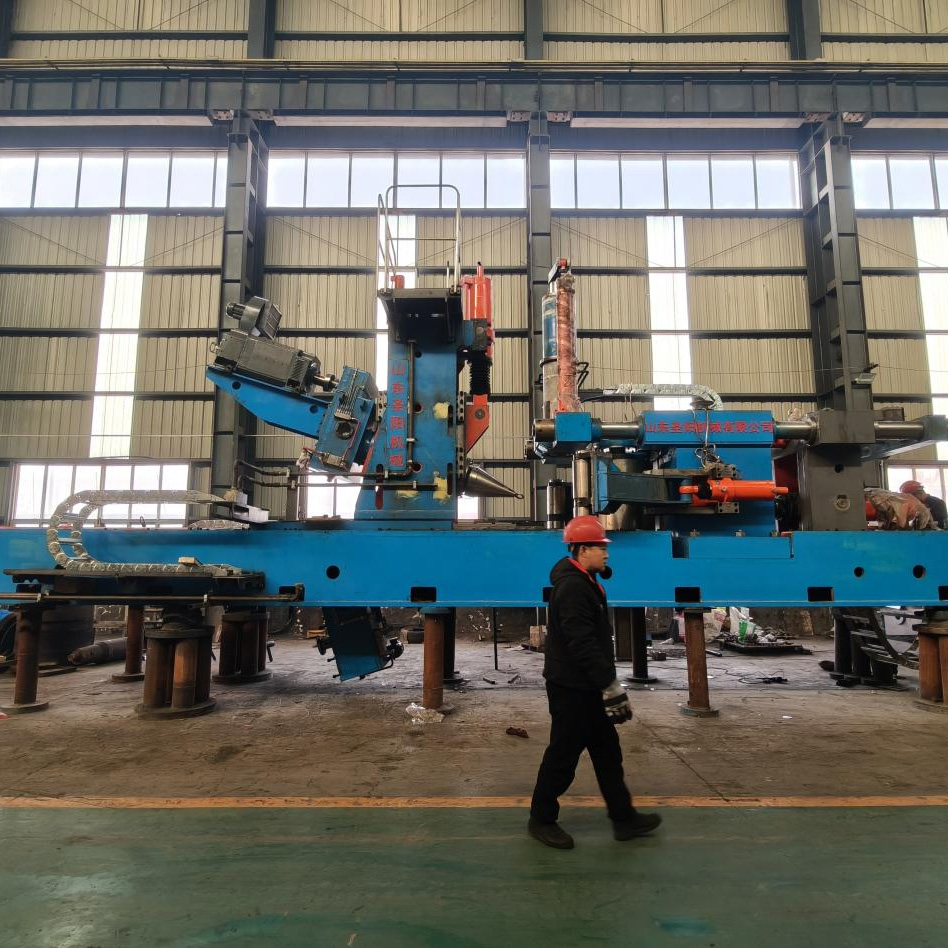
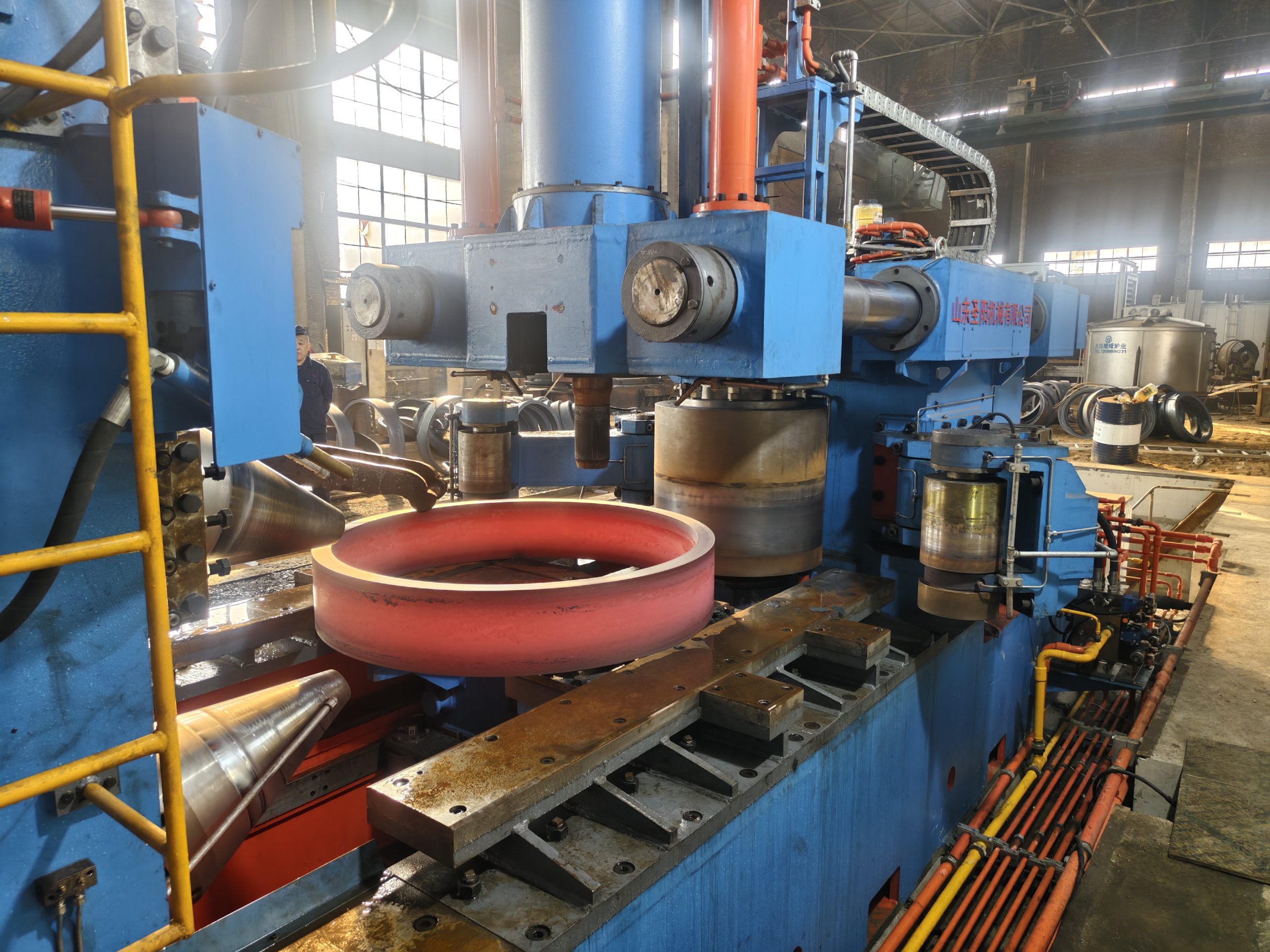
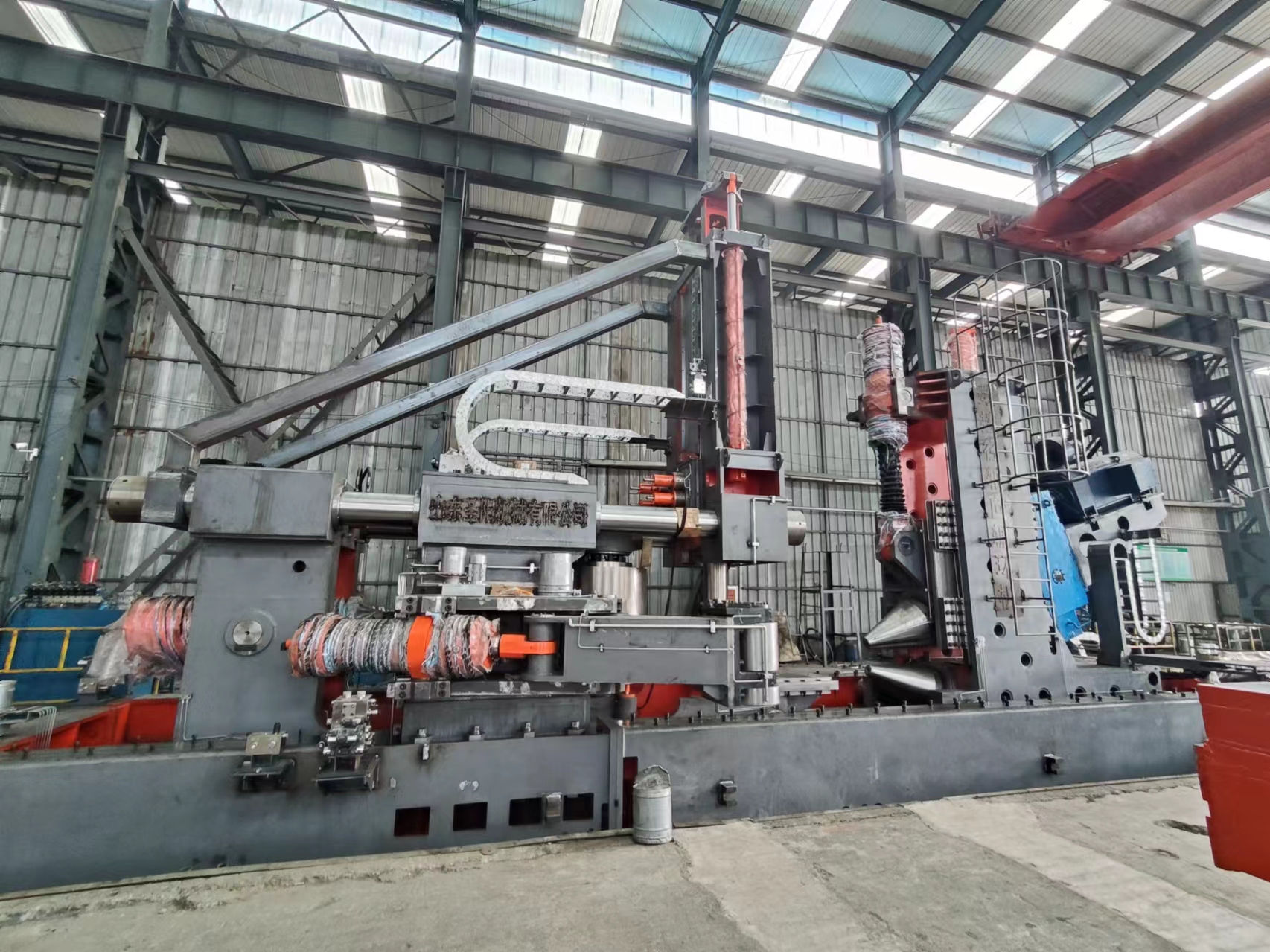
When you hear “Chinese gzj forging manipulator?”, the first thought for many is “well, cheap, probably?”. But this is where the main catch lies, which I myself caught more than once until I started working closely with specific factories. It's not about the price as such, but about what is hidden behind these letters and how it relates to the real work in the shop, where every hour of downtime is money. Reliability is not about brochures, but about how the machine behaves on the third shift during intensive disembarkation.
The abbreviation GZJ is not a single standard, as some purchasing managers mistakenly think. Often this is an internal model series of a specific manufacturer. In the case of forging manipulators, this usually indicates a design with rigid parallel kinematics, which is critical for accurate positioning of heavy forgings. But here’s a nuance: for one plant GZJ-800 may mean a load capacity of 800 kg, while for another it is a conditional series index, but the real load will be 750. Therefore, the first practical lesson is to never rely only on markings, always request a passport with calculation diagrams of loads on the boom and column.
I came across a situation where a manipulator was delivered, declared as GZJ-1000, and it began to “float”. along the Z axis already by 800 kg at full reach. It turned out that the manufacturer indicated the maximum load at the minimum offset, which is useless for forging. This is a classic mistake when choosing "by letter". Now we always require load capacity charts depending on reach and height.
Innovation here often manifests itself not in revolutionary breakthroughs, but in such details: what modification the gearboxes are in, how the system for compensating gaps in the hinges is implemented, what logic is built into the CNC for smooth acceleration and braking of the load. It is these “hidden” ones. parameters and determine whether the manipulator will be a reliable partner in the workshop or a source of constant problems.
The reliability of the supplier is, perhaps, even more important than the declared performance characteristics of a particular model. Many companies present beautiful websites with perfect 3D models, but reality is checked at the moment when you need urgent advice on replacing a sensor or updating a program. Here I can give an exampleShandong Shenyang Mechanical Equipment Co.,Ltd. I won’t say they’re perfect—there’s no such thing as perfect—but their approach is markedly different.
Their websitehttps://www.shengyangjxgroup.ru- this is not just a showcase. There you can find not only a catalog, but also technical notes, diagrams of standard solutions for integration with presses. This immediately hints that the company thinks in terms of application rather than sales.Shandong Shenyang Mechanical Equipment Co.,Ltd is a high-tech enterprise, as they themselves position it, and in their case this is confirmed by the presence of their own design bureau, with which modifications can be directly discussed.
Personal experience: somehow it was necessary to adapt a standard GZJ manipulator to a non-standard tool with a shifted center of gravity. Most suppliers answered “this is not according to the specification, we can’t?”. An engineer from Shenyang requested a 3D model of the equipment, two days later he sent a calculation of the loads on the nodes and proposed an option for strengthening the structure of the rotary column. This is the very reliability - the readiness to solve real, not catalog problems.
In the forging industry, breakthrough innovations that change everything are few and far between. More often it is a consistent evolution. For example, the transition from purely hydraulic to electro-hydraulic servo control. For the operator, the difference is colossal: it becomes possible to program complex “clamping” trajectories. forgings, and not work with two levers “by eye”. But the implementation of such systems is a headache for service engineers accustomed to pure hydraulics.
In the same Shenyang, in the latest series, I noticed an interesting solution: they left the possibility of emergency manual hydraulic control in case of electronics failure. It seems like a small thing, but in the shop, when there is a hot forging, and the system has failed, this “trifle?” saves both the workpiece and, possibly, the equipment. This is an innovation with an eye toward real use, not exhibition.
Another point is security systems. Previously, they were limited to limit switches. Nowadays, sensors for direct load measurement on the hook and torque sensors in the boom hinges are increasingly being installed. This is not just a “feature”, it actually prevents accidents due to the human factor when the operator tries to tear off a stuck forging. But there is a pitfall here: the quality of these same sensors. Cheap analogues fail due to vibration and temperature changes. Therefore, when choosing, you need to clarify who the manufacturer of critical sensors is.
I had experience with another, highly advertised Chinese supplier. The GZJ-series manipulator worked flawlessly for six months, and then problems began with smooth movement along the rotation axis. Diagnostics showed wear of the gear in the turning mechanism. It would seem like an ordinary breakdown. But it turned out that for replacement it was necessary to remove the entire column, and no special technological fastening was provided for this. The downtime of the line was almost two weeks.
This failure taught me to look at equipment from a maintainability perspective. Now the list of mandatory questions to the supplier includes: “Provide instructions for replacing the main components in a workshop environment, without using a crane with a lifting capacity above 5 tons?” The answer to this question says a lot about the engineering maturity of the manufacturer.
By the way, after this incident we contactedShandong Shenyang Mechanical Equipment Co.,Ltdwith a request to show how a similar unit is arranged for them. They sent not just a drawing, but a video analysis of the manipulator at their site, where it was clear that the gearbox and rotation drive were mounted on a skid and could be pulled out for maintenance after unscrewing four bolts. This is life cycle design.
So, back to the original question. Chineseforging manipulatorGZJ-type can be both innovative and reliable, but the key is not in the acronym, but in the specific supplier and their depth of immersion in the process. You need to look not at pretty pictures, but at the details: how technical support is organized, is there documentation in Russian with clear diagrams, are engineers ready to discuss non-standard conditions.
Experience suggests that companies likeShandong Shenyang, which position themselves as high-tech enterprises and invest in engineering support, turn out to be more profitable partners in the long term, even if their price is initially 5-10% higher. Their ?innovation? are often invisible improvements in serviceability and maintainability that cost more than any new feature.
Ultimately, reliability is when, after three years of working three shifts, you open the control panel, see cleanliness inside (which means they made a good seal against forge scale), and the phone number of the consulting engineer in the phone’s memory was still not useful for an emergency call. This is what you should strive for when choosing.