Email support
syjx@shengyangringrollingmachine.com

2026-02-24
When it comes to vertical ring rolling machines, many people immediately think of Germany or Italy. China? Often perceived as a source of cheap equipment of questionable quality. But is this true now? It's time to figure it out, based on what you see on the market and in the workshops.
I remember ten years ago, if a client asked for a “reliable machine”, they didn’t even consider Chinese options. Everyone knew a couple of brands from Europe, and that’s it. The situation began to change somewhere after 2015-2016. First, individual units appeared - not full-fledged lines, namelyvertical ring rolling machinesfor specific applications, for example, for medium-diameter rings in the energy sector.
The first samples I came across were... strange. Structurally, they seemed to repeat well-known models, but the assembly was lame, the hydraulics were noisy, the CNC system could “freeze?” from voltage drop. It seemed that Chinese manufacturers were simply copying without understanding the essence of the process. But even then the advantage was visible - the price could be 1.5-2 times lower. For some projects where the budget was critical, this became the decisive argument, despite the risks.
Now the conversation is going differently. I recently spoke with a technologist from a Ural plant. They just bought a vertical rolling line for bearing rings. He says: “We waited six months for the Europeans and another six months for customs clearance. We took it from the Chinese - from order to launch in the workshop it took four months. The adjusters came and trained us. Bye pah-pah?. This is an indicator. Speed of response and service have become their strong points.
If before the main problem was hardware? - materials, heat treatment, now many Chinese factories have switched to world-class components. Hydraulics - Rexroth or Yuken, bearings - SKF or FAG, CNC - Siemens or Fanuc. This is no longer a secret, they are actively proud of it in the specifications. The problem has shifted to another plane: the integration of these components into a single system and, more importantly,softwareto control the rolling process.
There is still something to work on here. Algorithms for controlling deformation, compensating for thermal expansion, and predicting dimensions are know-how that is difficult to copy. I saw a machine where the mechanics were impeccable, but when rolling a heat-resistant alloy, the system could not stably maintain the size due to elastic deformation of the bed. Chinese engineers then spent a long time fiddling around, calibrating the sensors, and eventually wrote a correction factor manually. A European machine would solve this ?out of the box? its adaptive control system.
But there are also opposite examples. For mass production of standard carbon steel rings, their machines perform very well. The settings have been worked out, the cycle is stable. The key point is a clear technical specification. If you yourself, as a customer, know exactly what you need: steel grade, size range, accuracy, then they will assemble an adequate machine for it. If the requirements are vague, expect problems.
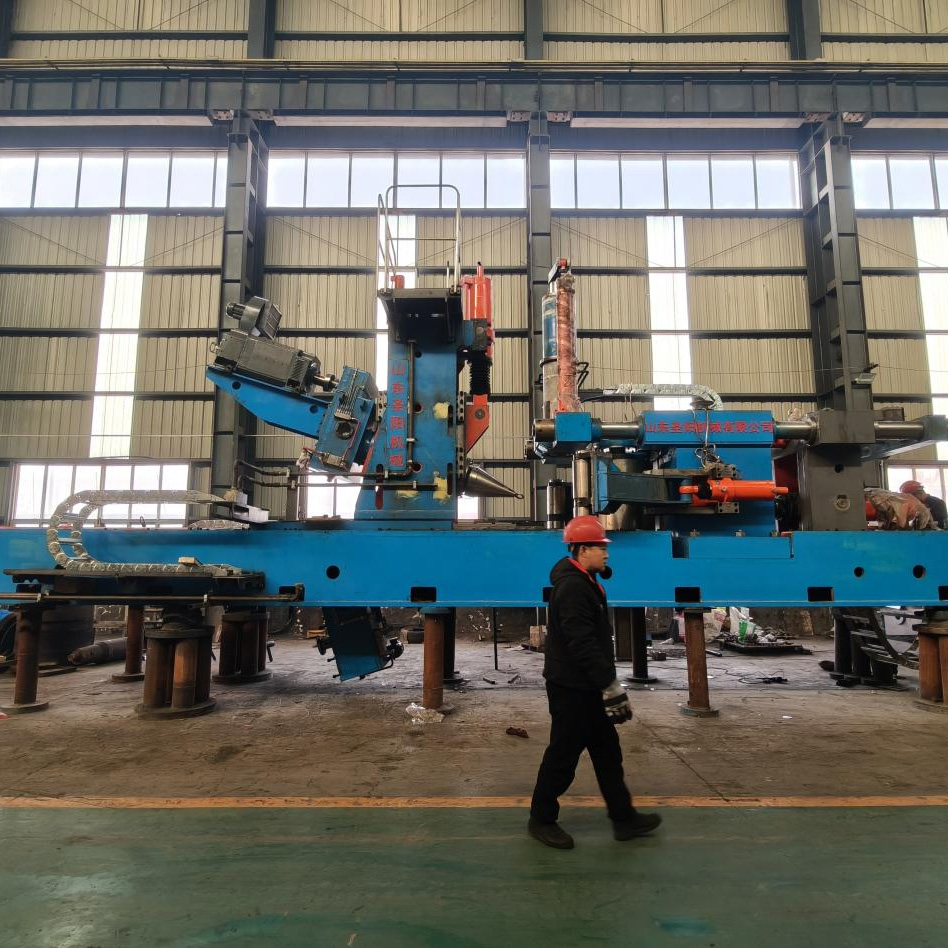
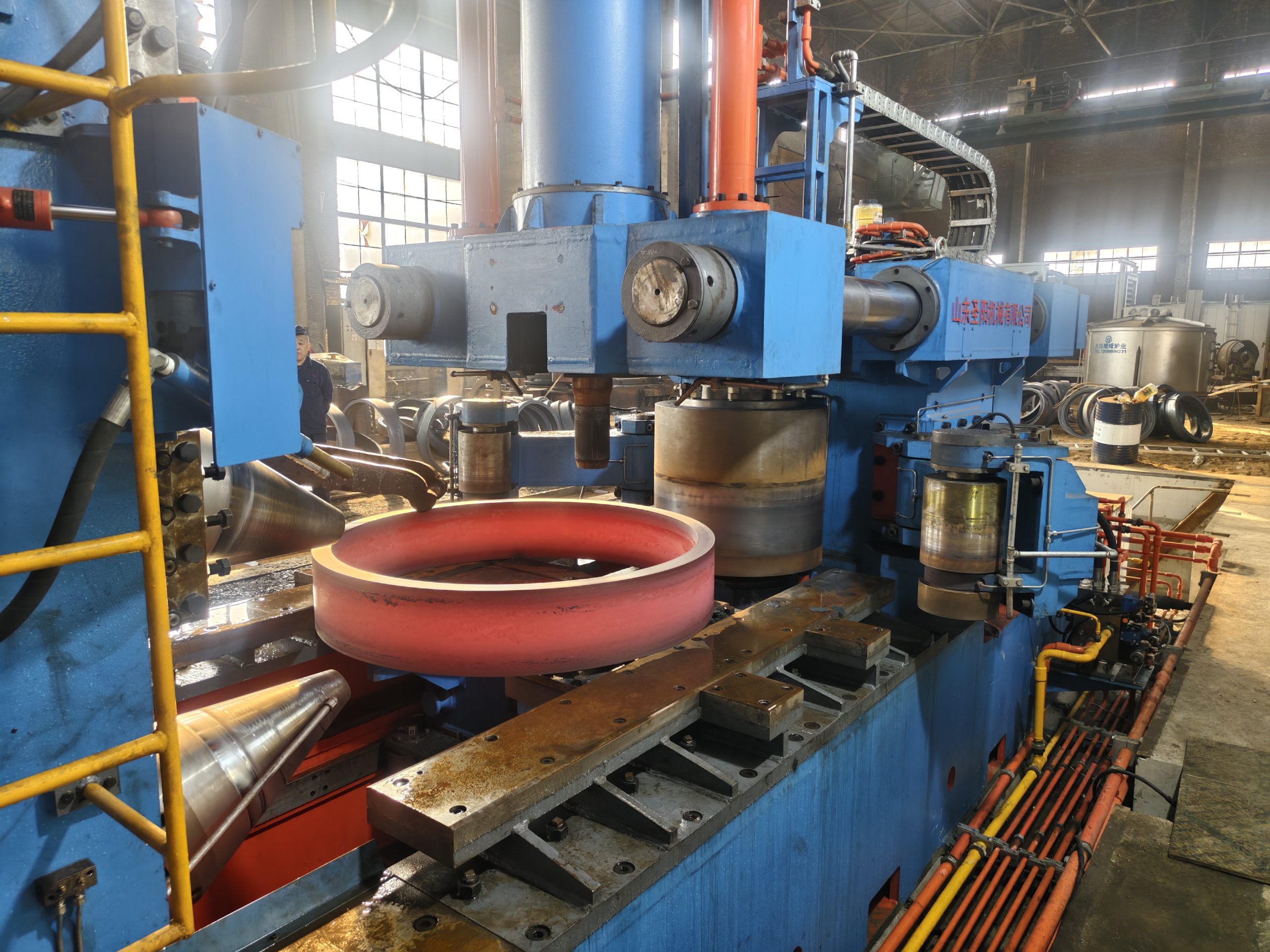
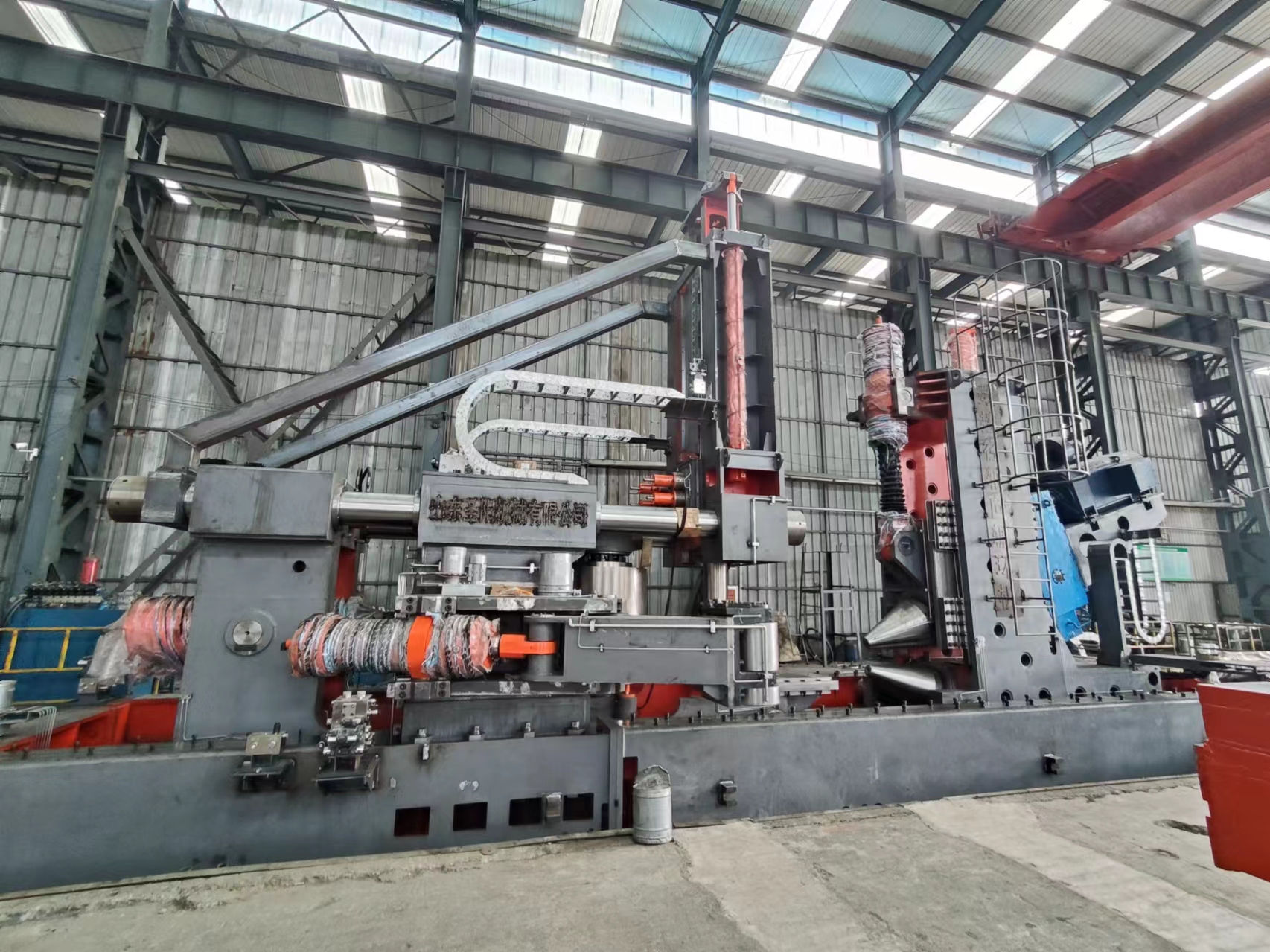
In the context of the conversation, it is worth mentioning specific players. Here, for example,Shandong Shenyang Mechanical Equipment Co.,Ltd(website - https://www.shengyangjxgroup.ru). They position themselves as a high-tech enterprise, and these are not just words on a business card. Was interested in their equipment for one of our potential wind power ring projects.
What caught my eye on their website and in the correspondence is that they do not hide the fact that they make machines on a modular basis. That is, they have a basic platform of a vertical machine, and then there are options: an infrared dimensional measurement system during the rolling process, an additional manipulator for loading/unloading, a special tool for profiles of complex shapes. This is a reasonable approach that allows you to flexibly adapt to your budget and tasks.
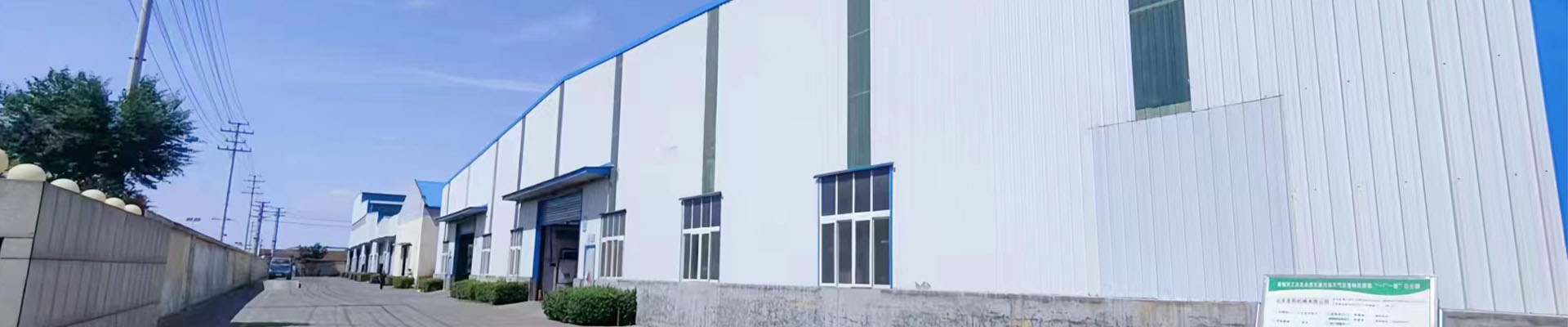
According to them, key components - the bed, the main drive shaft - are produced and processed in their own factory under strict control. This is an important point because many assemblers simply buy everything externally and screw it together, hence the problems with alignment and rigidity. Shenyang, judging by the photo reports from production provided, has a serious fleet of processing centers. This adds trust.
Working with any, even the most advanced Chinese equipment, requires special training. The first is documentation. Translation of technical manuals often leaves much to be desired. Electrical and hydraulic diagrams can be accurate, but the description of troubleshooting algorithms or error codes is a lottery. Sometimes you have to call a support engineer and explain the problem using your fingers, through a translator.
The second point is spare parts. Yes, they are cheaper. But delivery times may be variable. If you urgently need a special roller or sensor that is not in stock in Russia, you can wait a month or more. Therefore, smart consumers immediately order an extended set of spare parts for their product range upon purchase. This adds to the initial cost but saves in the long run.
And third, the most subjective thing is the design culture. The European machine feels like a finished product, where every little detail has been thought out, from the location of the terminal blocks to the chip collection system. A Chinese machine can be powerful and accurate, but the cables will not hang very neatly, and access to service any filter will be difficult. This is not fatal, but it does require some getting used to by our mechanics and service technicians.
Based on experience, several typical cases can be identified. Firstly, these are companies that are mastering a new direction for themselves - the production of rings. It’s scary to risk large investments in a European line, but a Chinese machine allows you to enter the market, develop the technology, and find customers. This is a kind of “starter package”.
Secondly, these are projects with strict deadlines. As in the example above. When the window of opportunity in the market is narrow and production needs to begin quickly, Chinese manufacturers often benefit from short production cycles.
Thirdly, this is a production that does not require ultra-high precision or work with exotic materials. For rings intended for further mechanical processing, or for products for general industrial use, modern Chinesevertical ring rolling machines- a more than adequate choice. Their accuracy within 0.5-1 mm in diameter is sufficient for many tasks.
But if we are talking about rings for the aerospace industry, where every micron is important and there are strict requirements for certification of the entire equipment supply chain, then there are no options yet - only proven European or Japanese brands. The Chinese are striving for this, but the market still lacks confidence at this level.
So, returning to the main question: Is China a supplier of vertical ring rolling machines? Yes, for a long time now and seriously. But not the ?supplier? in the sense of a faceless source of cheap goods. These are already full-fledged, competitive manufacturers who have occupied their niche.
Their strength is flexibility, speed and price. Their weakness is still the lack of depth of engineering solutions for highly complex tasks and in some aspects of after-sales service in our open spaces.
The choice, as always, is up to the technologist and economist of a particular enterprise. You need to clearly understand what the machine is for, what risks you are willing to take, and what is more important to you - immediate savings or long, predictable work “like in Switzerland?” Personally, I observe that the share of Chinese equipment in workshops is growing. And those who have learned to work with it correctly derive serious advantages from it. And those who are expecting “the same as the Germans, but at half the price?” continue to be disappointed. It all depends on the adequacy of expectations.