Email support
syjx@shengyangringrollingmachine.com


2026-02-25
When you hear about innovations in ring rolling machines from China, many people immediately think about cheap copies or simply increasing engine power. But over the past seven or eight years, the picture has begun to change, and not everywhere and not immediately. I myself worked for a long time with equipment for the production of bearing rings and fasteners, so I observed this evolution, as they say, from inside the workshop. And the main thing that catches your eye is not loud statements, but specific, sometimes targeted, improvements in mechatronics and process control that actually solve old problems.
It all started when about ten years ago the Chinesering rolling machinesreally were mainly a matter of price. They took proven European or Japanese circuits, simplified them, made them more massive, and installed more affordable electronics. Accuracy and resource, of course, suffered. But the demand in the markets of Asia, Africa, and even in the CIS was huge - not everyone needed the micron tolerances of Mitsubishi or SMS group, many just needed to start production. This was their springboard.
The turning point, in my opinion, was the saturation of our own domestic market. Chinese manufacturers of automotive components, bearings, and engineering fasteners began to demand more from their equipment. Not just roll a ring, but roll it with a predictable metal structure, with minimal variation in wall thickness, and even quickly adjust to a different standard size. That's when local engineers began to dig deeper.
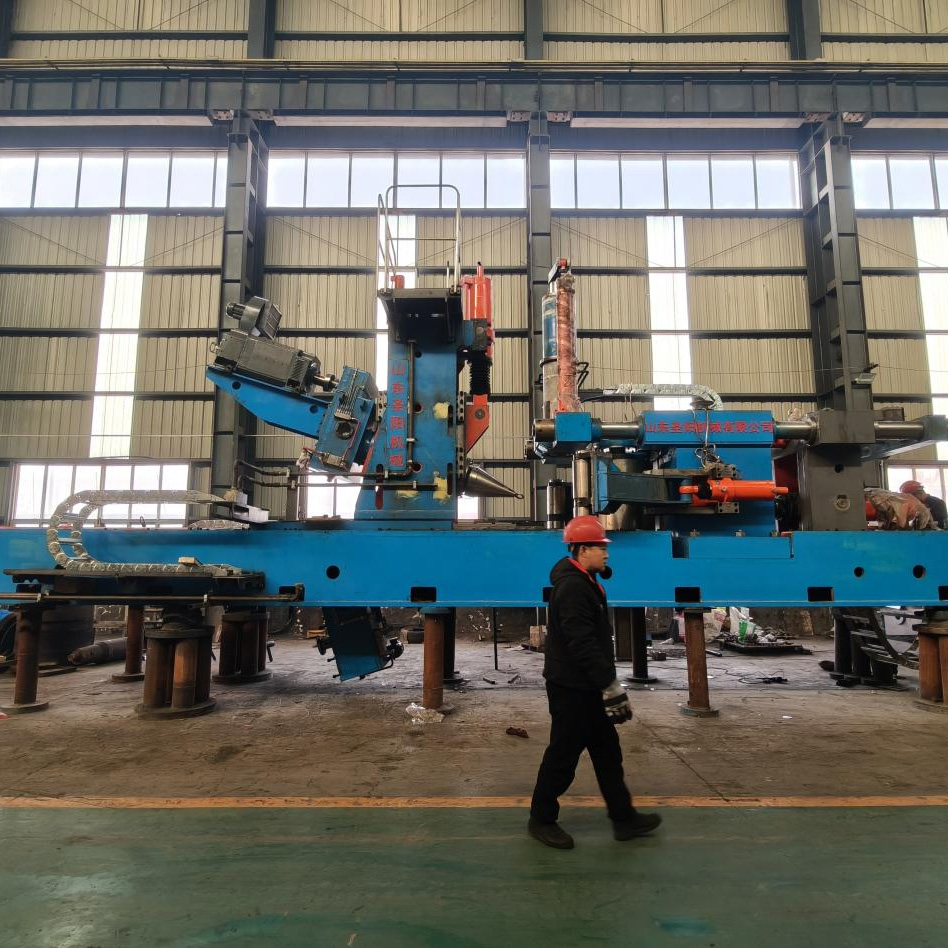
I remember how in 2018-2019 one of the new models fromShandong Shenyang Mechanical Equipment Co.,Ltd. By the way, you can see the current assortment on their website -shengyangjxgroup.ru. Back then it was an attempt to integrate a real-time active geometry control system. Not just sensors that signal a deviation, but a circuit that, through servos, immediately corrected the position of the rolls. In theory - great. In practice, the first months were spent combating vibrations, which the sensors mistook for deformation of the workpiece. But the very fact that they went this route, and did not simply increase the rigidity of the frame, already spoke volumes.
If we talk about hardware, progress is noticeable in two key components: the main drive system and guide rollers. Previously, there were often standard asynchronous motors with a gearbox, which gave a lot of backlash and inertia. Direct servo drives are becoming more common these days, especially in precision forming machines. This is not just fashionable, it provides a direct benefit in controlling the rate of deformation at different stages of rolling, which is critical for alloys such as high-temperature steel for turbines.
Another point is the materials of the rolls themselves and their supports. Chinese manufacturers have begun to work more actively with wear-resistant surfacing and special series rolling bearings. I won’t say that they invented something new, but they learned to effectively combine ready-made high-quality components (often the same European bearings or Japanese servomotors) in their design. This is a pragmatic approach: don’t do everything from scratch, but put together a reliable system where the weak link is not your design.
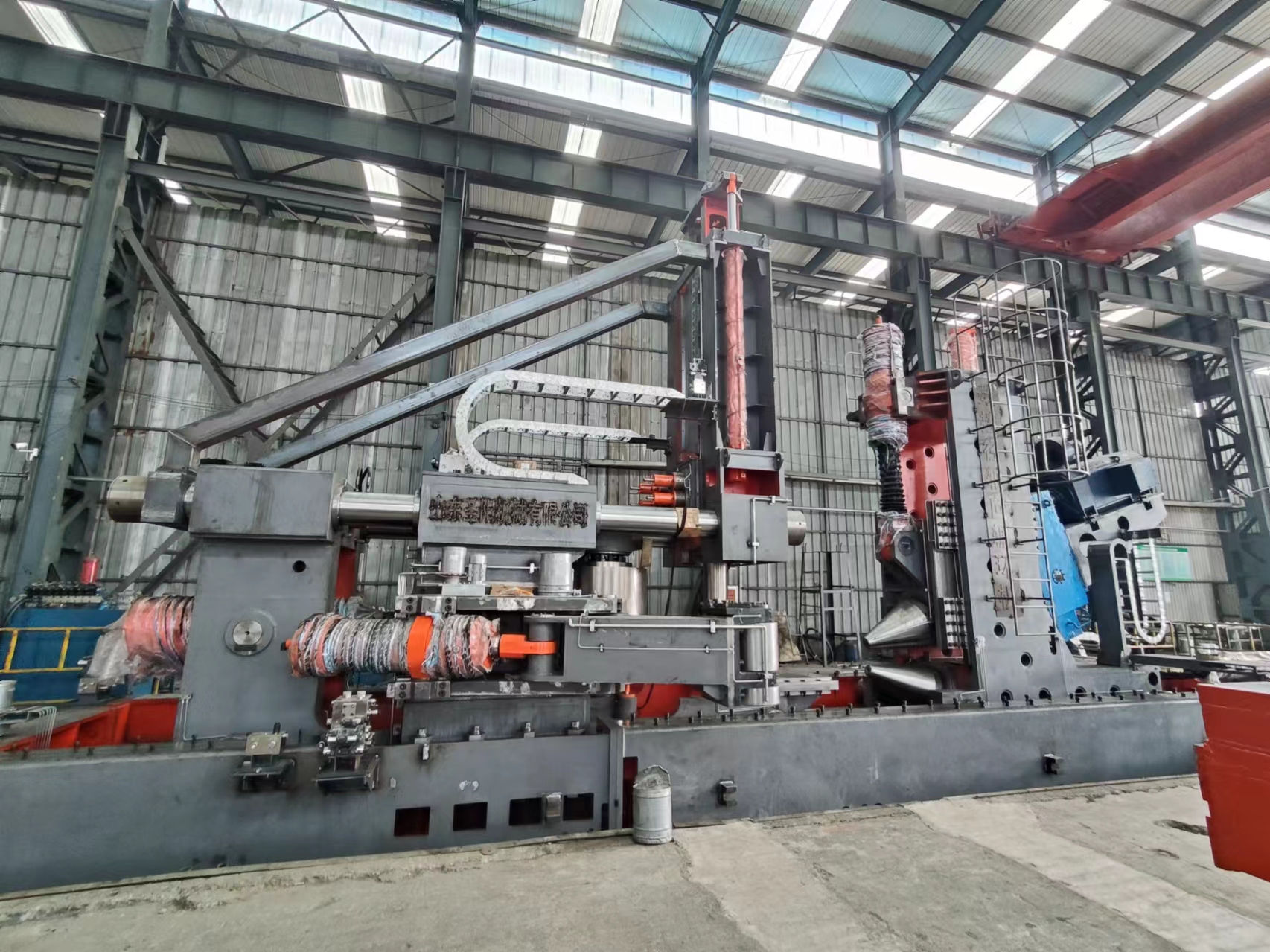
For example, the sameShandong Shenyang Mechanical Equipment Co.,Ltdpositions itself as a high-tech enterprise, and in their newer models it is clear that the emphasis has shifted to the survivability of components under intensive three-shift work conditions. They have models where the frame is designed to take into account not just static load, but dynamic shocks when rolling discontinuous profiles. This is no longer a copy-paste, this is an engineering calculation for specific difficult conditions, which are typical for many industries in the Russian Federation and Kazakhstan.
And here, perhaps, is the most interesting and controversial thing. The introduction of CNC and SCADA systems in Chinese machine tools has long been a formality. They installed a color screen and made an interface similar to Siemens Sinumerik, but the control logic inside remained simple and diagnostics primitive. The situation is changing, but in fits and starts.
Now there are systems that not only set the trajectory of the rolls, but simulate the rolling process for a given specific workpiece - taking into account its initial temperature, steel grade, and degree of deformation. Algorithms select the mode to minimize stress in the material and, as a result, subsequent deformation during heat treatment. This is already a serious step towards intelligent production.
But there is also a downside. Overly complex software, written without deep expertise in metallurgy, can produce beautiful graphs but useless recommendations. I came across a story where the system on a new machine stubbornly recommended a mode for a ring made of 40X steel, which led to the formation of sunsets. It turned out that the materials database was incomplete, and the algorithm extrapolated data from another brand. The problem was solved, but only after the intervention of production engineers. Conclusion: The most advanced innovation is useless without a close connection to the practice of the rolling mill.
All these innovations are being tested in the most unexpected places. One of the illustrative cases is the production of large-sized rings for wind energy. The requirements for the homogeneity of the metal structure are prohibitive here, because the ring will work under a colossal variable load. Chinese equipment manufacturers have actively joined this race.
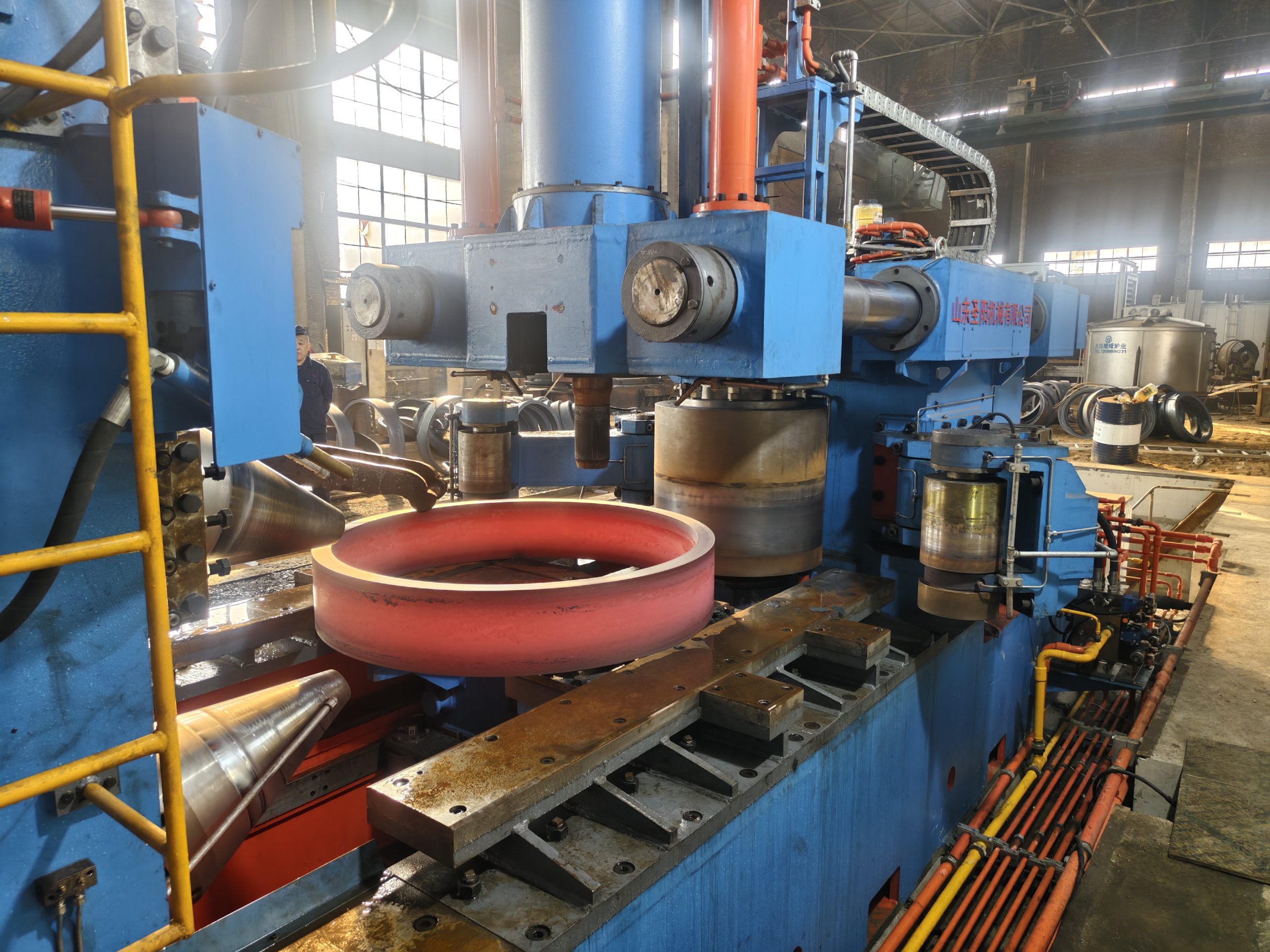
What do they offer? Complete solutions: yourselfring rolling machinewith a reinforced frame and precision hydraulic roll preload systems, integrated with an induction heater with precise control of temperature zones and subsequent installation for controlled cooling. That is, they are not selling a machine, but a technological chain. This is an important shift in thinking.
But this is not without problems. At one of these projects in Siberia, we were faced with the fact that the heater control system, designed for a stable mains voltage, was going crazy due to surges in our local network. We had to install additional stabilizers and modify the software. This became valuable feedback for Chinese engineers, and in subsequent deliveries to our region they already included a wider range of input power supply parameters. Innovation is born in dialogue with the market and its problems.
To summarize informally, innovation in Chinese ring rolling machines is no longer a myth, but a gradually becoming reality. But this reality is very pragmatic, not revolutionary. They do not create fundamentally new rolling methods. They take well-known global trends - digitalization, mechatronics, integrated technical processes - and adapt them to the needs of a specific, often very demanding market in terms of price and reliability.
Their strength lies in their reaction speed and flexibility. We noticed a problem with roll wear at one of the client plants - after six months they offered a modification with a modified lubrication system. We heard the need for quick changeover for small-scale production - we are developing a modular tooling system with digital setup templates. These are innovations at the level of improvements and improvements, but it is precisely such improvements that are often needed in real production.
Therefore, when you are now considering an offer from a company likeShandong Shenyang Mechanical Equipment Co.,Ltd, you can no longer just wave your hand, saying it’s a standard Chinese machine. It’s worth digging deeper, seeing exactly what problems they solved in the latest models, and talking to those who already have this equipment working in conditions similar to yours. Because their main innovation, perhaps, lies precisely in this - the ability to listen and embody what they heard in metal and code, albeit imperfectly, but working. And in our business, this is sometimes more valuable than any high-profile technological revolution.