Email support
syjx@shengyangringrollingmachine.com

2026-01-31
Were you looking for a Chinese manufacturer of ring rolling mills? Not everything is as simple as it seems at first glance. Many people immediately go into search, type these words and expect to see a list of factories. But they often come across trading companies or aggregators that only resell equipment. A true producer is something else. They have their own logic, their own priorities, and they are not always the first in the search results. And the term itself? ring rolling mill? - it is common. It is important to understand which rings: large, small, bearings, flanges, aerospace components? It depends on who to go to.
My experience suggests that the key is in the details of the technical documentation and the scope of delivery. If, in response to a request, they immediately send you a beautiful catalog with a dozen models, but without foundation drawings, connection diagrams or equipment recommendations - this is an alarm bell. A real manufacturer usually first asks clarifying questions: workpiece material, accuracy according to GOST or ISO, required performance. They think in terms of technology, not just selling a piece of equipment.
I had a story about five years ago. The customer needed a mill for rolling out rings with a diameter of up to 2 meters from a heat-resistant alloy. Through friends we found a company in China that promised everything in words. They sent us a video of the working mill. But when it came to discussing the CNC system and force sensors, inconsistencies began. It turned out that they assembled the mill from ready-made modules, and purchased the control system externally. The commissioning deadlines were then delayed by three months while they were “reducing?” hardware and software Lesson learned: you need to look at vertical integration. A manufacturer that makes its own power racks, hydraulics and writes (or deeply adapts) software for CNC is an order of magnitude higher level of reliability.
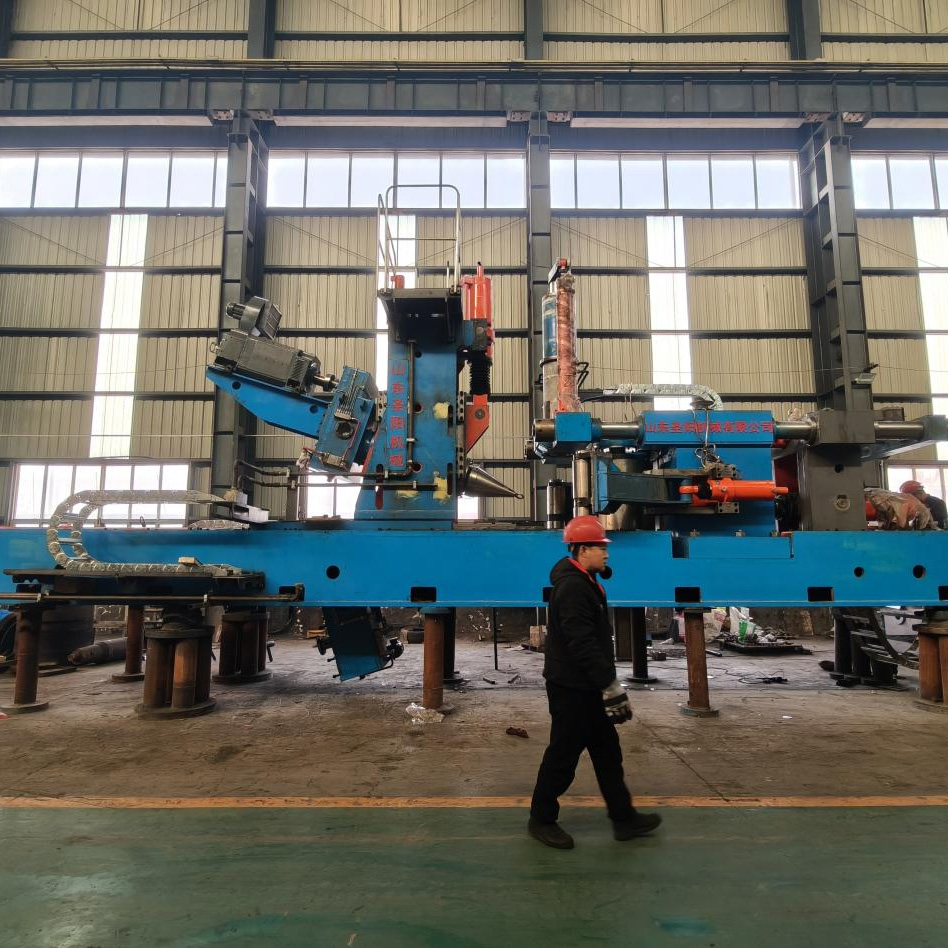
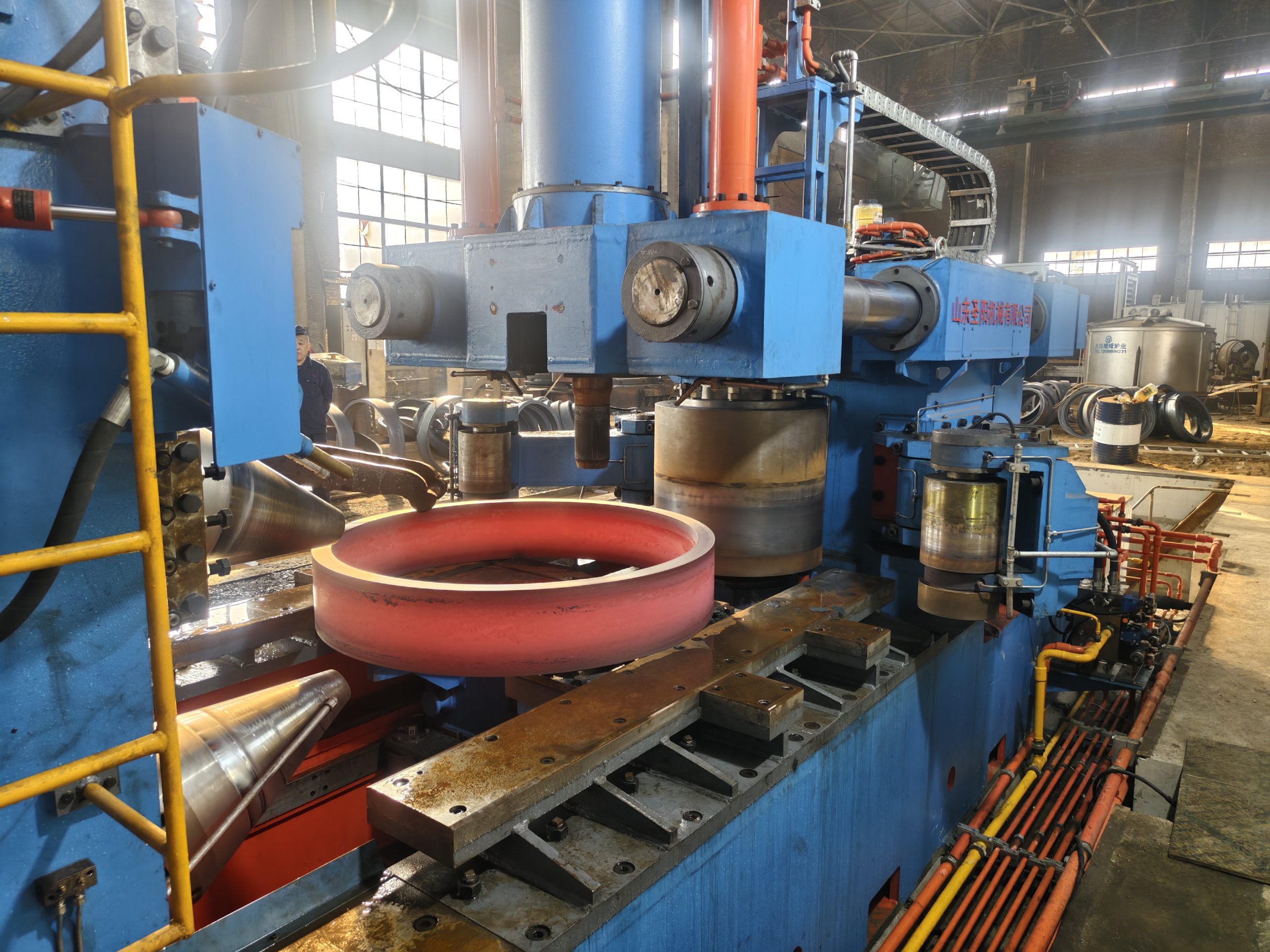
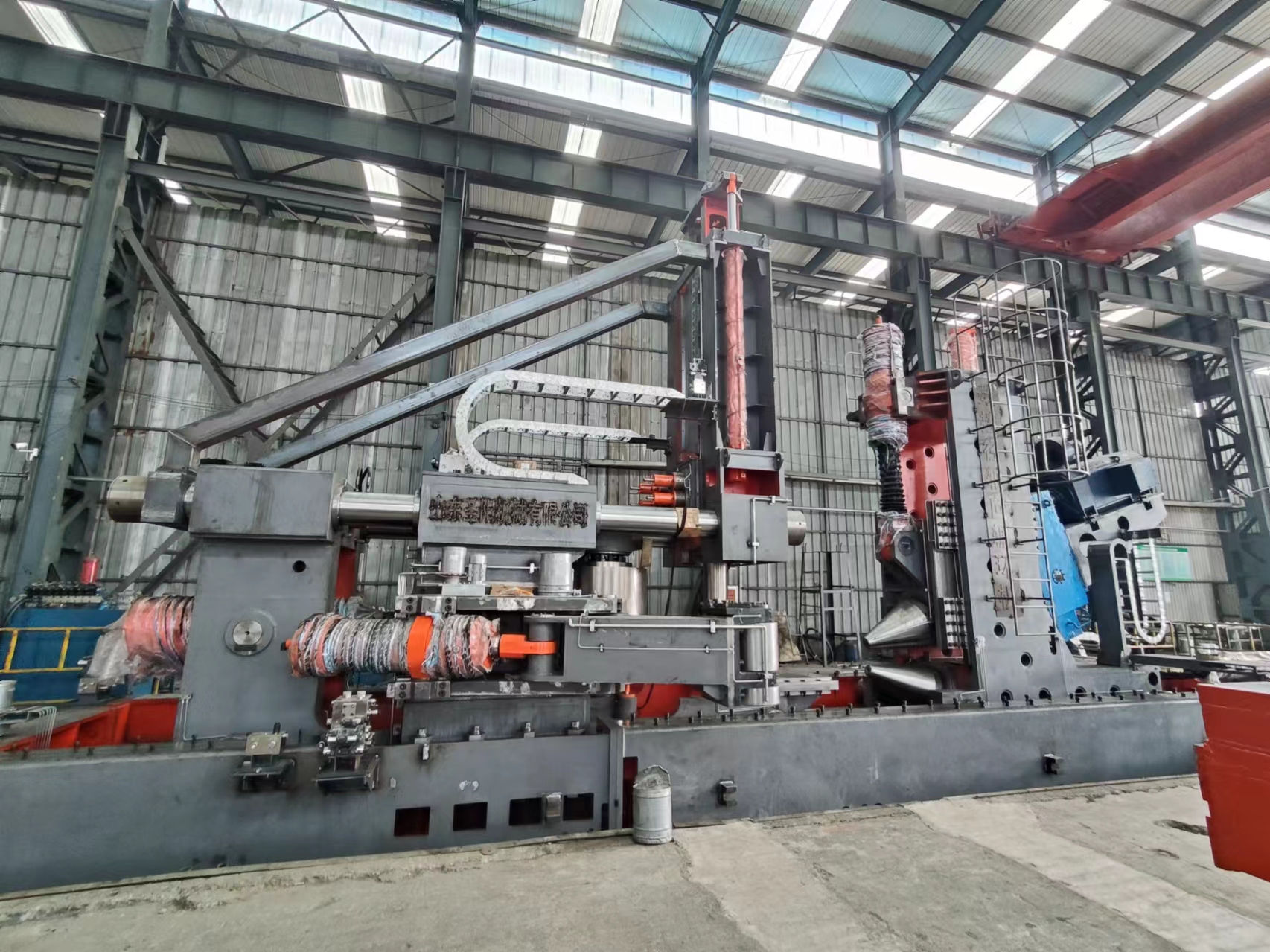
By the way, about websites. Often it is from the site that the first conclusions can be drawn. If the site is replete with the phrases “leading global manufacturer?” in ten languages, but at the same time in the section ?Plant News? the last post from five years ago is weird. Live production always updates and modernizes something. For example, I am impressed when the site has a section with videos from the workshop, where you can see the real assembly, and not staged videos. Or when specific models and their key parameters are indicated, and not just “we have everything?”. For example, I somehow came across the siteShandong Shenyang Mechanical Equipment Co.,Ltd (https://www.shengyangjxgroup.ru). In the company description -high-tech enterprise, which sounds normal. But what’s important is that in their portfolio they had photos of machines at customer sites, with logos, and this is already a kind of verification. Not just 3D renderings.
These two terms are the basis of all commercial offers from China. But how to decipher them? Quality in our context is, first of all, the resource of the main drive and the accuracy of the positioning of the rollers after a year of intensive work. The price often turns out to be “floating”. The basic cost of the machine may be attractive, but then it turns out that the cost of equipment (arbors, stops) or a mandatory package of spare parts for the first year increases the estimate by 25-30%. This is normal practice, but you need to know about it in advance.
One of the reliable, although slow, ways to check is to request a list of reference objects not in the world, but specifically in the CIS or Eastern Europe. And if possible, contact the technologists at these enterprises. Their feedback on working with the service and the availability of engineers for online consultations when setting up a new rolling mode is priceless. I remember talking with a colleague from a plant in Belarus who bought a Chinese radial-axial mill. He did not complain about the machine itself, but about delays in receiving software updates that corrected an error in the tension calculation algorithm. The manufacturer was serious, but their IT department worked according to its own internal plans, not particularly focusing on the requests of individual foreign clients.
Another point is materials. The quality of steel for the main power elements (frame, sliders) and the class of bearing supports. In cheap offers they save money on this. The machine can successfully roll rings made of mild steel, but when working with a titanium alloy or under cyclic loads, plastic deformation of the guides or increased backlash begins. Therefore, in the specifications you need to look not just for “high-strength steel,” but for specific grades, for example, 42CrMo, and require certificates for it. This is the part wheremanufacturerwith a good reputation usually does not shirk and provides documents.
Frequent request: “We need a machine that will make both small rings for bearings and large ones for wind generators?” Technically, there are models with a wide range. But in practice it is always a compromise. For small rings, speed, accuracy and quick tool changes are critical. For large ones - huge torque, powerful clamping hydraulics and completely different kinematics. A machine that tries to cover everything often ends up being ineffective in every niche.
Highly specialized Chinese manufacturers sometimes produce more interesting results than the giants. I know one factory in Jiangsu that mainly makes mills for gas turbine engine rings. Their entire design, control system, and even the cooling system are designed for Inconel and titanium alloys. They won't even offer you an option for rolling ordinary steel rings for construction - that's not their profile. Their website is modest, but when you talk to their chief engineer, you immediately feel the depth. They ask about the heat treatment modes of the workpiece before rolling in order to more accurately calculate the forces.
This is about the question of choice. Sometimes it's better to not just search?Chinese ring rolling mill?, and ?a machine for rolling out rings from aluminum alloys? or “radial-axial mill for heavy engineering?”. This way you will quickly reach companies that are immersed in your specific task. For example, if we return to the mentionedShandong Shenyang Mechanical Equipment Co.,Ltd, then by studying their website, you can see in which industries they position their equipment. This immediately cuts off unnecessary options and saves time.
The biggest headache when purchasing any complex equipment is not the purchase itself, but life with it after launch. With Chinese machines, the range of situations here is huge. There are manufacturers who, after shipping the container, consider the work completed. And there are those who organize a full-fledged service center in the region, with engineers and a spare parts warehouse.
When discussing a contract, it is necessary to clearly state: who and how will carry out supervision of installation and commissioning (how many people, for how many days, at whose expense travel and accommodation will be paid). What is the warranty period for different components (usually longer for mechanics, less for electronics and software). But the main thing is access to technical documentation. Ideally, you need to get not just a passport, but a full package: electrical diagrams, hydraulic diagrams, a list of all installed components (models of sensors, servos, even bearings) indicating the manufacturers. This will make it possible in the future to purchase some consumables or make repairs locally, without depending entirely on the supplier.
From personal experience: the most successful contract we had was when we insisted on including annual remote support via TeamViewer or similar in the price. Once a month, plant engineers connected to our CNC, recorded work logs, and checked wear using indirect parameters. One time they themselves discovered an incipient problem with the oil temperature sensor and sent us a new one, even before we noticed the failures. This is a level of trust and responsibility that takes years to build. And this approach often outweighs the small difference in initial price with competitors.
To summarize, I want to say that searching for a manufacturer is not an auction where the lowest price wins. This is a search for a technology partner. It is necessary to estimate the total cost of ownership (Total Cost of Ownership) for, say, 5-7 years. It includes the price of the machine, the cost of equipment, commissioning costs, downtime due to breakdowns, the cost of spare parts, and even your time spent solving problems.
Sometimes a reliable, but more expensive machine from a proven onemanufacturerturns out to be many times more profitable than ?profitable? offers. Because he just works and makes parts, and doesn’t stand around waiting for a specialist or a rare spare part from the other side of the world. Chinese equipment has long ago moved beyond the stage of simple copying. Now there are companies there that offer truly innovative solutions, especially in the field of automation and data collection. But to find them, you need to dig deeper than the first search lines, ask awkward technical questions and look at real projects, not advertising slogans.
Therefore, to the question ?? I would answer this way: yes, there are such manufacturers, and many of them are very competent. But the key to success lies in a detailed analysis of their competencies for your specific task, checking their real experience (not in words, but in completed projects) and building clear, written agreements throughout the entire life cycle of the equipment. This is the only way to get not just a machine, but an effective production tool.