Email support
syjx@shengyangringrollingmachine.com

2026-02-17
When talking about ring rolling mills from China, many people immediately think about the price. But the real story is how over the past ten years they have learned to balance between productivity, accuracy and what everyone cares about now - the environmental component. Not without problems, of course.
Previously, about ten years ago, when we were just starting to look closely at Chinese suppliers for a project in Kazakhstan, the main argument was, of course, the budget. Ecology? The word sounded, but only appeared in the specifications as a general phrase about compliance with standards. In fact, when we arrived at the first manufacturing plant (I won’t name it, it has not been in trend for a long time), it was clear: the cooling and lubrication system was classic, with a large volume of emulsion, filtration was at a basic level, they spoke sparingly about the disposal of slag and scale waste. The noise from the main drive is such that you can’t stand in the workshop for long without headphones. Then the first impression was formed: the technology is there to roll rings, but about “green?” in the cycle they think last.
This, by the way, is still a common misconception - that Chinese machines are always “dirtier?” or less reliable. In fact, the spread is huge. There are giants that have been exporting to Europe for a long time and have had to catch up, and there are many small manufacturers where you can still see the old schemes. The key point is when exactly the company began to seriously modernize its product lines. The year 2015-2017 became a turning point, when internal standards for emissions and energy consumption were tightened.
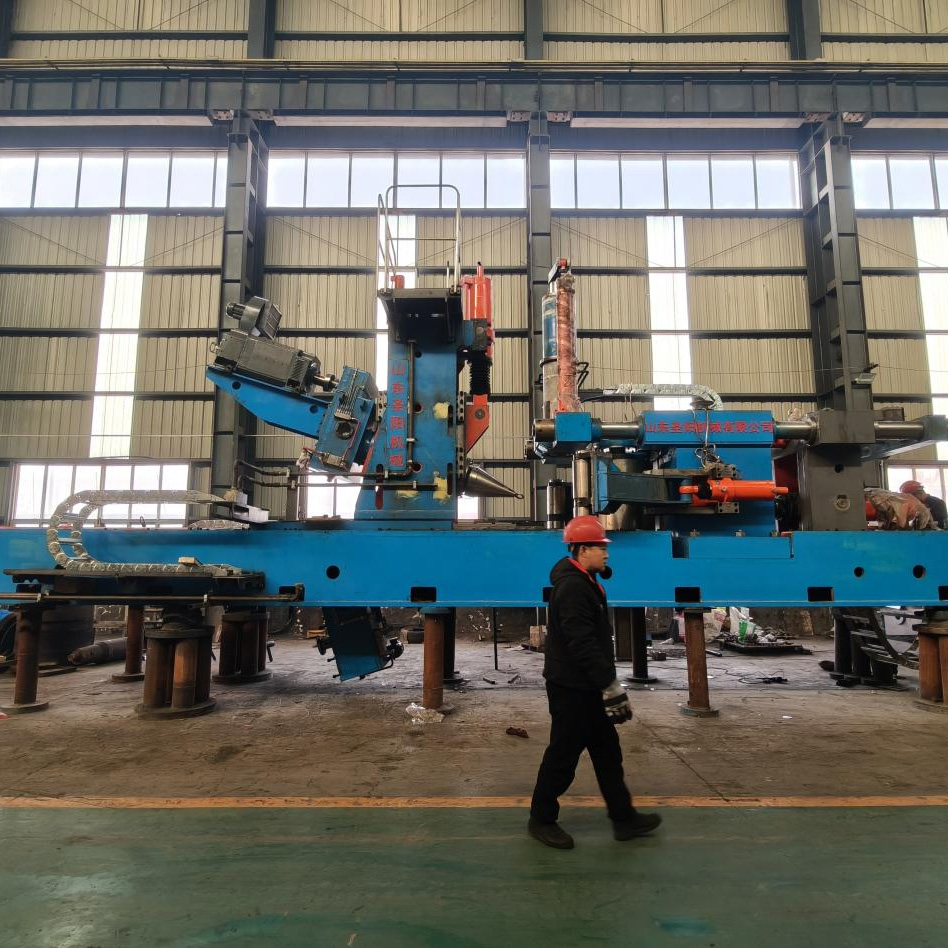
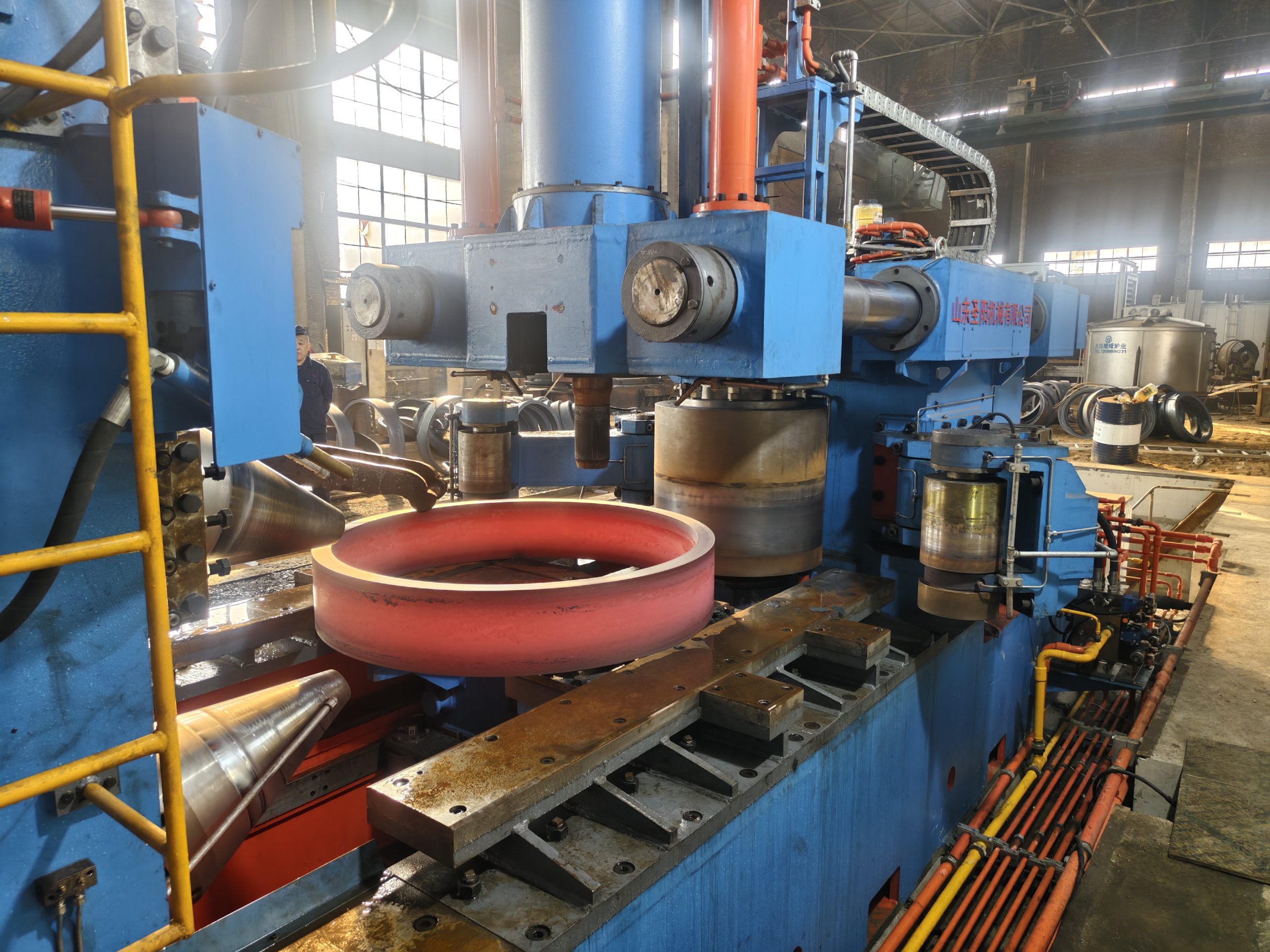
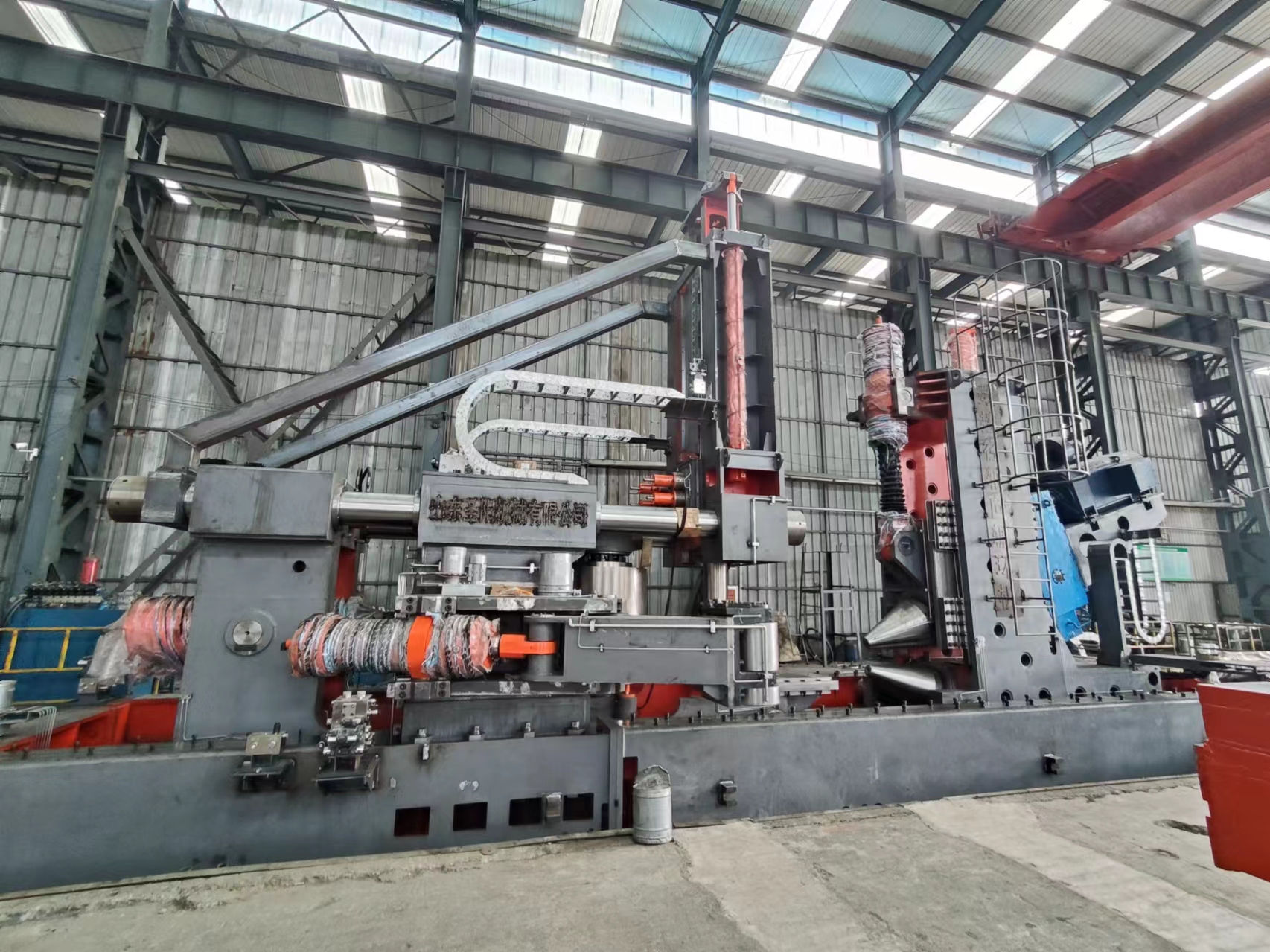
For example, let’s take not the most popular, but interesting manufacturer -Shandong Shenyang Mechanical Equipment Co.,Ltd. On their website,https://www.shengyangjxgroup.ru, it is clear that they position themselves as a high-tech enterprise. When we studied their proposal for mills for rolling medium-diameter rings, we noticed the emphasis in the description on the CNC system and “energy-saving drive”. Many people say this in words, but there were specifics in the technical documentation: a stated reduction in energy consumption by 15-20% due to optimization of cycles and recovery in hydraulics. This was a plus for us, but the question immediately arose: what about processing oil mist and chips? In correspondence, the engineers sent a diagram of a built-in separator - something that is almost mandatory now, but five years ago it was installed only as a special order and for an additional fee.
A modern Chinese ring rolling mill is already a rarity to see in the “naked” world. the same as before. Nowadays, a complex is almost always offered: the mill itself, a loading/unloading mechanism, a diameter measurement system and, importantly, a system for cleaning and circulating process fluids. Previously, the last item was an option, now it is part of the basic configuration for serious players. Why? Because European and partly Russian customers began to demand not only a CE certificate, but also specific protocols on noise levels, aerosol emissions, and water consumption.
In practice, this resulted in changes in design. For example, more and more often the main electric drive and pumping stations are closed in noise-insulating casings, not just like boxes, but with thoughtful ventilation and points for maintenance. The lubrication system for the main roller bearing is not flow-through, but circulation with thermal stabilization. This may seem like a small thing, but it solves two problems: less oil consumption (which means less waste) and a more stable temperature in the assembly, which affects rolling accuracy. At the sameShandong Shenyangin the description of their D56 series mills, it is precisely “closed circuit lubrication of key components” that is mentioned? - this is just from this opera.
But what still has difficulties is adaptation to specific raw materials. Chinese manufacturers often optimize their machines for their own range of steels and ring sizes. When we ordered a mill for rolling heat-resistant nickel alloy rings, there was a problem with setting up the cooling system after the induction heater. The standard system was designed for more standard temperatures; together with engineers, it was necessary to refine the circulation parameters and add an additional heat exchanger. The plant was cooperative, but the project dragged on for three months. This relates to the question of what is a “high-tech enterprise?” - this is not only assembly, but also readiness for non-standard engineering tasks.
There's an interesting paradox here. Introduction of "green" solutions were initially perceived as an increase in cost. But in a number of cases, it also began to provide savings, which began to be taken into account in commercial proposals. For example, a heat recovery system from cooling water to heat process rooms in winter. Or more efficient filters, which, although more expensive to purchase, extend the life of hydraulic oil, reducing the frequency of its replacement and disposal costs.
Some manufacturers, especially those who work closely with German or Italian partners on components (CNC systems, sensors), have these approaches already built into their design philosophy. You look at the 3D model of the new mill and see how lines are laid for collecting chips and scale, hatches for cleaning are provided, and connection points for aspiration are calculated. This is not an afterthought, this is from the beginning. True, the price of such equipment is already close to Korean or Turkish, but still competitive.
In the case ofShandong Shenyang Mechanical Equipment Co.,Ltd, judging by their open cases, they are actively promoting their countries for projects where not only the result is important, but also the environmental report. For example, in the description for delivery to one of the CIS countries it was mentioned that the complex allowed the customer to reduce the annual volume of waste oil generated by 30% due to closed circuits. The figure, of course, requires verification, but the very fact that this is included in the advantages is indicative.
Not everything is so smooth, of course. One of the main unobvious problems is the durability and availability of “ecological” ones. components. The same oil mist separator or fine water filter is often purchased by a Chinese manufacturer from a subcontractor. And when after a couple of years this element fails, a headache may arise in finding an analogue or original spare part. We encountered a situation where, in order to replace an emission monitoring system sensor, we had to wait 2 months for delivery from China, because local analogues did not fit the exchange protocol with the main CNC.
Another point is calibration and setup. A modern energy-efficient drive with recuperation is a complex thing. If it was set up at the factory by an experienced engineer, and a less qualified specialist came to the customer for commissioning, all the energy saving benefits may come to naught due to incorrect acceleration/deceleration parameters. It happened that a mill formally met all noise standards during testing, but in actual operation, under certain rolling conditions, vibration occurred, leading to an excess. We had to call specialists again for dynamic balancing.
So, to summarize. Chinese manufacturers of ring rolling mills have come a long way from copying to their own developments, and the topic of ecology is no longer just a marketing ploy. It has become part of the technology package, especially for the middle and high end of the market. Selecting equipment now is not just a comparison of prices per ton of rolled steel, but an assessment of the entire life cycle: how much energy will be consumed, what are the costs of maintaining filtration systems, how easy is it to dispose of waste.
Companies likeShandong Shenyang Mechanical Equipment Co.,Ltd, demonstrate this trend. Their positioning as a high-tech enterprise is no longer an empty phrase, but a necessity dictated by the market. Of course, there is still room for improvement, especially in terms of after-sales support for complex systems and the unification of “green” systems. components.
For me personally, the main conclusion of recent years is that when you are discussing a new project, questions about ecology and resource efficiency are asked not only because of the desire to obtain a certificate, but because this directly affects operating costs. And Chinese engineers understand this very well. Their equipment can be very different - from simple and cheap to complex and “smart”. But the very fact that even the descriptions of standard models now include clauses about energy saving and environmental friendliness indicates a shift in the industry itself. As always, you need to choose carefully, looking not at the brochure, but at specific technical solutions and, if possible, at working examples from other customers.