Email support
syjx@shengyangringrollingmachine.com

2026-01-24
If you are looking for a Chinese manufacturer for vertical ring rolling mill, forget about a simple internet search. There you will find mostly resellers or aggregators who do not produce themselves. Real factories are often poorly represented online, especially for specific items such asvertical ring rolling mill. My experience tells me that the key is not to “find”, but to “figure out”. and check on site.
When we started a project to modernize the workshop, we also needed such a mill. The first mistake is to think that all Chinese manufacturers are the same. There are giants like some state holdings, but they often work for large government orders within the country. Their equipment may be powerful, but documentation, adaptation to European standards and service are a complete headache. And we needed a mill for specific ring sizes, with a certain accuracy.
Then there are private companies. This is where the fun begins. Many position themselves as manufacturers, but in reality they only have an assembly shop. Forging blanks, casting frames, manufacturing complex gears - they order all this externally. Quality then depends on a dozen subcontractors, and it is difficult to control this. Once we almost got caught: we arrived at the plant, and in the workshop there was only assembly; there was no trace of a foundry. They asked about the heat treatment of the shafts - the manager began to get confused in the readings.
Therefore, the first practical filter: a real manufacturer must have a full cycle or its critical parts - its own metal processing, preferably a foundry or close ties with one proven foundry, and its own control department. If everything is purchased in the form of ready-made units and simply bolted together, this is a bad sign for a complexChinese vertical ring rolling mill.
An alternative to a random search is industry exhibitions in China. For example, MetalForm China or similar ones in Shanghai or Guangzhou. There you can see the equipment live, communicate with engineers, and not just sales managers. Remember the name of the plant, and then “dig?” deeper. Often their websites are outdated, but this is not an indicator.
One of the methods that we have developed: we ask you to provide not just a catalog, but a video from the workshop, specifically the process of processing large parts. Not ceremonial photography at the entrance, but work on rotary lathes, milling beds. If they give it quickly and without problems, that’s a good sign. We also look at history. If a company has been making rental equipment for 15-20 years, and not “everything in a row?”, this is a serious plus.
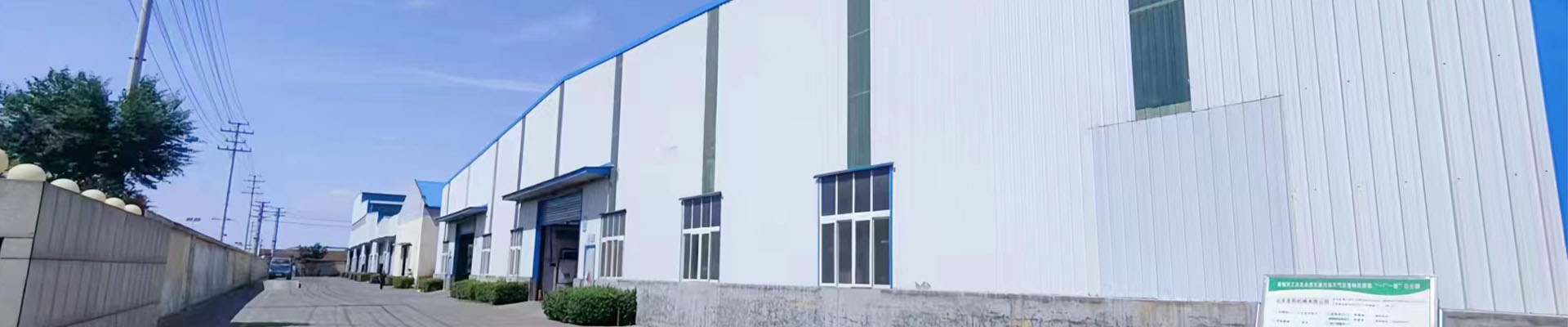
By the way, about websites. Often, useful information is provided not by official websites in English, but by their internal Chinese portals or industry B2B platforms, where there are reviews from other buyers (although they should be treated with skepticism). I recently came across the siteShandong Shenyang Mechanical Equipment Co.,Ltd (https://www.shengyangjxgroup.ru). They position themselves as a high-tech enterprise and, importantly, are from Shandong, a region with a strong metallurgical and mechanical engineering tradition. The site itself was made for the Russian-speaking market, which already indicates the focus of exports. But this is just a starting point for testing.
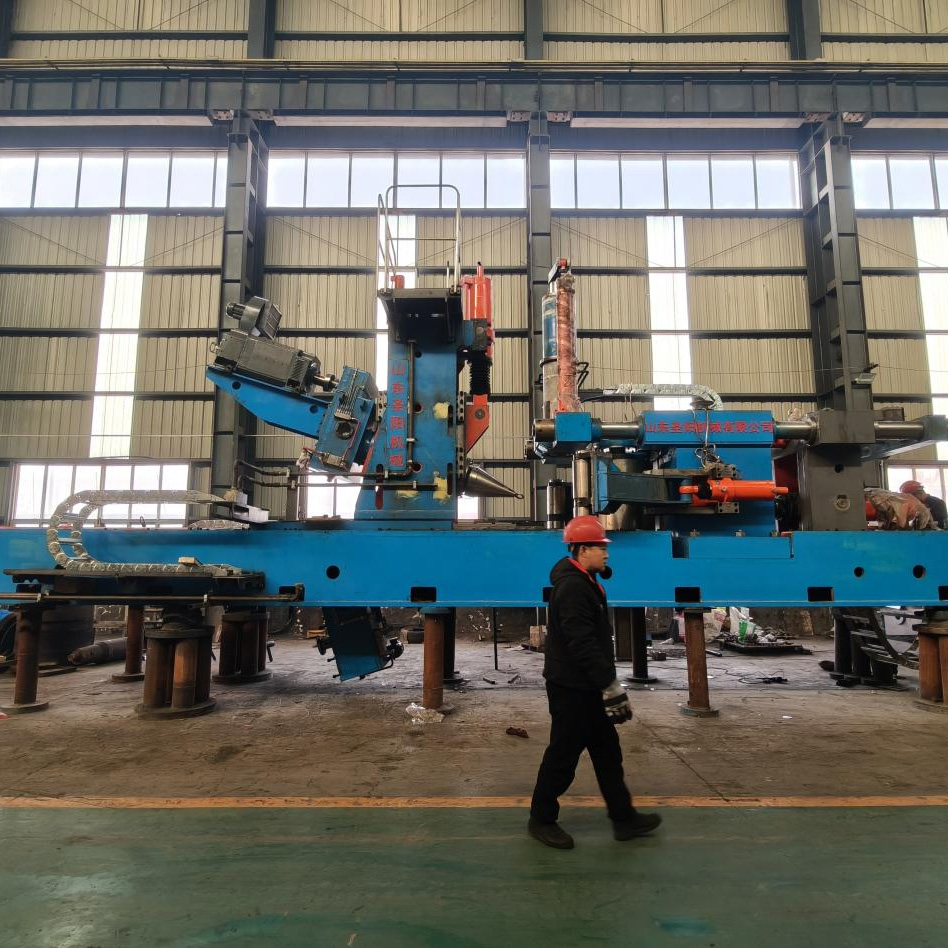
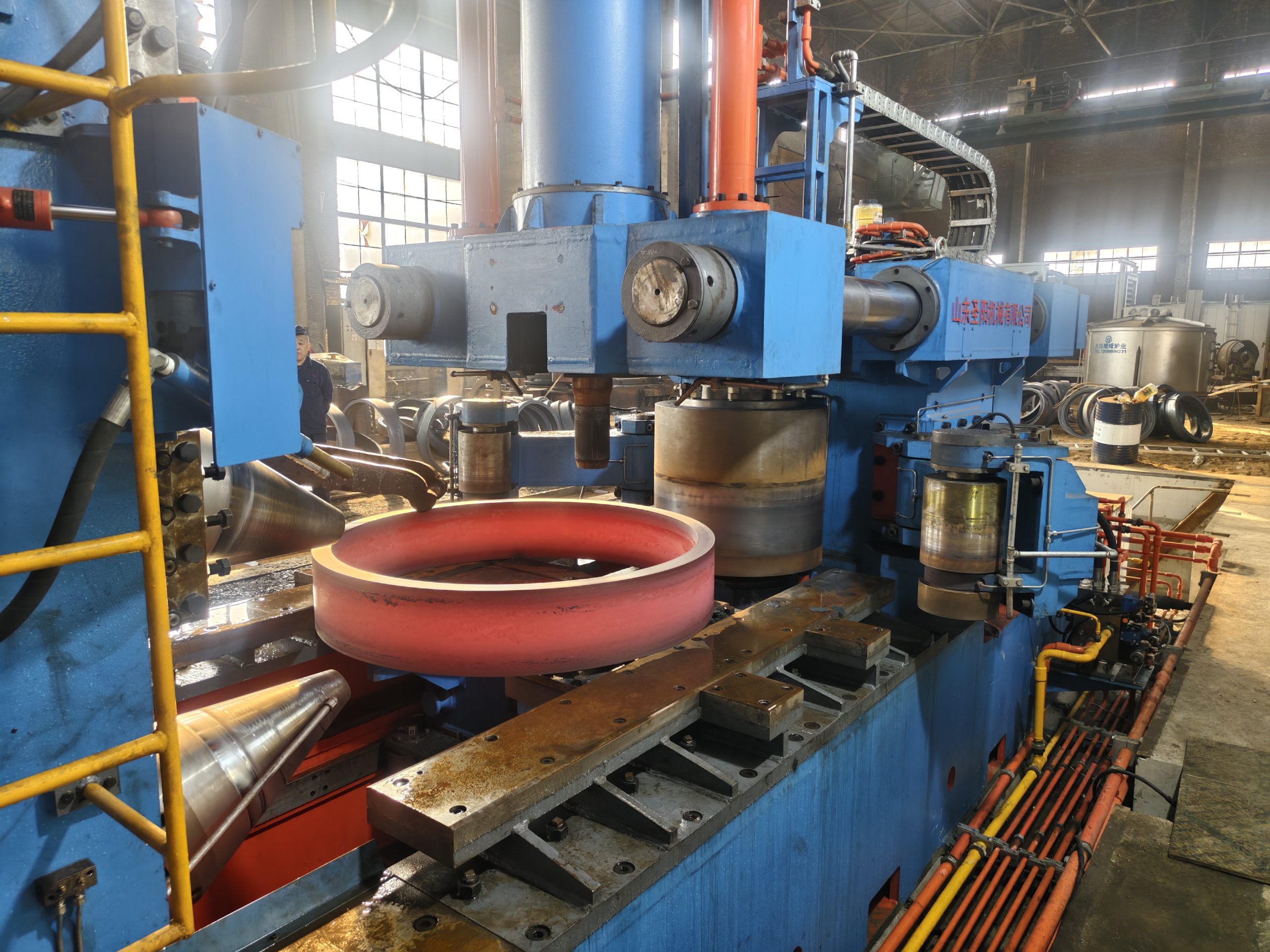
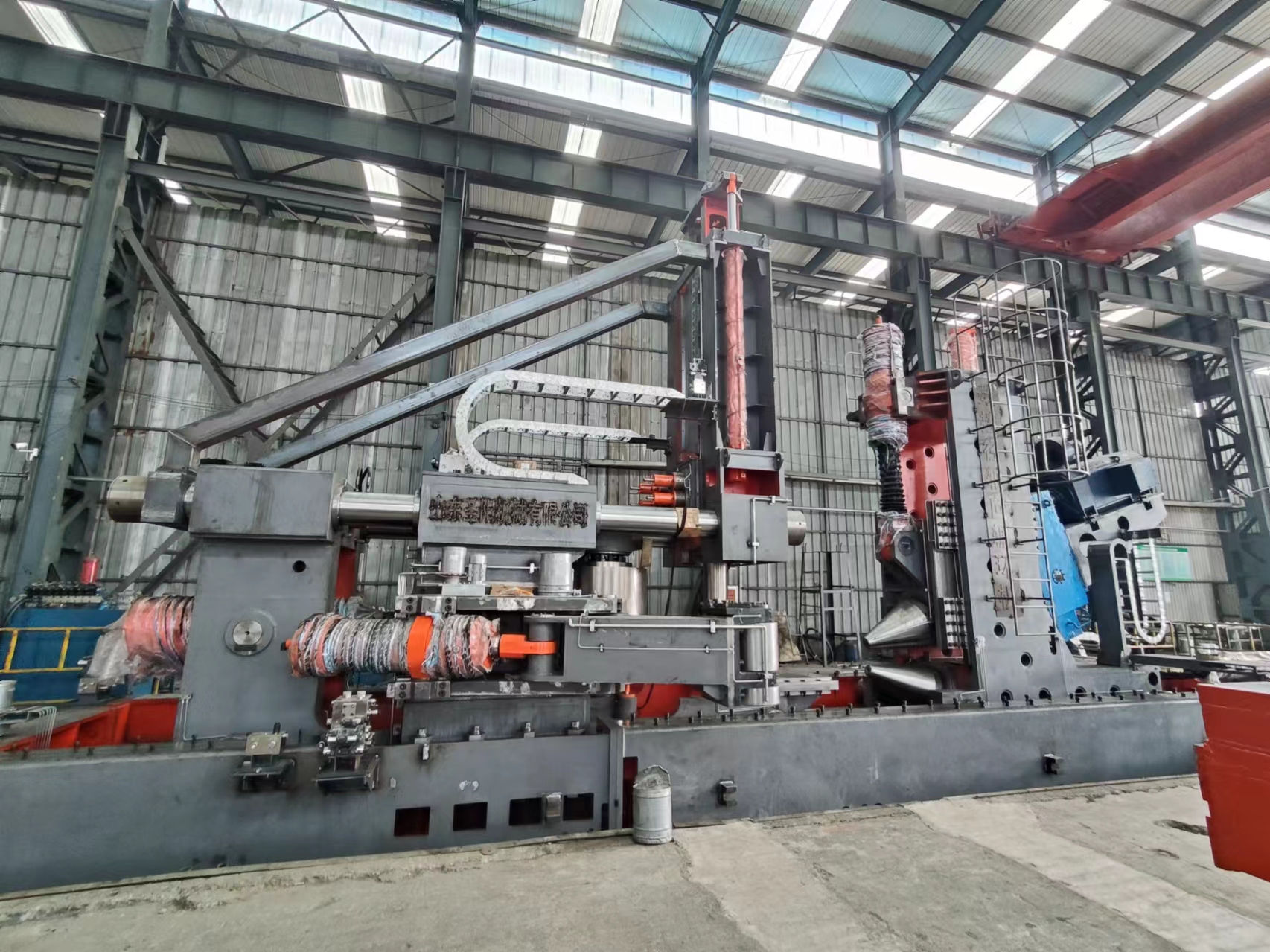
Let's say you found several candidates. Now we need to get to the bottom of it.Vertical Ring Rolling Mill— the car is not for show. You need to look at the drive of the main work roll. Hydraulics or electromechanics? Each scheme has its own nuances in terms of accuracy and reliability. At one time, we chose an electromechanical drive with servomotors and a precision gearbox - fewer problems with oil temperature and hydraulic cleanliness, but more expensive.
The CNC system is a separate issue. Chinese manufacturers often install Siemens or Fanuc. This is fine. But it is important who programs and configures. It happens that the camp comes with “raw” standard program, but it needs to be seriously modified to suit your ring sizes. Check to see if the supplier has process engineers who can adapt the software. Otherwise, you will have to figure it out yourself or look for a third-party integrator.
Material of rolls and support bearings. It sounds cliché, but this is a common point of failure. Ask directly: what steel is the roll made of, what is the hardness after hardening, who is the supplier of the bearing units (preferably SKF, FAG, or at least decent Chinese analogues). If the answers are vague, that's a red flag.
The biggest mistake is to chase low price as the main criterion. A price reduction of 20-30% often means a simplified design, cheaper components (the same bearings or hydraulic cylinders) and weak technical supervision. As a result, you will lose more on downtime and repairs. We had a bad experience with one ?economical? supplier: we saved on the hydraulic cooling system; after six months of intensive operation, leaks and pressure drops began.
The second mistake is not going to the reception. It is imperative to schedule a visit to the factory for inspection and preliminary testing (FAT - Factory Acceptance Test). Look not only at the mill itself, but also at the production culture: cleanliness in the workshop, order with the tools, how quality control is carried out. If there is a defect lying around in the warehouse of finished products, this is a bad sign.
And third, do not think through logistics and commissioning. Who will install? Chinese specialists often include only a short commissioning visa in the contract. Check the details: translation of documentation, training of your operators, availability of a guarantee supply of wearing parts. Without this, even the bestChinese vertical ring rolling millcan turn into a pile of metal in your factory.
So, to summarize. Search is a filtering process. Start with regions traditionally strong in mechanical engineering: Shandong, Hebei, Jiangsu. Study not only websites, but also industry chronicles and company patents. As an example, the sameShandong Shenyang Mechanical Equipment Co.,Ltd— their mention as a high-tech enterprise should be checked through requests for technical documentation and patents for mill designs.
Make a checklist of questions for the supplier: about the production cycle, key components, experience in supplying to your country or the CIS, conditions for conducting FAT. Do not hesitate to ask awkward questions about weak points of the design.
Ultimately, finding a manufacturer is half the battle. The second half is to build a working relationship with him, where you will not just be a “buyer from the West”, but a technically savvy partner. This greatly increases the chances that your order will be treated more carefully and that the equipment will meet your expectations. Good luck with your search, it's worth it.