Email support
syjx@shengyangringrollingmachine.com

2026-01-28
Recently, an acquaintance was looking for how to approach the purchase of a Chinese-made CNC ring rolling mill. A bunch of options immediately pop into your head, but there are also just as many pitfalls. Many people immediately go to Alibaba, thinking that it is a buyer's paradise. Well, heaven is heaven, but only if you know how to negotiate there and what to look at. And if not, you will get, at best, almost what you need, and at worst, you will get hardware, which you will then only disassemble for spare parts. The price, of course, is tempting, but this price often hides not just savings on assembly, but a complete lack of understanding of what they will ultimately bring to you. I went through this myself.
Let's start with the most obvious - platforms like Alibaba or Made-in-China. There really is a sea of offers. You write to ten suppliers, they send you catalogues, beautiful pictures, certificates. The prices seem attractive. But here's the rub: the specifications. The same machine from five different sellers will be described in five different ways, with different accuracy parameters, drive power, and equipment. And you sit and wonder whether it’s different CNC software, or even different mechanical platforms. I found out empirically that 70 percent of the profiles are simply resellers who have never been to the factory themselves. They receive your request, forward it to the factory, receive a response, add their margin and give it to you. Naturally, there is no talk of any deep technical consultation.
Direct contact with the factory is a more serious level. But not everything is smooth here either. You will find the plant’s website and write to the general mail. A sales manager who knows English exactly at the level of the price tag and basic characteristics from the brochure will answer. You ask something specific, about rolling tolerances, about roll wear, about the possibility of calibration for a non-standard ring profile - and a long correspondence begins with engineers through this manager. Time is running out enormously. I once corresponded like this for three months until I received clear answers to all technical questions. But then, when it came to the contract and prepayment, it became clear that the plant did not really want to take on obligations for installation supervision and training. Send your specialists, we will show you - standard answer. And these are additional costs, visas, accommodation.
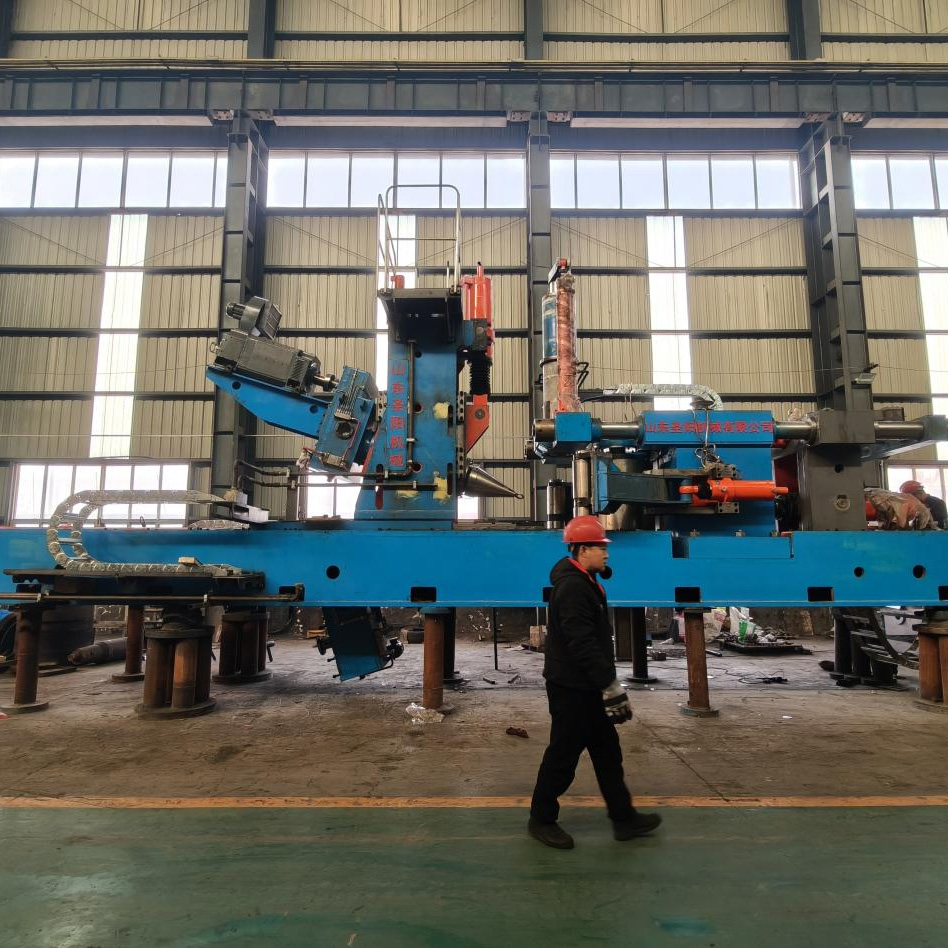
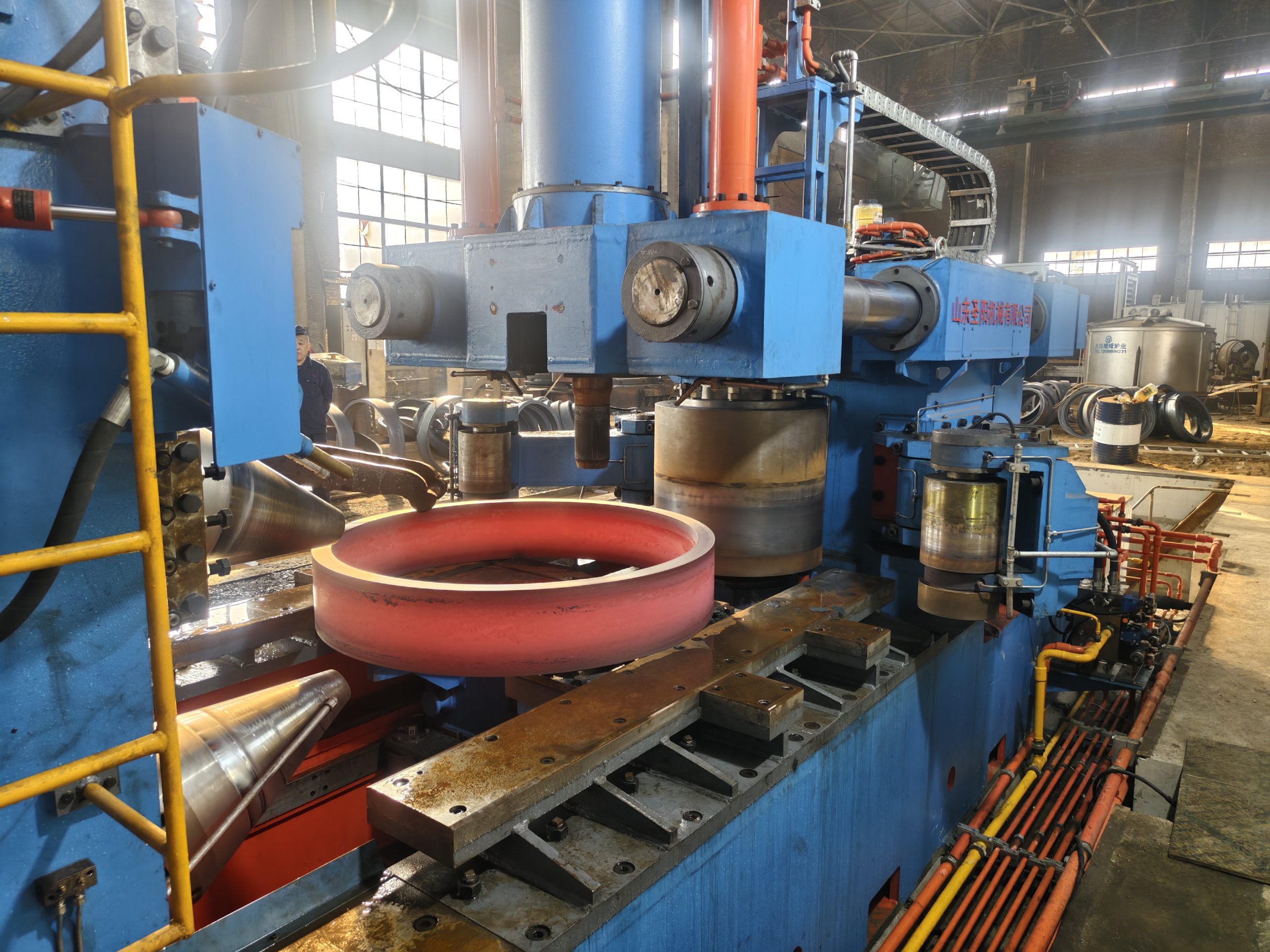
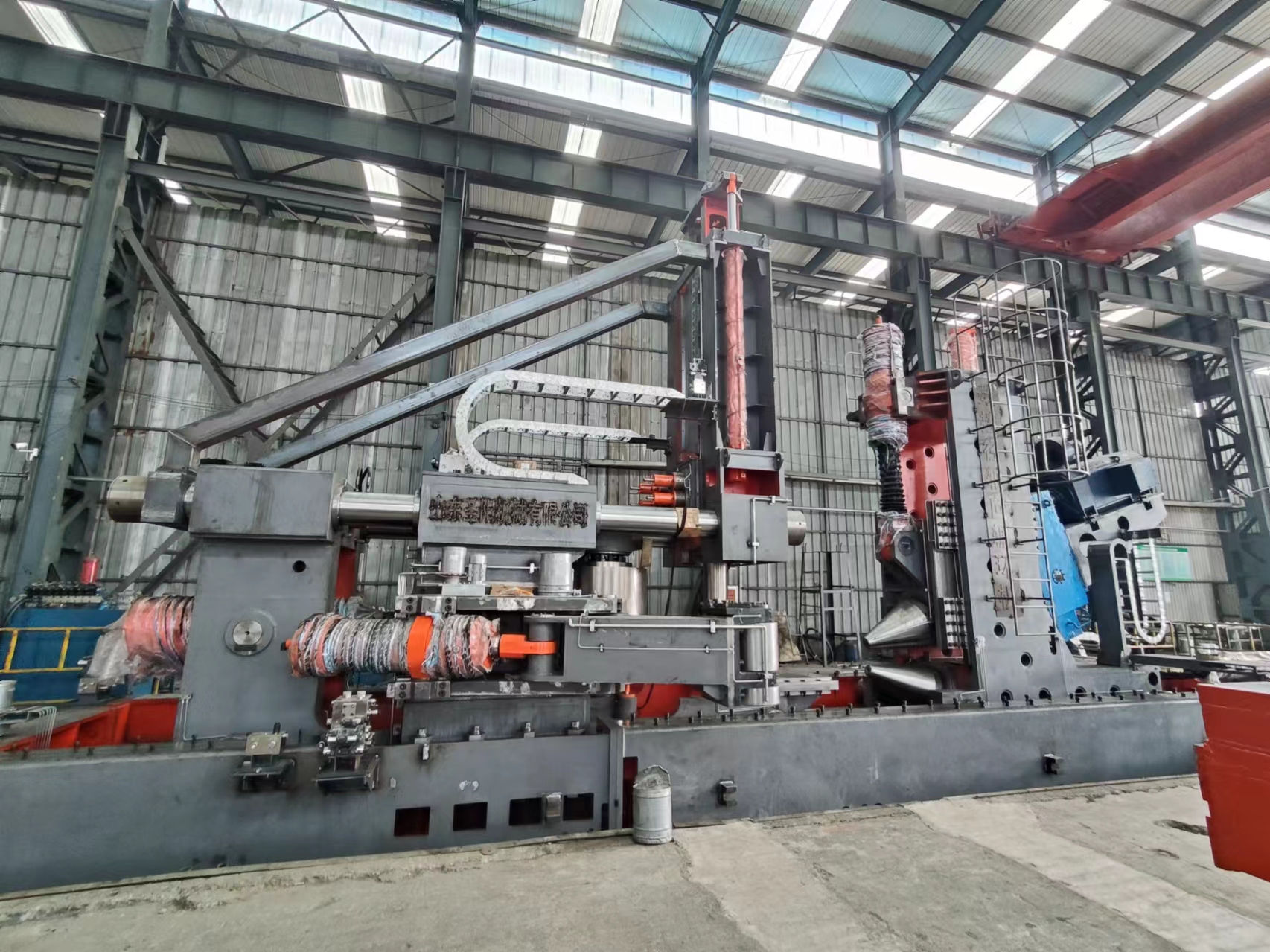
I also had negative experiences. I ordered through this schemeChinese CNC ring rolling millfor the production of rings of medium diameter. According to the specifications, everything matched. When the machine arrived and we started it up, it turned out that the CNC system was designed for a very narrow range of feed speeds. If you want to make a ring from a harder alloy with other parameters, the program gives an error or behaves inappropriately. We contacted the factory. It turned out that this is the basic version of the software, and to expand the functionality you need to buy an engineering package. Of course, there was not a word about this in the initial commercial proposal. I had to pay extra and wait for an engineer to reflash it. A month of shop downtime.
After stories like this, you begin to appreciate companies that work as intermediaries, but the right ones. Not just resellers, but engineering or distribution companies with an office and, importantly, technical specialists in Russia or the CIS. They are more difficult to find, they are not so aggressively advertised on public platforms. More often you learn about them through word of mouth, at industry exhibitions (which, alas, are not so accessible now) or through colleagues.
What is their advantage? They usually represent not one plant, but several, and can more or less objectively suggest which model is suitable for your specific tasks: for mass production of the same type of rings or for piece, complex-profile products. They already have established logistics and often have spare parts warehouses. And most importantly, there is a person you can call when something breaks. He won’t always solve the problem over a call, but at least he will organize communication with Chinese engineers in a normal mode, and not through email with Google Translator.
For example, now companies have appeared on the market that not only import equipment, but adapt it to our standards and networks. They are replacing Chinese starters with Schneider or ABB ones, and installing more understandable localized interfaces on control panels. This is a huge plus for our operations teams. One of these companies isShandong Shenyang Mechanical Equipment Co.,Ltd. I heard about them from my workshop partners. They position themselves not as simple sellers, but as a high-tech enterprise (Shandong Shenyang Mechanical Equipment Co.,Ltd is a high-tech enterprise), which deals with complex solutions. I went to their websitehttps://www.shengyangjxgroup.ru— it is clear that they are focusing on heavy forging and rolling equipment, including ring rolling mills. The information is structured, there are technical descriptions, videos of work. What is important is that there are contacts for Russia. This already inspires a little more confidence than an abstract Alibaba profile. Although, I repeat, you need to talk to everyone personally and ask tricky technical questions.
Price is only the entry point. Then the fun begins. The first is the mechanical part. Rolls, bed, drive. It is necessary to require information about the grade of steel for the rolls, its hardness, and the method of heat treatment. Cheap machines often suffer from the fact that the rolls wear out after the first tens of tons of rolled stock and begin to become barrel-shaped or have an irregular profile. Ask for a wear test report if they can provide it. If not, this is a reason to be wary.
The second is the CNC system. The Chinese now often install their own developments or systems based on Sinumerik and Fanuc. With Fanuc everything is more or less clear, it is a de facto standard, and it is easier to find a programmer for it. But with their own systems it can be difficult. Check whether it is an open architecture, whether changes can be made to the program, whether there are post-processors for popular CAM systems. Otherwise, you will be tied to the software they give you and to the engineer who understands it.
Third - equipment. Included in the basic packagering rolling millalmost never the entire necessary set of mandrels, mandrels, and measuring tools for different standard sizes of rings is included. This is a separate expense item, and it needs to be calculated immediately. Ask if the factory makes custom tooling and how long it takes. Sometimes it’s easier and faster to make it yourself, but this requires exact drawings from the machine manufacturer, and they are not always willingly issued.
I'll tell you another instructive case. We ordered a machine for rolling bearing rings. The technical specifications clearly stated the required surface cleanliness after rolling and runout. The Chinese side confirmed everything. When the machine was installed and a trial batch was launched, the quality seemed to be normal. But when we switched to mass production at full capacity, after a couple of weeks problems began: the variation in size increased and vibration appeared. It turned out that the main movement drive used a motor and gearbox designed to operate at 70-80% of the maximum load. When constantly working at the limit (and our technical process required exactly this), overheating, backlash, and loss of accuracy began. The specification indicated simply the power, without graphs of the on-time (ON). We had to urgently change the engine and strengthen the structure. Conclusion: you need to ask the supplier for all the details, even those that seem unimportant to him. Ask about the PV engines, about the accuracy class of the bearings in the units, about the hydraulic cooling system (if there is one).
That is why now I am more inclined to work with companies that have an engineering department capable of conducting such a dialogue with the plant on a professional level. Like the sameShandong Shenyang Co.,Ltd. It is clear that they are on topic, and can be not just a transmission link, but a filter and translator of technical requirements. This saves nerves and, ultimately, money, despite the fact that their commission may be included in the price.
So where to buy? There is no clear answer. It all depends on your willingness to immerse yourself in the process, on the budget, on the urgency and on the required level of support.
If you are an experienced engineer yourself, have the time and desire to understand, and have a limited budget, you can take a risk and work directly with a proven factory, but only after a thorough check of references, video conferences with production and, ideally, a visit to the factory before paying. It's long and difficult, but it can be cheaper.
If you need reliability, minimal risks and quick commissioning, look for a specialized distributor or an engineering company with a good reputation. Their websites are likeshengyangjxgroup.ru, is worth studying not only for contacts, but also to understand their specialization. Narrow specialization is often a sign of deep immersion. Yes, you will pay more, but you will most likely get a working solution and one window for solving problems.
In any case, don't be fooled by the lowest price. In this segment, she is almost always deceptive. Consider the total cost of ownership: price of the machine + delivery and customs + installation and commissioning + training + spare parts and equipment + possible upgrades. And only then compare the options. Good luck in your search, colleague. This is not the easiest way, but the result is worth it.