Email support
syjx@shengyangringrollingmachine.com

2026-02-17
To be honest, when you hear about Chinese CNC ring-rolling machines, the first thought for many is “well, it’s cheap and cheerful, it’ll do for simple rings.” I thought so myself ten years ago. But now the situation is different. It’s not just about the price, but about what specific tasks you are completing and what stage of production you are at. I’ll try to break down what it looks like from the inside, without the gloss.
Previously, about 15 years ago, Chinese machines on the CIS market were associated mainly with manual or hydraulic units. CNC was the lot of the Italians, Germans, and Japanese. But somewhere in the mid-2010s, the first serious attempts began to appear. Not pure copies, but developments for specific requests: for example, for the production of large-diameter rings (from 2 meters) or for working with certain grades of steel that we use.
A key shift occurred when local manufacturers began to actively implement CNC systems from Siemens and Fanuc. Not home-made controllers, but “boxes”? from the leaders. This immediately removed a lot of questions about control reliability. But here is the main pitfall - assembly. You can install a better CNC system, but if the mechanics, frame, and drives are assembled somehow, then there will be no accuracy. And here the variation in quality among Chinese factories is colossal.
I personally came across a situation where at an exhibition in Shanghai a machine showed perfect accuracy, but a batch of the same model brought to us had play in the guides. It turned out that they were collecting an “exhibition” for the exhibition. copy manually, and the serial flow was not up to par. This is an important point: you need to look not at the prototype, but at what is in production, and preferably at machines already working with colleagues.
Everyone looks at the main parameters: the diameter of the rolled ring, force, accuracy. But there are nuances that are often not written in catalogs. For example,kinematicsmain drive and stand drives. With cheap models, it happens that the stand drive does not keep up with the change in the cross-section of the workpiece in real time, especially when rolling out profiles of variable cross-section. The result is marriage.
A very important questionrigging(instrument). Many Chinese manufacturers offer a standard set, but for a specific profile (say, for wind power or aircraft rings) a special tool may be required. And here you either wait 3 months for production from them, or look for a local equipment manufacturer. It is better to work out this issue before purchasing.
Another point is the cooling and descaling system. During intensive work, especially with heat-resistant steels, this is critical. I have seen cases where they skimped on the hydraulic cooling system, and in the summer the machine simply crashed from overheating every two hours. Moreover, everything in the passport was normal. Ask specifically about the calculation of heat dissipation and the type of coolers.
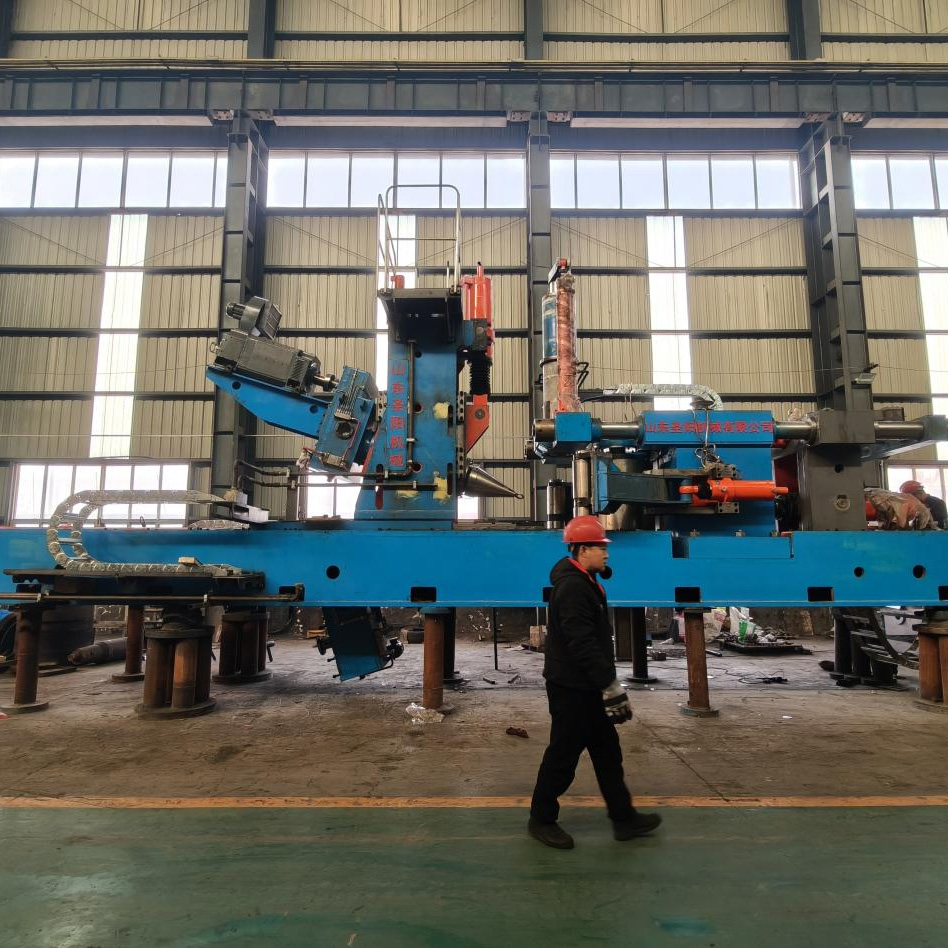
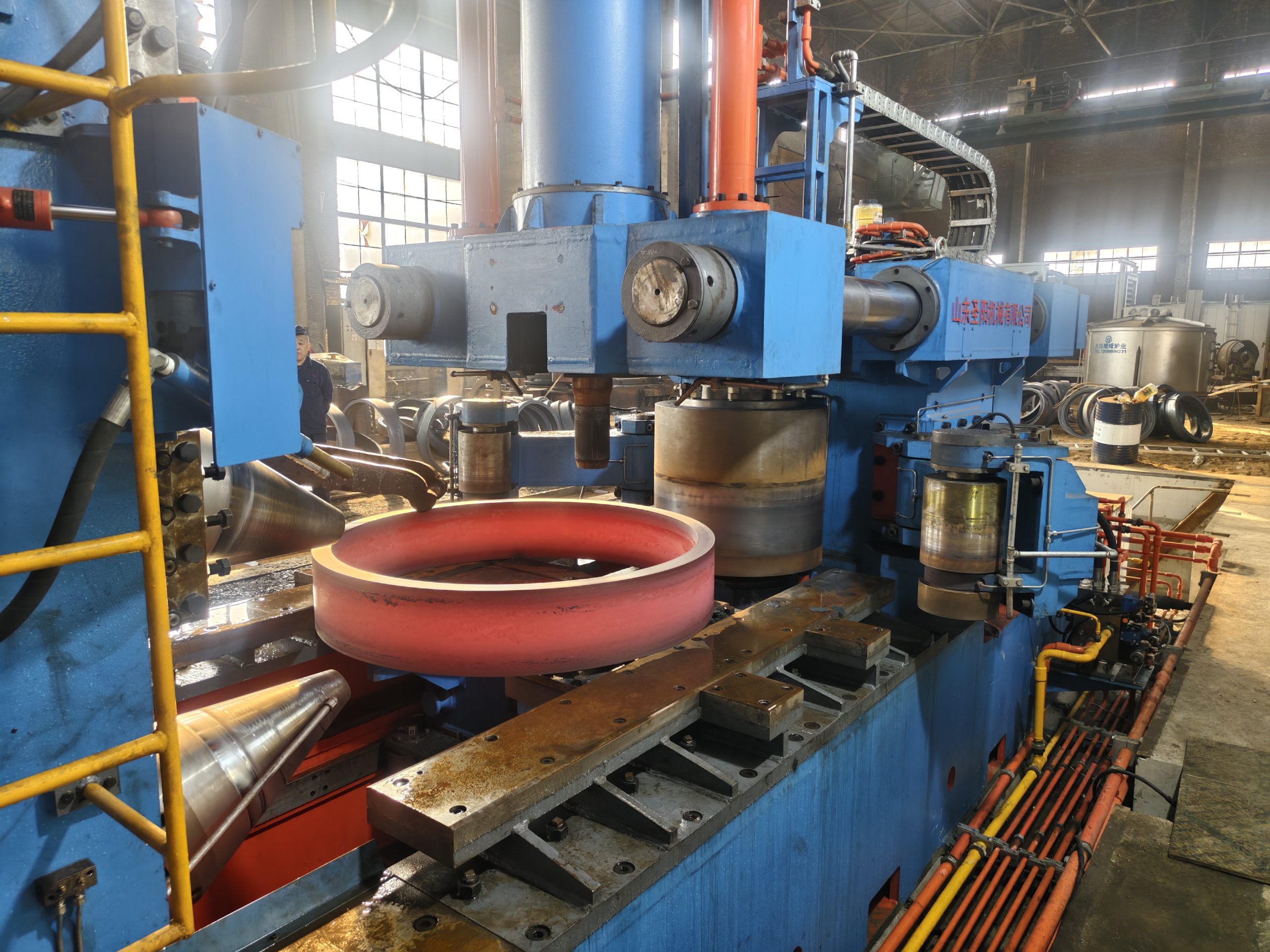
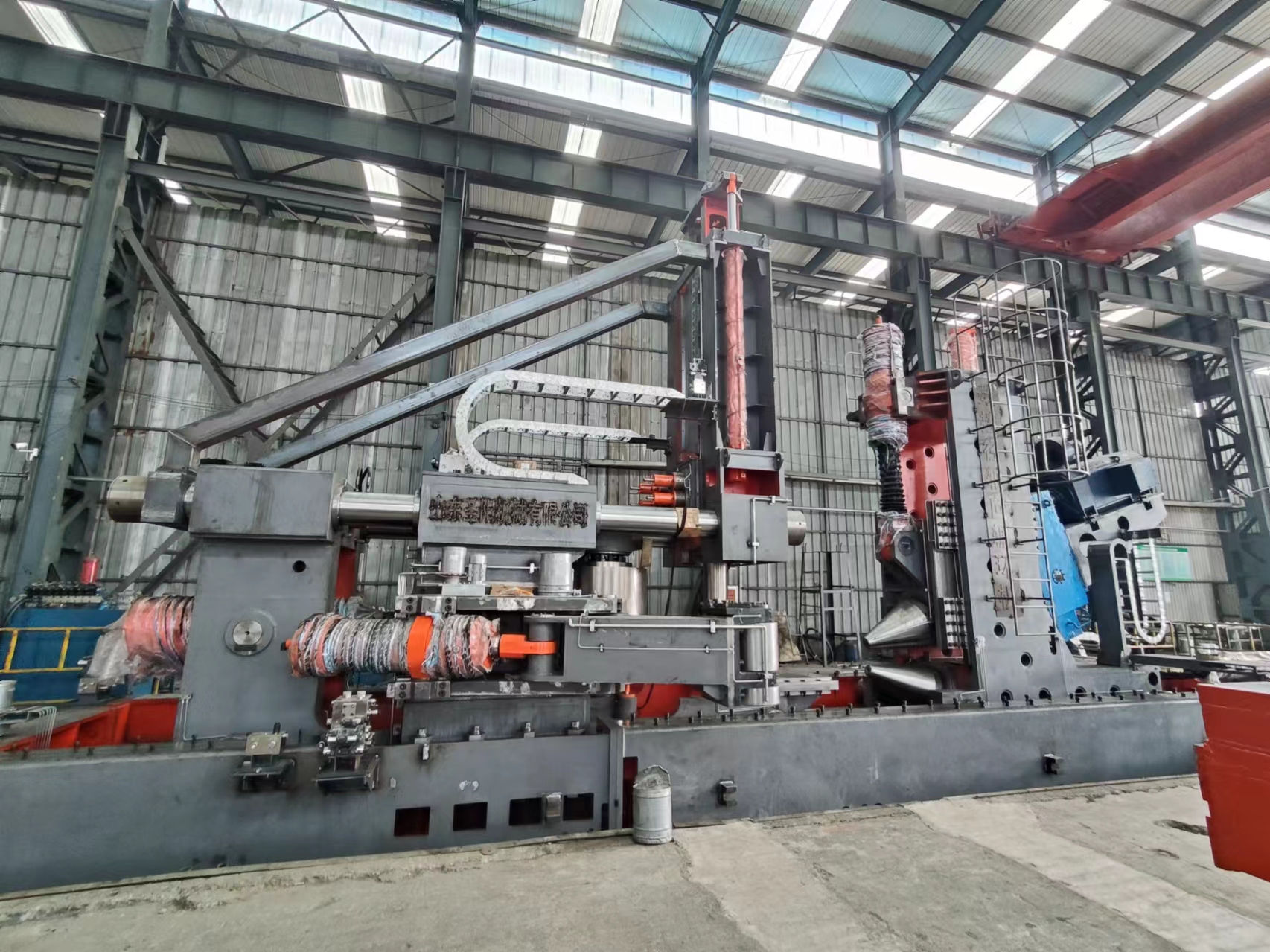
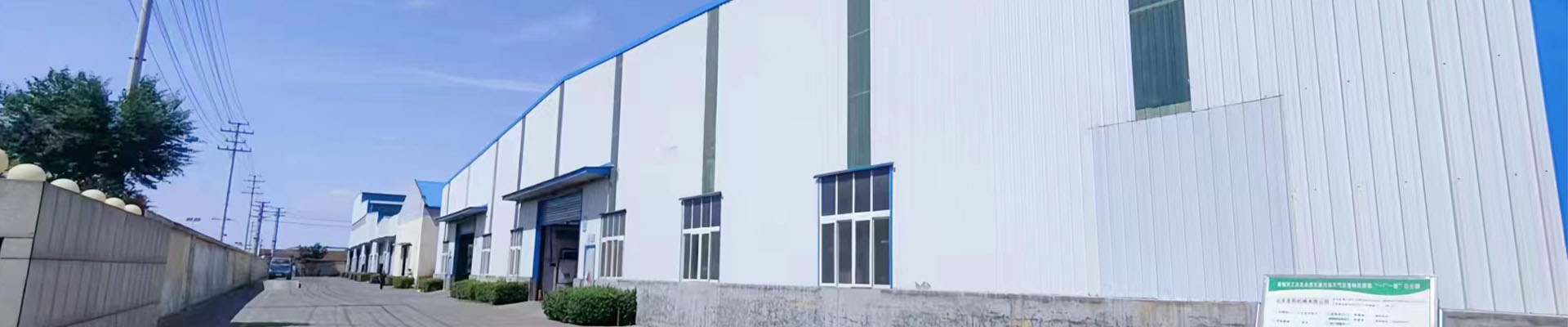
For example, let's takeShandong Shenyang Mechanical Equipment Co.,Ltd(their website isshengyangjxgroup.ru). They are positioned as a high-tech enterprise. I worked with their machines for rolling out bearing rings. What I can note: they have really well-developed mechanics for their price segment. The bed is massive, there is little vibration. On the plus side, they offer fairly flexible CNC customization to suit the customer’s technological process, not just a “standard package”.
But there were also negative experiences. We ordered a machine for rolling out titanium rings from them. Everything was agreed upon in the specification. However, during acceptance tests it turned out that the declared rolling force at the maximum diameter was achieved only at low speeds. And for our process we needed speed. Together with their engineers (who, by the way, responded promptly), we had to reflash the control program and slightly modify the hydraulic circuit. The machine eventually gets the job done, but not without reservations.
This is to the question that even sane manufacturers need to write out the technical specifications in great detail, especially for non-standard materials or modes. Their strength is that they are ready to solve problems and make changes that would be either impossible or incredibly expensive for many European brands.
This is perhaps the most painful question. Supply of spare parts. Even for large Chinese manufacturers, logistics of spare parts in the CIS can take 1.5-2 months at best. Therefore, when purchasing, it is critical to build up your stock of key components: position sensors, servos, hydraulic seals. On the websiteShandong Shenyang, for example, there is a section with spare parts, but prices and terms need to be clarified individually.
Engineering support. Now many offer online connection for diagnostics. This works, but adjusted for time zone and connection quality. It is much more valuable when the supplier has a trained Russian-speaking technician or partner in the region. The mentioned company, according to my information, prepares such specialists and sometimes sends them for complex commissioning work.
Documentation. It used to be a nightmare - Google translation. Nowadays, normal, albeit with some rough edges, technical documentation is often provided in Russian. Electrical diagrams, hydraulic diagrams - these should be mandatory. Make sure of this before signing the contract.
If you need a machine for serial production of simple rings with moderate accuracy requirements (tolerance +/- 0.5 mm and above), the Chinese version can be very economically justified. A benefit of 30-50% compared to the entry-level European analogue is serious.
If we are talking about complex profiles, high-precision products for aerospace or energy, then we need to consider not only the cost of the machine, but also the cost of possible downtime, modifications, and risks. Sometimes it is safer to take a used European machine than a new Chinese one with unpredictable behavior in harsh conditions.
There is a niche where Chinese manufacturers, includingShandong Shenyang, look interesting - these are non-standard, large-sized machines. Manufacturing such a machine from scratch? in Europe it will cost astronomical money. The Chinese undertake design and manufacturing for a specific standard size for more reasonable money. But the production time and risks with this approach are, of course, higher.
Chinese marketCNC ring rolling machinesno longer what it was. There are players who make high-quality, competitive equipment. But the approach to selection should be as down-to-earth and detailed as possible. Don’t trust catalogs 100%, look for reviews from real users, preferably in similar technological conditions.
Be sure to plan a long phase of acceptance testing in your production, with your materials. And budget and budget for possible improvements. Chinese manufacturers often cooperate, but this requires active communication.
In general, if you approach it wisely and without illusions, you can get a very decent machine for your money. But this is precisely a tool for those who are ready to “immerse themselves” in it, and not just press a button and forget. As, indeed, with any other complex technology.