Email support
syjx@shengyangringrollingmachine.com

2026-02-23
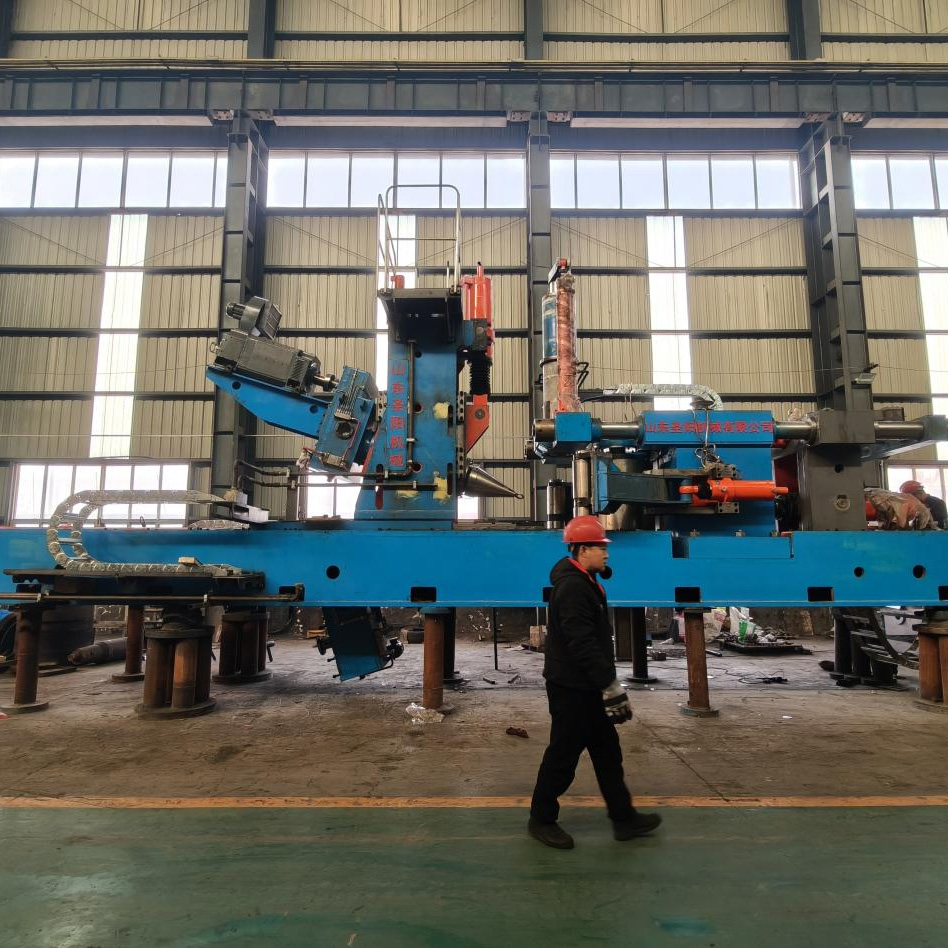
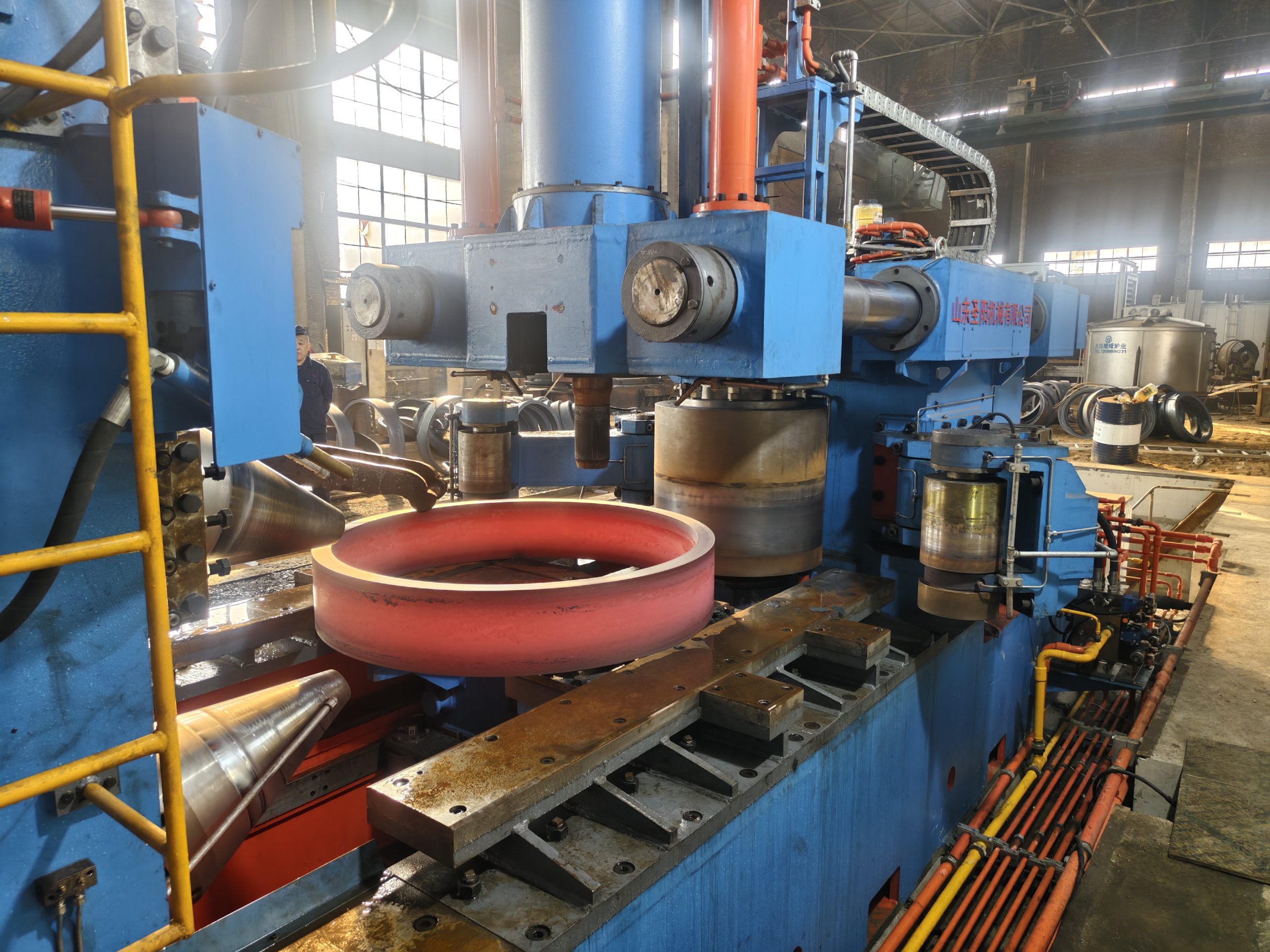
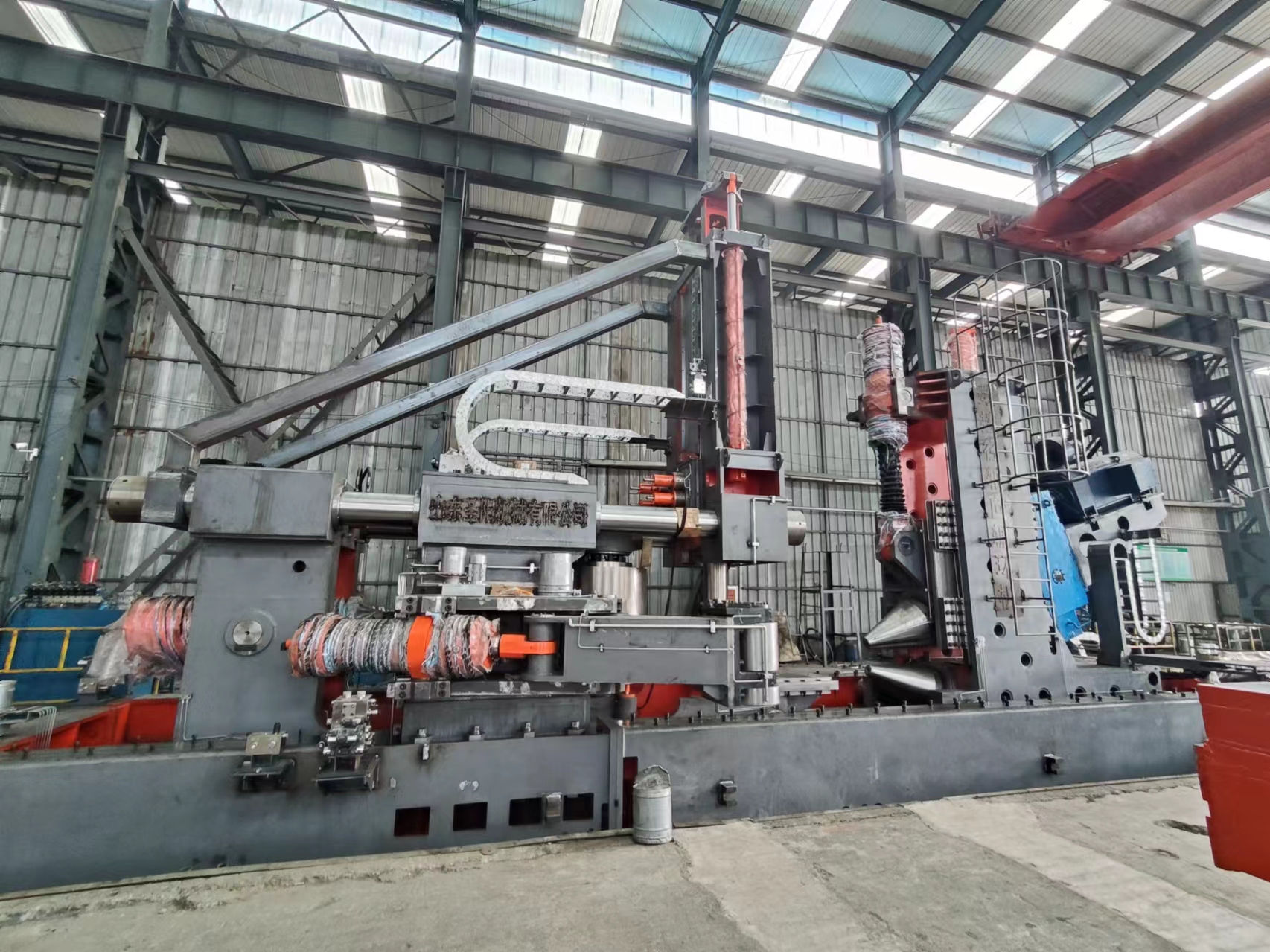
If you are looking for a Chinese supplier for CNC axial ring rolling, I’ll say right away that the main mistake is to chase the cheapest offer on Alibaba. There are a lot of resellers there who have not seen how the machine works. And when it comes to the accuracy of rolling rings for critical components, the cheap option almost always backfires - either the geometry is lame, or the servos begin to float after six months of work.
Many people think that it is enough to search for China CNC axial ring rolling machine and choose a factory with a beautiful website. In fact, half of such sites are trading companies that don’t even have a workshop. I myself once fell for a presentable catalogue, they sent me a video of the machine working - everything seemed to be going smoothly. And when I arrived at the reception, it turned out that the video was shot at another plant, and our machine was not adjusted, and the engineer could barely explain how to set the gaps. I had to refuse the deal, I lost time and my advance.
Therefore, now the first thing I do is demand a live broadcast from the workshop. Not a recording, but a live broadcast, where you can ask to turn the camera to the control panel, show a cabinet with controllers (they often install old systems, although the specifications indicate new ones). If the supplier delays or refuses, this is an immediate red flag.
Another point is that many people do not pay attention to the CNC system. The Chinese often skimp on this and install simplified versions or their own developments, the documentation for which is only in Chinese. Then, during operation, any problem turns into a quest. It is better to immediately negotiate the installation of proven systems, for example, Siemens or Fanuc, even if this increases the cost of the machine by 10-15%. It pays off in the long run.
Alibaba and B2B platforms are the front door, but nothing more. In my experience, there are few real contacts there. It is much more effective to watch industry exhibitions in China, for example, CIMT or MetalForming China. There you can not only see the equipment in operation, but also communicate with engineers and assess the level of training. At one such exhibition, I met a technologist, who then helped adapt the machine to our specific product range - rings with variable cross-sections.
It is also worth monitoring specialized industry portals where equipment reviews are published. The names of trusted factories often appear there. But it is important to look not at advertising articles, but at comments and discussions - sometimes they contain valuable remarks about childhood diseases of a particular model.
One proven option is direct visits to industrial clusters. For example, many engineering factories are concentrated in Jiangsu and Shandong provinces. When you go there with a clear technical specification, you can visit 3-4 production facilities in a week, compare the equipment of workshops, and the level of automation. Yes, it’s expensive, but you can see everything with your own eyes - how the assembly is organized, is there quality control at every stage. I remember at one factory I noticed that the machine beds were sandblasted before painting - a small thing, but it speaks volumes about the production culture.
Once you have a short list of candidates, the most important part begins—evaluating the details. The first is the design of the bed. Cheap machines often have a welded frame without sufficient heat treatment, which over time leads to deformation and loss of accuracy. Normal manufacturers use castings with artificial aging or normalization. Ask about this directly - if the answer is silence or general phrases, you should be wary.
The second key point is actuators and sensors. CNC axial ring rolling is a dynamic system where the synchronization of the axes is critical. I prefer Yaskawa or Mitsubishi servos to be used and absolute rather than incremental encoders. I once encountered a situation where, after a power failure, the machine lost its zero point - it turned out that they saved money on a battery for the encoder. A trifle that paralyzed work for half a day.
Third is the availability of engineering support. A good supplier will not just sell the machine, but will provide detailed setup instructions, train operators (preferably in Russian), and will also have spare parts in stock in the Russian Federation or at least in Europe. Clarify this question right away - if spare parts are delivered for 2-3 months, this means downtime and losses. By the way, some companies, for example,Shandong Shenyang Mechanical Equipment Co.,Ltd(website - https://www.shengyangjxgroup.ru), position themselves as high-tech enterprises with a full cycle - from design to service. These often have more sophisticated logistics and technical support, because they work not only for export, but also for the domestic market, where the requirements are high.
Recently there was a case - it was necessary to purchase an axial ring rolling machine for the production of large-sized bearing rings. Ovality accuracy is no more than 0.3 mm, material is alloy steel. We considered several options, including European ones, but the price was 2.5 times higher.
We settled on two Chinese manufacturers. The first is a well-known factory with a large sales volume, the second is less well-known, but with a narrow specialization in ring rolling equipment. We started with a request for commercial proposals. The first sent a template document with a bunch of general phrases, the second sent a detailed specification, which included steel grades for key components, the accuracy of axle positioning, even the results of wear tests on guides.
We went on an introductory visit. At the first factory they showed us the workshop, but they didn’t let us get close to the machine due to safety precautions. On the second, they immediately took me to a working machine, let me change the parameters in the CNC, and showed me the quality control log. An on-site technologist modeled our part in their software and launched a trial run. After this, the choice became obvious.
By the way, at the same factory I noticed an interesting detail - to adjust the gaps they use not just feeler gauges, but a laser measuring system. This is an indirect sign that the company is investing in precision, rather than working on the principle that it will do.
The most common mistake is skimping on pre-shipment inspections. Many people rely on a standard factory report, but it is often formal in nature. You definitely need to either go yourself or hire an independent inspector. You need to check not only the operation of the machine at idle, but also under load, with material as close as possible to yours. We somehow missed this stage - in the end the machine arrived, and when rolling rings from our steel (with a high chromium content), vibrations began. It turned out that the calculated rigidity of the frame was underestimated.
The second mistake is not clearly stating the terms of warranty and technical support. The contract must state that the guarantee covers not only the machine itself, but also the accuracy of the processing for a certain period (for example, a year). And also the response time to requests for problems - for example, a video consultation within 24 hours, a specialist visit if necessary - within 10 working days.
Third, underestimate the importance of staff training. Even the most perfectCNC axial ring rolling machine- it's just a tool. If operators do not understand the control logic and do not know how to make adjustments for a specific material, there will be no point. It is better to budget for a week-long training course at the manufacturer for two specialists. Yes, this is an additional expense, but it will prevent downtime due to stupid mistakes in the future.
So, to summarize my experience, finding a supplier is a multi-step filter. You should start not by asking for prices, but by studying the company’s profile. Do they have their own developments? Do they participate in industry exhibitions? What is the experience of supplying to the CIS countries or Europe (this is an indirect indicator of the ability to work with international standards)?
Then - deep technical correspondence. Ask tricky questions about kinematics, control systems, and component materials. Answers in the style of all quality are a bad sign. A good supplier will be willing to dive into the details, perhaps even offering to optimize your process.
And finally, personal contact and visit. Nothing can replace eyes and hands. Look at how the workplace at the machine is organized, how clean the shop is, how workers and engineers communicate with each other. This will provide more information than dozens of beautiful brochures. And remember that a reliable partner in China is not one who does everything cheap, but one who understands your tasks and is ready to be responsible for the result. Sometimes such a company may not appear on the first page of a search engine, but it is with this company that you will sleep peacefully.