Email support
syjx@shengyangringrollingmachine.com

2026-02-19
When people talk about Chinese equipment for ring rolling, many still mentally see outdated machines with manual controls and questionable accuracy. But reality, especially in the segment of cars with a bump stop, has moved far ahead. Here it is no longer just copying, but quite meaningful, and sometimes risky, engineering solutions born from specific production tasks. I would even say that the main innovation is not in individual components, but in the approach: how to make this machine work stably in conditions for which it was not originally intended.
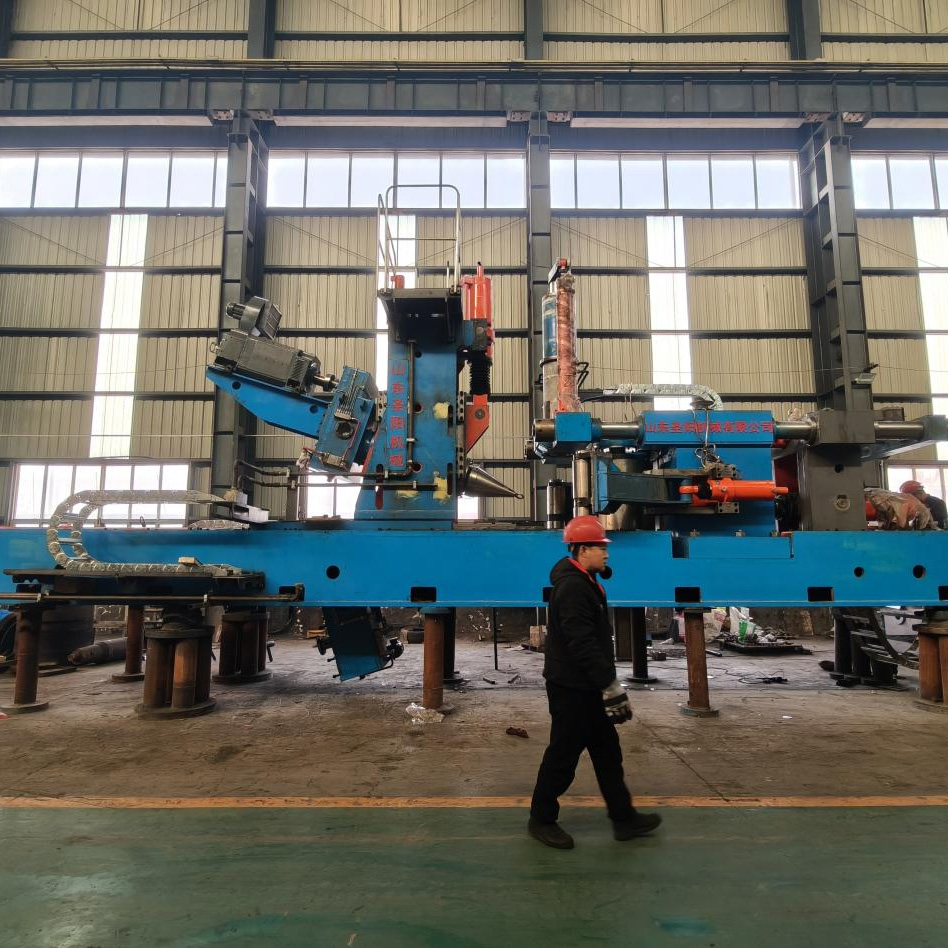
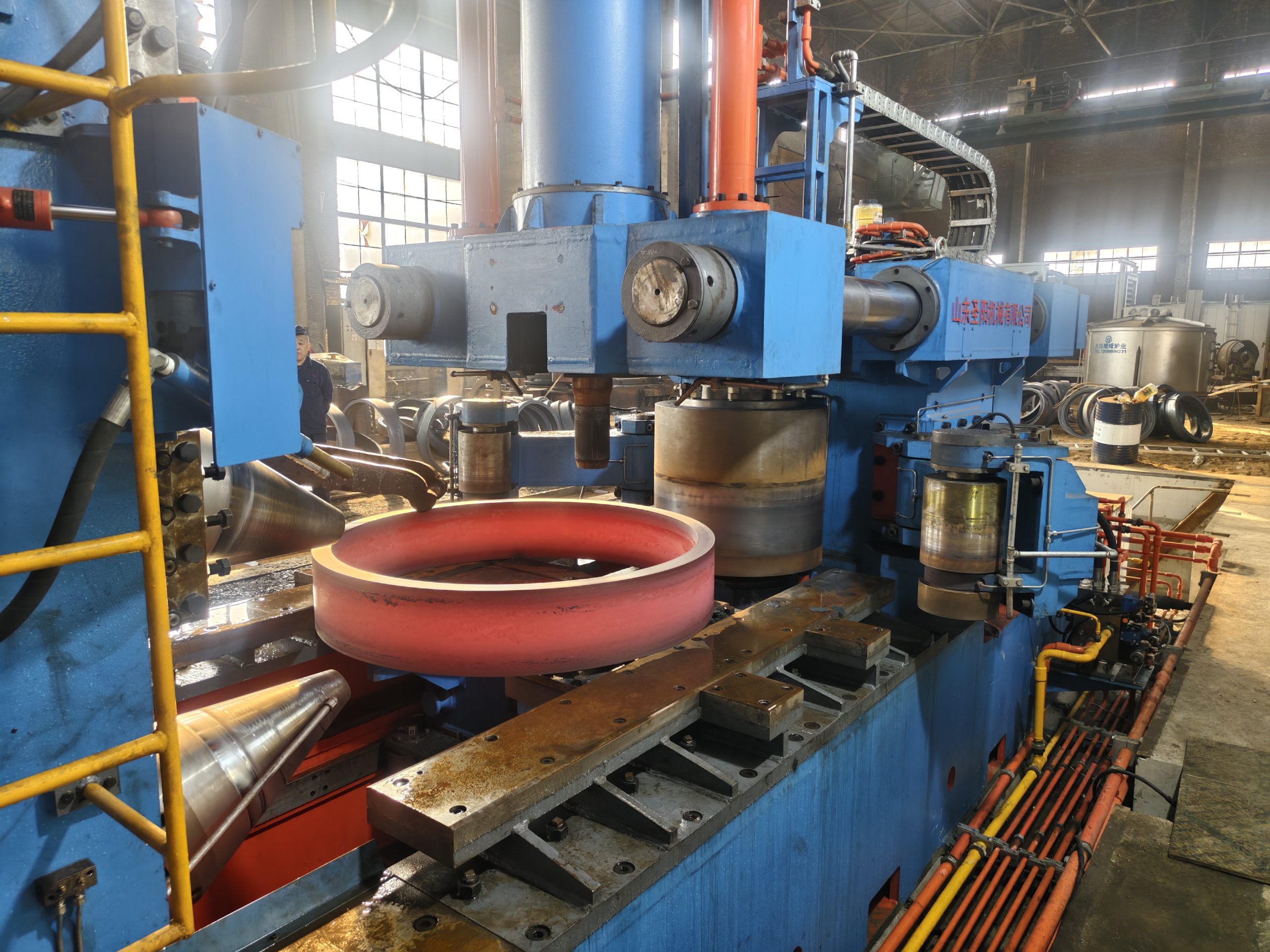
The term "ring rolling machine with a bumper" often causes confusion. Inexperienced buyers sometimes think that this is some kind of separate, especially powerful category. In fact, we are almost always talking about a standard radial forging or piercing machine, wherebumperis not the main character, but a critical element of the deburring or edge sizing system during the ring rolling process. Its role is to ensure the cleanliness of the contour, which directly affects subsequent processing and fatigue strength of the product.
The problem is that the classic European circuit is designed for ideal metal and stable temperatures. In real workshops, where a batch of hardened steel can be replaced by a batch of heat-resistant alloy, and the temperature in the furnace “walks”, this unit quickly fails or begins to “smear”. Chinese engineers, faced with this in their own factories, began to experiment not with the principle itself, but with the layout and materials.
I saw how at one of the factories in Jinan forring rolling machinesfor medium tonnage they tried to make a hydraulic fender with adaptive pressure. The idea was for the sensor to monitor the resistance of the metal and automatically reduce the force when it hits an internal defective area. Technically it worked, but in practice the system turned out to be too complex for daily maintenance by ordinary mechanics. The project was abandoned, but the developments in the material of the rod and the profile of the striker migrated to simpler models.
Where do these machines find their main application? If we ignore the advertising brochures, their niche is the production of large-sized rings for wind power, heavy engineering and, oddly enough, repair shops. The last segment is especially revealing. A small workshop that restores support rollers for quarry equipment does not forge a new ring, but builds up a wear layer on the old base. The geometry is curved, the material is a mixture of base metal and surfacing.
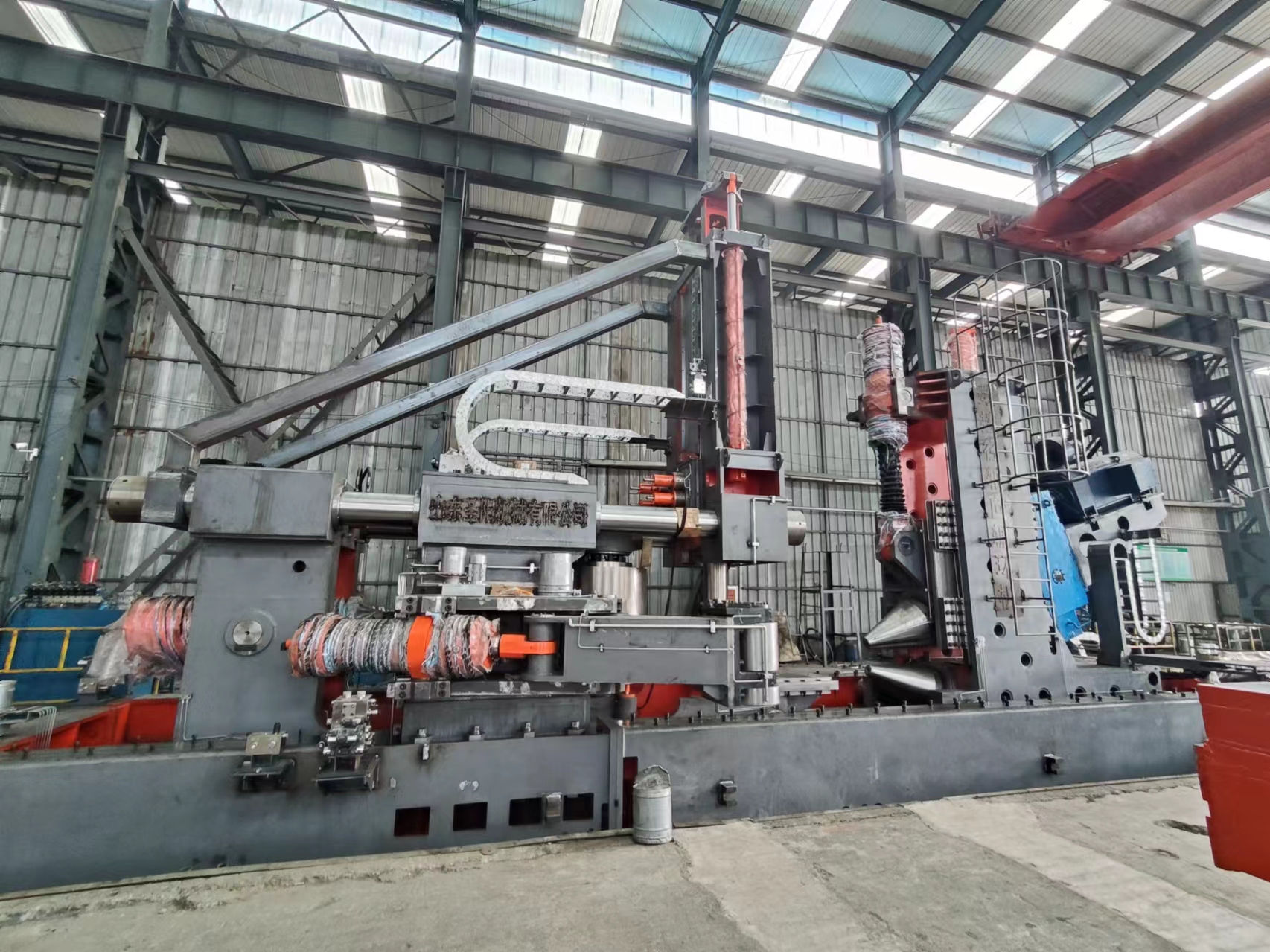
Here the standard bump stop either breaks or fails to cope. You need a tool with a large margin of safety and the ability to quickly manually adjust the stroke. It is precisely for such requests that some manufacturers, for example,Shandong Shenyang Mechanical Equipment Co.,Ltd, they began to offer cars with a duplicate bump control system - automatic and manual. On their websitehttps://www.shengyangjxgroup.ruone can see how the emphasis is placed precisely on the adaptability of equipment to “non-ideal” conditions. conditions. These are not empty words - their installations often come with a reinforced frame precisely in the area of this unit, as can be seen from the drawings in the technical documentation.
But there is also a downside. The desire to make the node “indestructible?” sometimes leads to excessive weighting of the entire structure and increased energy consumption. I remember the story of the car being delivered to a plant in Siberia. Local engineers praised the reliability of the fender after two years of work in an unheated workshop, but the accounting department was shocked by the electricity bills - the drive was constantly overloaded. I had to intervene and modify the soft start system already in place.
If you disassemble a specific unit, then all the “salt” innovation is often in the details. Let's take, for example, the guides of the bumper rod. Cheap models use standard steel bushings, which require constant lubrication and wear out quickly under lateral loads. More advanced manufacturers have switched to combined Teflon-coated plain bearings or even self-aligning ball bearings. The difference in price is 15-20%, and the difference in the service interval is several times greater.
Another point is the cooling system. During intensive work, the striker striker becomes hot and its hardness decreases. European cars often have a centralized system with a heat exchanger. Chinese analogues first tried to make do with air blowing, which was a clear mistake for working with titanium alloys. Now top models, like those that he designsShandong Shenyang, are equipped with compact contour liquid cooling systems built directly into the striker body. This solution, by the way, was borrowed from stamping press manufacturers and has taken root well.
But the biggest headache is synchronizing the stroke of the bumper with the rotation of the main roll. A delay of a fraction of a second results in a defect. Previously, this was solved by a purely mechanical connection through a system of shafts and gears. Nowadays, servos with digital controller dominate. It would seem ideal. However, when we tested one such machine, we encountered phantom crashes. It turned out that the interference was caused by an inverter from a nearby turning center. I had to shield the cables and ground the controller in a special way - a small detail that is not described in any manual.
The demand for such cars is not growing where expected. Not so much in large metallurgical holdings that purchase complex lines, but in the middle segment - from manufacturers of specific fasteners, large bearings and pipeline fittings. They need flexibility. Today we will roll a batch of rings for the flange, tomorrow - for the gearbox housing. And here is the opportunity to fine-tunebumperfor different edge profiles becomes a key argument when purchasing.
There is an interesting trend towards “hybridization”. Instead of purchasing a separate ring rolling machine and a separate wrapping press, customers are increasingly looking for combination solutions where both processes are integrated. This requires a completely different kinematics from the bump stop - not just translational movement, but a complex trajectory with a twist. Not all manufacturers cope with this task. Previously mentioned companyShandong Shenyang Mechanical Equipment Co.,Ltdpositions itself as a high-tech enterprise, and their developments in the field of combined operations are just an attempt to respond to this market request. Their latest concepts at exhibitions confirm this.
However, the market is tough. The best innovations are quickly copied, and patent protection in this segment is poor. Therefore, real competition is shifting to the service sector: speed of delivery of spare parts, quality of training materials for operators, availability of engineers who are ready to fly in and deal with the problem on the spot. A machine with a bumper is not a machine that can be turned on and forgotten. This is a tool that requires understanding. And those who sell this understanding along with steel and electronics ultimately win.
So is there innovation? Undoubtedly. But they are down to earth, hard-won and often to the point. This is not a revolution, but an evolution, driven by practical failures and the desire to save on operation. The future, in my opinion, lies not in increasing power, but in “intellectualization?” this seemingly simple node. Embedding vibration sensors to predict striker wear, using machine learning algorithms to optimize force in real time depending on rolling noise - such experiments are already being conducted in laboratories at factories.
But it will be implemented slowly. The workshop is a conservative environment. The master needs a lever, a button and confidence that if he hits a jammed rod with a sledgehammer (yes, this happens), nothing will break. Therefore the next generationring rolling machines with a bumperwill most likely be dual-circuit: ?smart? electronic filling for ideal conditions and a reliable, simple emergency manual mode for all other cases. The balance between high technology and the harsh reality of production is where the main challenge lies for Chinese, and not only, engineers today.
In the meantime, when choosing equipment, you should look not at beautiful renderings, but at the insides. Ask the supplier what steel the striker is made of, how the chips are removed from the contact zone, and whether the design includes a safety clutch in case of overload. The answers to these questions will say much more about the innovativeness of the machine than any brochures.