Email support
syjx@shengyangringrollingmachine.com

2026-03-02
When you hear about Chinese rail forging manipulators, the first thought for many is “well, cheap, I guess?” And this is the main mistake. Over the past five to seven years, the situation has changed dramatically. I myself have encountered both German units and local developments in production, and I can say: now it’s not just about price, but about what specific problem needs to be solved in the workshop. Innovation here is not about fancy words in a catalog, but about real work with workpieces weighing 8-10 tons, when every millimeter of positioning and smoothness of movement is a question of both safety and quality of the forging. And reliability... Well, this is a separate long conversation, often contrary to expectations.
Previously, the main argument against Chinese technology was the resource of power units - hydraulics, gearboxes, guides. Let's just say that ten years ago the fears were unfounded. I remember, on one of the old samples, I was constantly “swimming” accuracy of the manipulator stopping on the rails after six months of intensive work. The fault was not so much the rail track itself, but the system for fixing it and compensating for gaps, made, to put it mildly, without taking into account our realities with temperature changes and dust.
But now, if we take the products of companies that have seriously entered the international market, the picture is different. I have seen manipulators in operation that use a modular portal design and an automatic lubrication system for rail pairs. These are not space technologies, but they are precisely so “inconspicuous”? innovations provide that same resource. The key change is the design approach. Previously, they often copied the general diagram, but now they count loads, cycles, and lay down specific materials. For example, for critical connections they use alloy steels of certain grades, which immediately eliminates a lot of problems with fatigue strength.
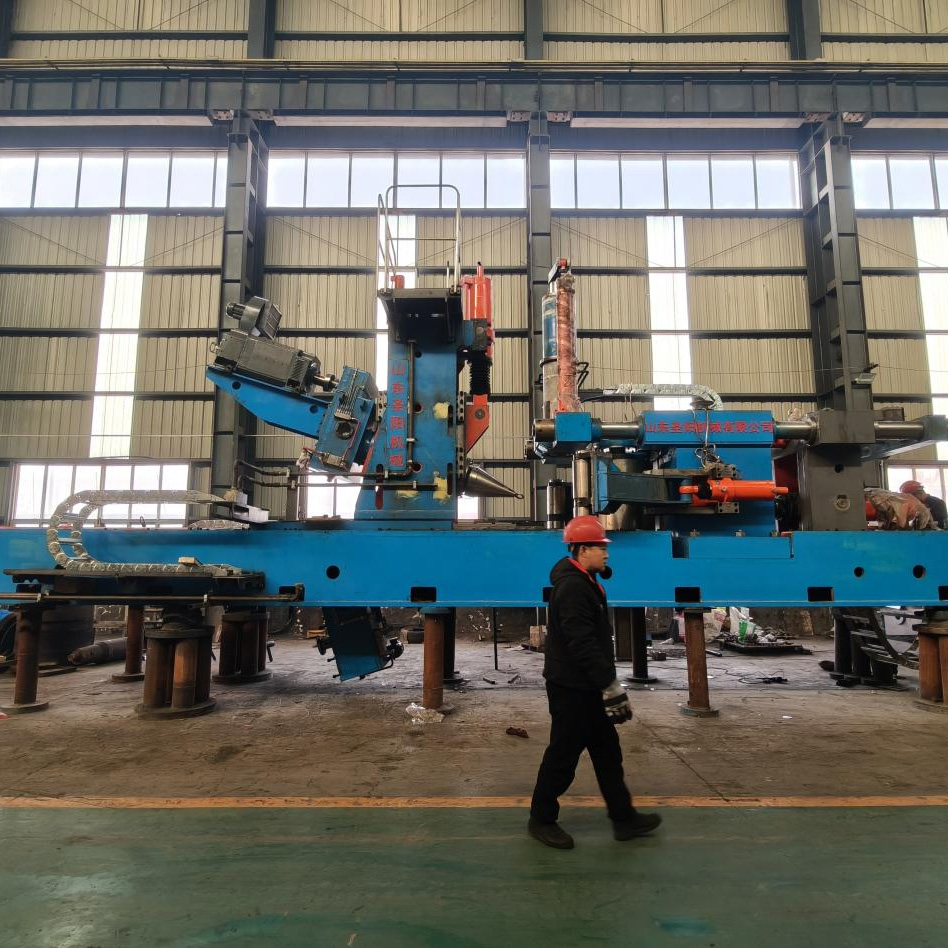
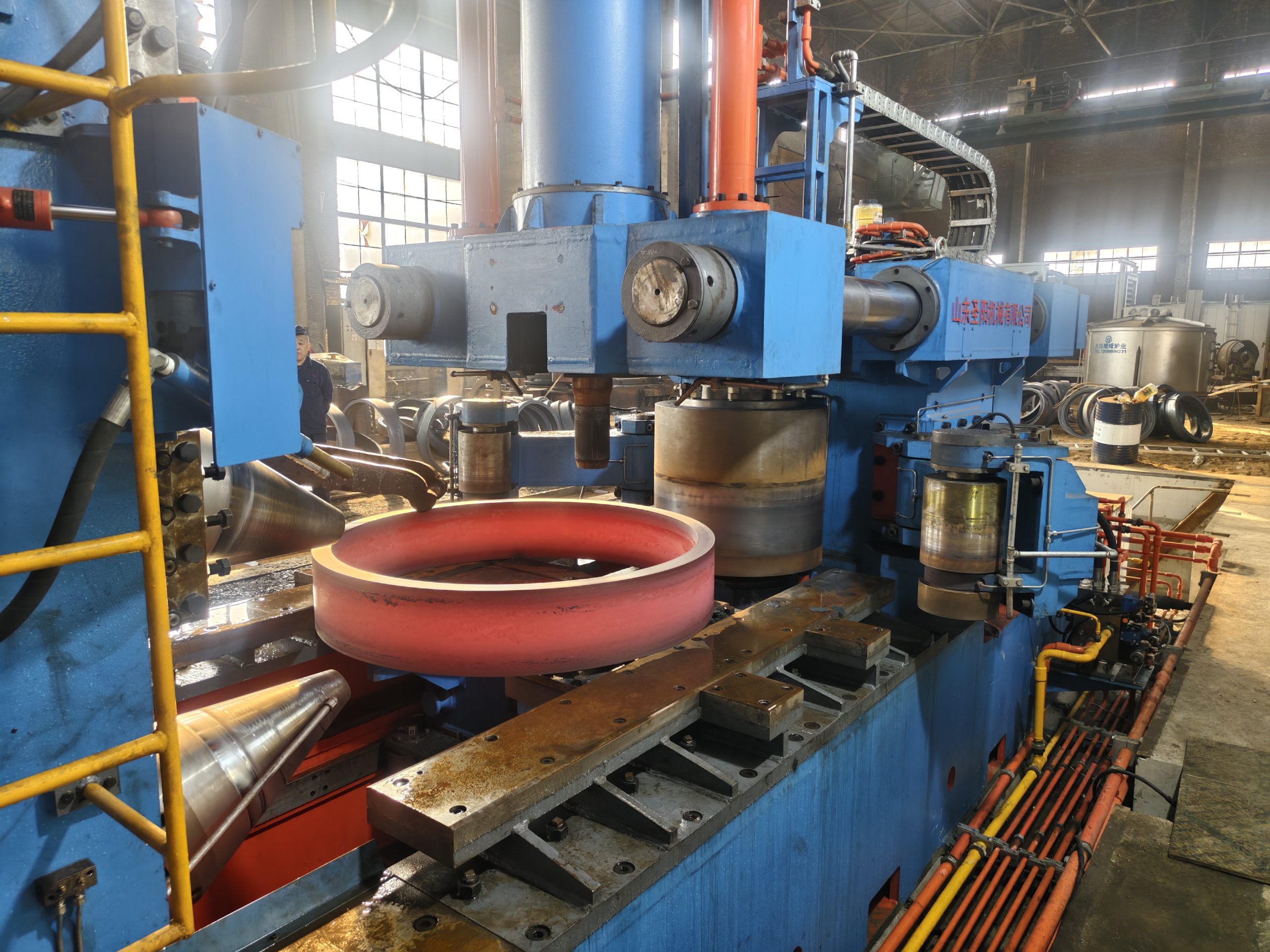
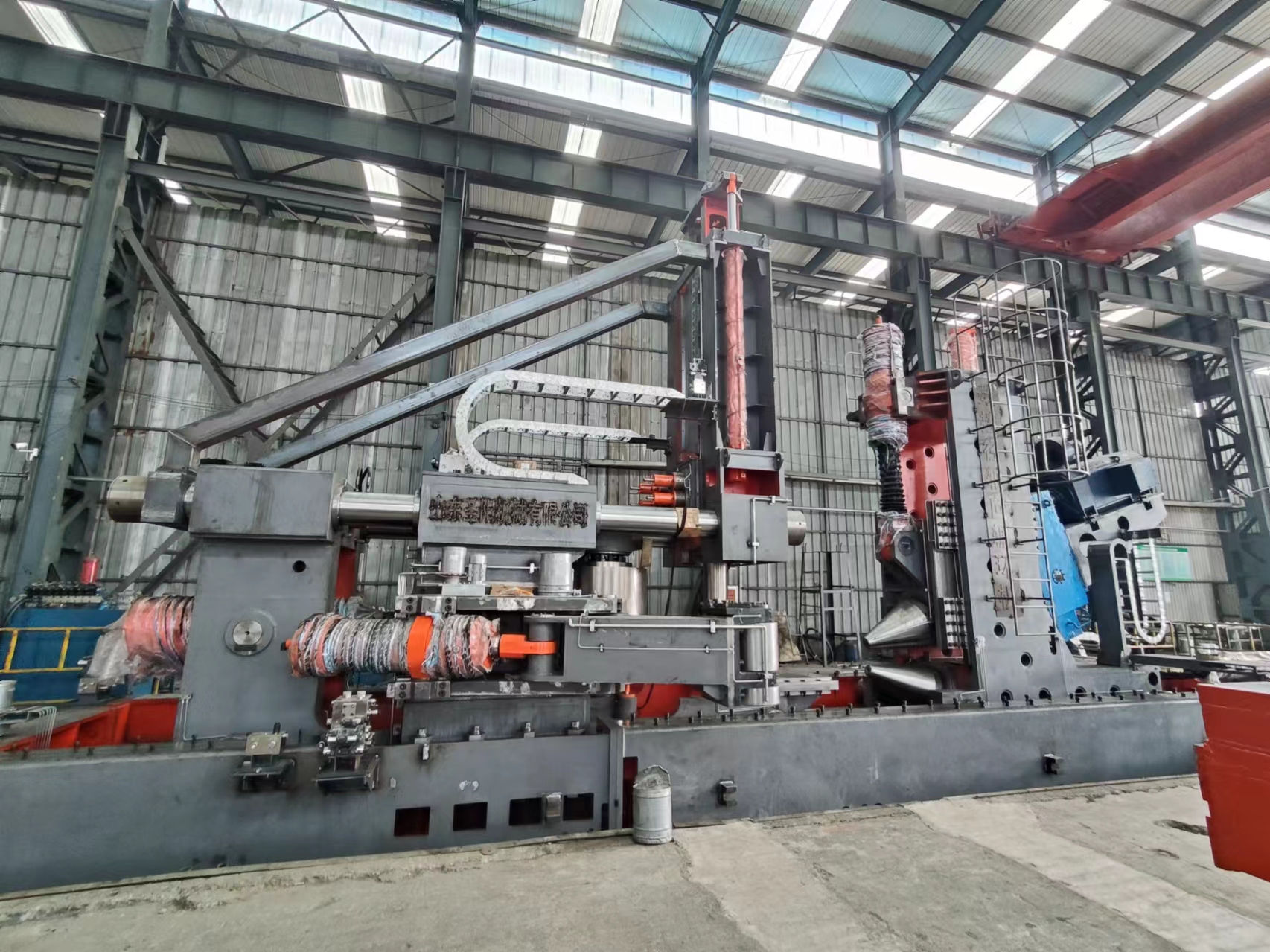
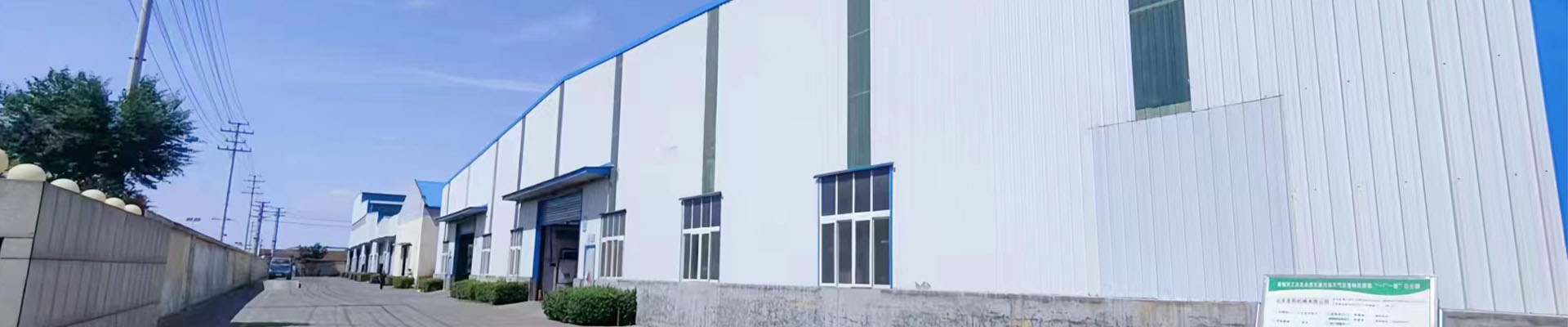
It is worth mentioning a specific player here -Shandong Shenyang Mechanical Equipment Co.,Ltd. I'm not familiar with their technology from brochures. Their websiteshengyangjxgroup.ru- this is, in fact, an open base for their developments. What is important is that they position themselves as a high-tech enterprise, and in the case of their forging manipulators, this is not an empty phrase. I studied their solutions for the gripper movement synchronization system - it uses not just a frequency converter, but an algorithm that compensates for inertia when working with asymmetrical workpieces. This is exactly the case when engineering thought is visible in the details.
Reliability for such equipment is not the mean time between failures from the passport. This is the answer to simple questions: how does it behave when the crew changes, when the operator is not “native”, but a stranger? How does it handle an accidental impact with a workpiece on a structure? How does it react to voltage fluctuations in the workshop network? It is on these points that modern Chinese models, from the same Shenyang, show themselves very worthy.
From personal experience: at one of the enterprises the task was to replace an outdated manipulator. They installed a new one, rail, with CNC. The first thing we noticed was the self-diagnosis system. It didn’t just display an error code, but in the local language (Russian) it wrote, say, “pressure drop in the clamp circuit, check the G4 filter?”. Is this a small thing? For a mechanic who spends an hour deciphering a manual, no. This is a direct indication that the manufacturer thinks about operation.
There was also a negative experience, where without it. Once I encountered the problem of "floating" bug in the software. The manipulator periodically, once every several hundred cycles, slightly brought the workpiece to the correct position for the press. The manufacturer, I won’t name him, first referred to vibrations. But when we started logging all the parameters on our own, it turned out that the failure was caused by the absolute position sensor, which at a certain temperature in the workshop began to “lie”. The problem was solved by replacing the sensor with a model with a different type of encoder. Conclusion: innovation in hardware must be supported by the same development of software and hardware components. Now, by the way, many, includingShandong Shenyang, offer remote monitoring of such parameters, which greatly simplifies life.
Innovation in this area is often understood as robotization. But for the forging manipulator, the main innovation is increased predictability. Take, for example, the adaptive grip force control system. Previously, the clamping force was set by eye? or according to the table. Too weak and the workpiece may slip out; too strong and you can damage it or quickly wear out the jaws. Now advanced models have a system that regulates force in real time depending on the weight, temperature and even geometry of the forging. This is not for show, it is a real saving on equipment and increased safety.
Another point is energy efficiency. A rail manipulator is not the biggest consumer in a workshop, but if it works in three shifts, the electricity bills are significant. Modern drives with energy recovery during braking are no longer exotic. I saw how on a test bench such a system generated 15-20% less kilowatts in a month compared to the old model. For the plant director, these are specific numbers in the cost reduction report.
And of course, ergonomics. Operator's cabin. It would seem, what's new there? But when the operator spends 6 hours at the console, every detail is important: visibility, joystick placement, screen information content, noise insulation. Chinese manufacturers began to actively involve ergonomists in this. The result is less fatigue, fewer mistakes. On one of the projects, they specifically chose a model where the operator’s seat and console could be adjusted to a specific person. Trifle? No, this is a concern for ensuring that the key link - the person - works effectively.
I would like to give an example of a not-so-smooth, but instructive implementation. One medium-sized enterprise decided to install a new rail manipulator for working with rotor forgings. We chose a model with the maximum, as it seemed then, degree of automation. Everything according to the passport was perfect: load capacity, speed, and accuracy. But they did not take into account one nuance - the specifics of preparing stamps. They had an old system where the dies were heated with gas burners before installation, right next to where the manipulator was working.
And so, after a month of work, malfunctions began in the positioning system along the Y axis. It turned out that the heat flow from the burners created local overheating of the rail in one area, which caused microdeformations, which were enough to throw off the calibration. The manufacturer, to his credit, did not make any excuses. Together with our technologists, we developed and installed a simple heat-reflecting screen and added an additional temperature sensor to the rail beam. The problem is gone. This case clearly shows that even the most innovative and reliable manipulator is part of the technological chain. It needs to be integrated correctly, and for this, a dialogue with a supplier who is ready to delve into the process is invaluable. It is companies such asShandong Shenyang Mechanical Equipment Co.,Ltdthat declare a high-tech approach often turn out to be more flexible in solving non-standard problems than some “promoted” ones. brands.
So what's the bottom line? The Chinese rail forging manipulator today is no longer just a “budget alternative”. This is a technique that can be very competitive precisely in terms of its combination of functionality, reliability and price. But with an important caveat: you need to be very careful when choosing a supplier. Look not at glossy pictures, but at real reviews from similar production facilities, the availability of service support in the region, the manufacturer’s willingness to provide detailed calculations and, if possible, visit existing facilities.
Innovation here has shifted from the realm of “making it more powerful?” in the field of “making smarter and more resilient in real conditions?”. We are talking about intelligent control systems, predictive analytics for maintenance, and the use of new composite materials to reduce the weight of the portal. Reliability is ensured not by blind copying, but by deep design development, high-quality element base (progress is obvious here) and, what is extremely important, close feedback from operators.
Personally, I believe that we will see further convergence in the coming years, with top Chinese manufacturers such as Shenyang increasingly matching the quality of European leaders while maintaining an advantage in price and flexibility. And their products will become a standard, and not exotic, choice for the modernization of forging and press shops not only in the CIS, but also beyond. The main thing is not to be afraid to look towards these decisions, but to do it with open eyes, asking the right questions and demanding specific answers, not marketing slogans.