Email support
syjx@shengyangringrollingmachine.com

2026-02-06
When you hear about Chinese balers for mini tractors, many people immediately have an image of something cheap and disposable in their minds. Sound familiar? I thought so myself about ten years ago, until I started working closely with machinery on small farms and saw how everything had changed. Now this is a completely different conversation - not about the price, but about how they actually work in the field, and what is behind it.
Previously, the main argument against Chinese technology was its unreliability. Everything broke, from pins to hydraulics, especially under load. But now, if you look at the catalogues, you can see that the focus has shifted. We are no longer just talking about copying old European models, but about our own developments for specific tasks. For example, for working on slopes or with wet hay. This is not marketing - I have seen such machines being dragged across our uneven fields.
Let's take, for example,balerswith variable pressing chamber. The idea is not new, but Chinese engineers have improved it - they have made the adjustment mechanism simpler and more accessible to the operator directly from the cab. I won’t say that this is a revolution, but such a little thing in the field saves time and nerves. True, the first versions of these systems suffered from dust - customers complained that the bearings became clogged over the course of a season. Manufacturers, apparently, have listened: new models are equipped with reinforced oil seals and protective covers. Small? Yes. But it is precisely these little things that give the impression of reliability.
Another point is materials. Previously, they often saved on steel for frames and shafts. Now, at least at reputable factories, there is clear progress. I myself compared the thickness of the metal on the frame of a five-year-old model and a new one - the difference is noticeable. This is not a guarantee, of course, but it already speaks of the approach. Although there are nuances here: sometimes, in pursuit of strength, the structure is made heavier, but formini tractorsEvery extra kilogram means a loss of power and an increase in consumption. Balance is difficult to find.
Articles often write about “breakthrough innovations”. In practice, most of the improvements are smart adaptations to real conditions. Chinese manufacturers have begun to actively use data from dealers and end users, especially from the CIS countries, where operating conditions are harsh. For example, the problem of freezing of pulleys and belts in winter - they began to solve it by offering optional heating systems or simply switching to a different rubber composition in belts.
An interesting case is bale wrapping systems. A classic problem: cheap twine breaks, expensive twine makes the process more expensive. Some Chinese brands, the sameShandong Shenyang, took the path of simplifying and strengthening the mechanism of the needle and the binding unit. Instead of complex electronics, there are reliable mechanics that can be repaired in the field with a wrench. This is not high-tech, but for our farmer, who is 100 km from the service center, this is the main innovation.
Electrics and “smart” systems is a separate topic. Fill sensors and bale density control are no longer uncommon even in the middle price segment. But here reliability is still lame. The sensors become clogged and the contacts oxidize. I saw how a new machine, after two weeks of work, “glitched?” control Panel. The dealer, of course, changed the block, but the residue remained. Conclusion? There are innovations in electronics, but their implementation is faster than testing for durability in difficult conditions.
Reliability is not a parameter that can be assessed from a catalogue. This is a story that is written in seasons. I remember onebalerfor the mini tractor that we tested five years ago. It looks strong and well assembled. The first season went off without any complaints. And on the second, the bearings in the drive of the pressing mechanism began to crumble. It turned out that the calculated load was underestimated - the designers did not take into account our dense soils and frequently encountered stones. The manufacturer then released a modification with reinforced components, but those who bought the first batches had a hard time.
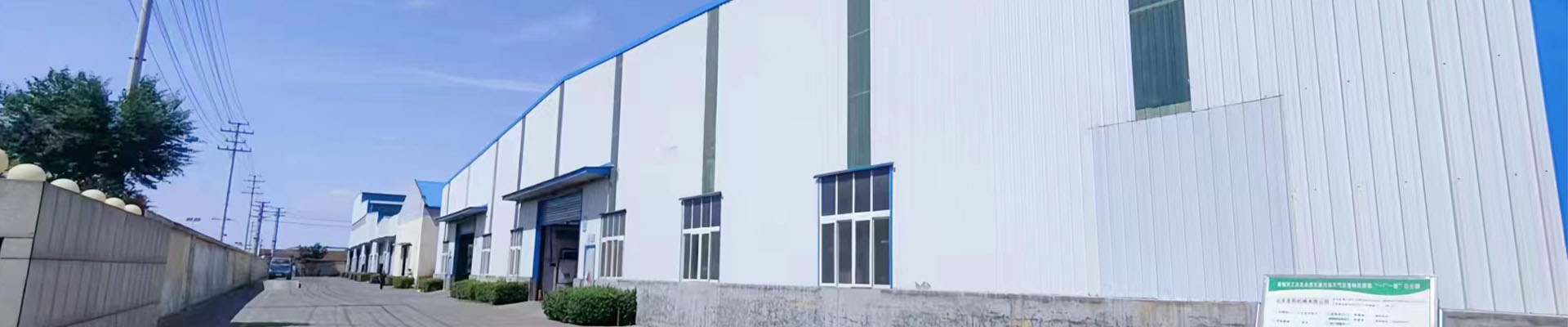
Now the situation is different. Many large factories, includingShandong Shenyang Mechanical Equipment Co.,Ltd(their website, by the way,shengyangjxgroup.ru, quite informative), openly publish reports on resource testing. Numbers in hours between failures. This is already a serious request. Their positioning as a high-tech enterprise is not just words. It can be seen from the design of their latest models for mini-farms: they use laser cutting for precision parts, cameras to control the quality of welds. Such things ultimately influence whether the seam will come apart after three years.
But the most important indicator for me is the availability of spare parts on the market. Previously, buying an original bearing or belt for a Chinese device was a quest. Now normal suppliers, including the mentioned company, have spare parts warehouses in the region. And this is perhaps even more important than minor technical improvements. Because any equipment breaks down. The question is how quickly it will be fixed.
Based on what I saw and what I tinkered with, I will give some non-obvious tips. Firstly, do not chase the maximum working width for yourmini tractors. Often the engine power simply won’t support a wide camera, especially on an ascent. It is better to take a narrower model, but one that will work stably, without overload.
Secondly, pay attention not to the main gearbox (everyone remembers about it), but to the drive of the knitting machine. This is a very loaded unit with a lot of back-and-forth movements. Ask the dealer to show it disassembled or at least a photo. The quality of the gears and the presence of protective covers will say a lot.
Thirdly, take an interest in the history of a particular model. If it has been on the market for 3-4 years, there should already be reviews, the “generic” ones should be known. sores. Ideally, the manufacturer has already released a second or third modification where these problems have been eliminated. Silence is not always a sign of quality. Sometimes this is a sign that equipment is simply not being bought.
So, returning to the main question... Yes, Chinese manufacturers have seriously taken up the topic of innovation and reliability in the segment of balers for mini tractors. This is no longer the same situation as it was ten years ago. But it is important to understand: this is not a homogeneous mass. There are leaders who invest in R&D, testing and spare parts logistics, like the same company from Shandong. And there are those who still work the old fashioned way, chasing only low prices.
The choice has now become more difficult, but also more correct. Previously, you bought, roughly speaking, a pig in a poke. Now you have the opportunity to study, compare, and read reviews from real users in similar conditions. Innovation has become more down-to-earth, aimed at solving specific field problems. And reliability... Well, reliability is still bought by experience. Only now this experience is not only your bitter one, but also accumulated by the community of farmers and dealers, which manufacturers have finally begun to hear.
Personally, I see positive dynamics. And if previously I recommended equipment from this category only for non-essential work or with a very limited budget, now some models can already be considered as the main tool for a small but serious farm. With reservations, yes. But the fact remains that the market landscape has changed, and it is changing towards greater thoroughness.