Email support
syjx@shengyangringrollingmachine.com

2026-01-11
If you are looking for equipment for the production of chains, sooner or later you will come across this specific request. I’ll say right away: the term itself is “ring rolling machine with a jackhammer”? This is often a sign of a lack of understanding of the process. People are looking for a universal unit that both rolls and immediately “beats” back. something. In reality, everything is more complicated and, as a rule, is divided into operations. But under this formulation lies a whole layer of Chinese equipment for chain production, from rather crude to truly competitive models. Let's understand it without gloss.
When you hear a jackhammer? in the context of chain rolling, the first thought is hammering for deburring or coining. And this is close to the truth. Often we are talking about built-in or accompanyingforging hammer(sometimes pneumatic), which brings the shape of the link after bending and joining. This is especially critical for anchor, traction, and high-strength chains, where the geometry and density of the joint is a safety issue.
Here is a classic picture: the link comes out of the rolling mill, it is closed, but the joint is not perfect. Then it is sent under the press or, as they often say in the shops, “under the hammer.” This is not a construction hammer, of course, but a specialized forging apparatus. Some Chinese manufacturers, especially those making heavy chain equipment, do integrate this operation into a semi-automatic line. But calling it a single machine is a gross oversimplification.
The problem is that the search for such a combined solution often leads to general-purpose machines that do not cope well with specialized tasks. I once saw a setup where there was a “hammer?” tried to compensate for the inaccuracy of the rolling rolls. The result was a 15% defect rate, constant adjustment and vibration that shook the entire structure. So the first rule is: separate operations. Good rolling and good forging are often two different machines that work harmoniously.
The market here is wildly diverse. I roughly divide it into three echelons. The first is small workshops that copy old Soviet or early Chinese models. They sell through Alibaba, made to order. The price is ridiculous, but the risks are huge: the drawings may not match, the metal is weak, assembly is difficult. Such people can actively use “jackhammer” in the description, because it sounds solid and powerful. In reality, you get a pneumatic cylinder from a tractor that hits without any control of force.
The second echelon consists of serious factories with their own design bureaus and test benches. They make machines for the domestic market and for export to developing countries. Their equipment is more reliable, there is service and documentation. This is where you can find adequate solutions to complete the line, where the rolling mill and forging hammer are designed to work together. Often they offer an option - you can buy only rolling, or you can buy it with an upsetting/piercing block.
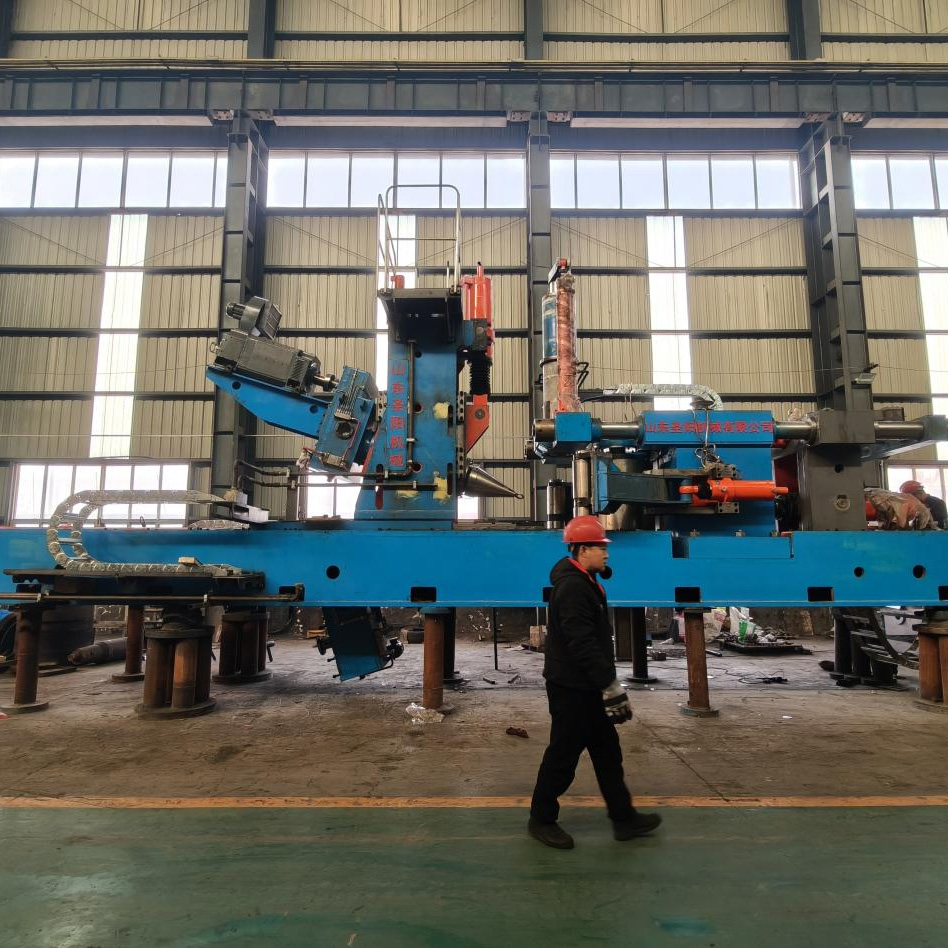
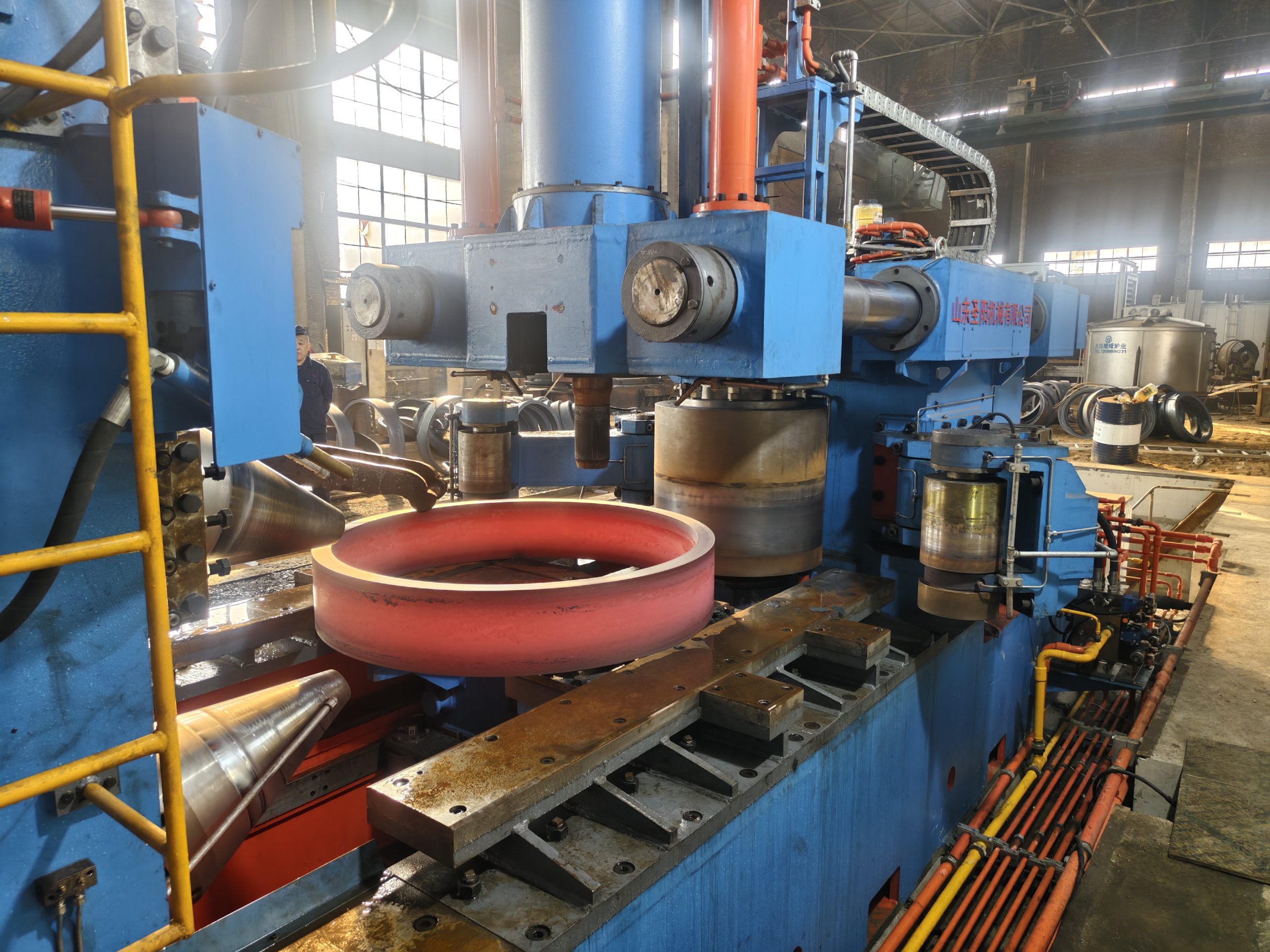
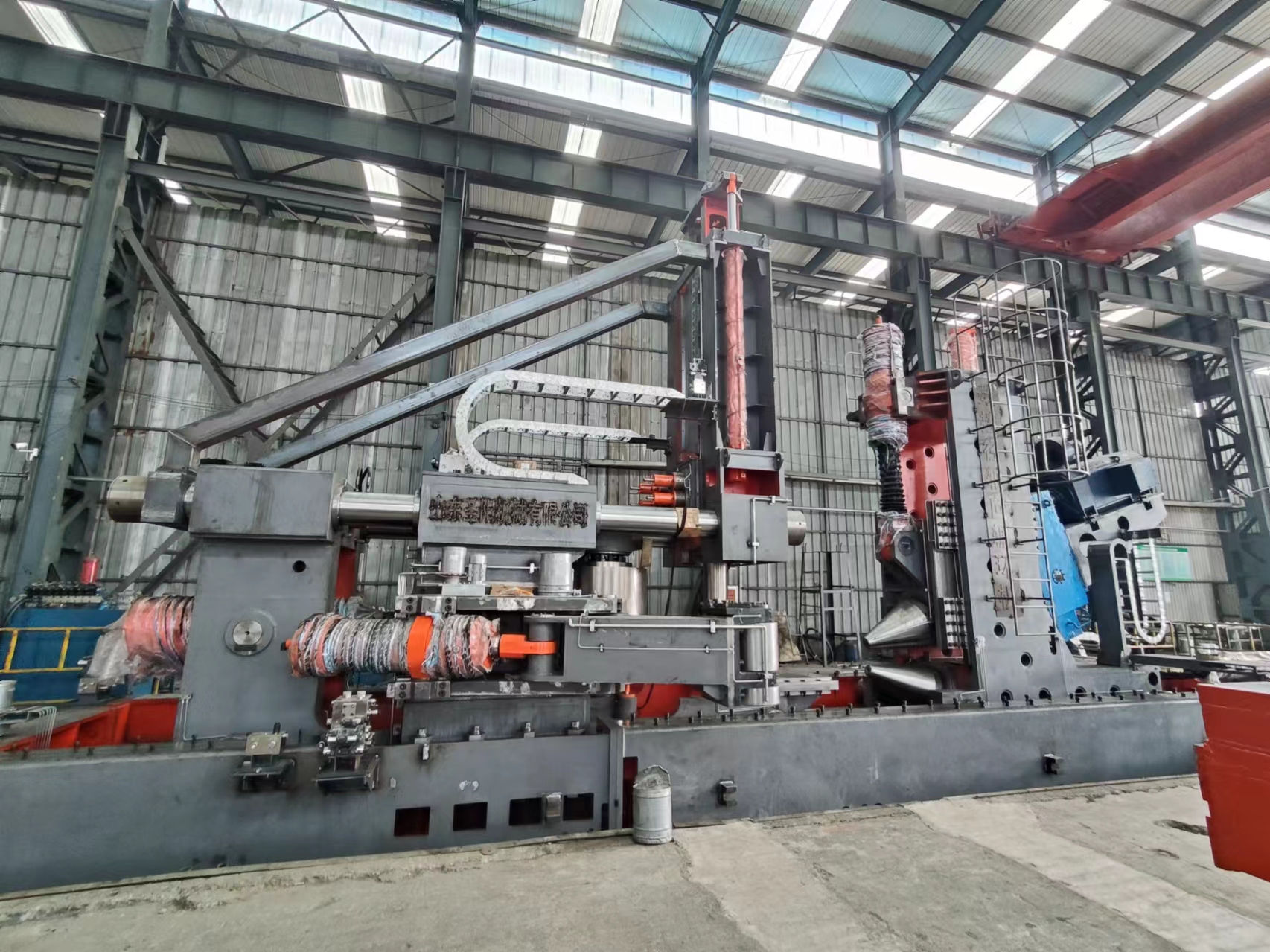
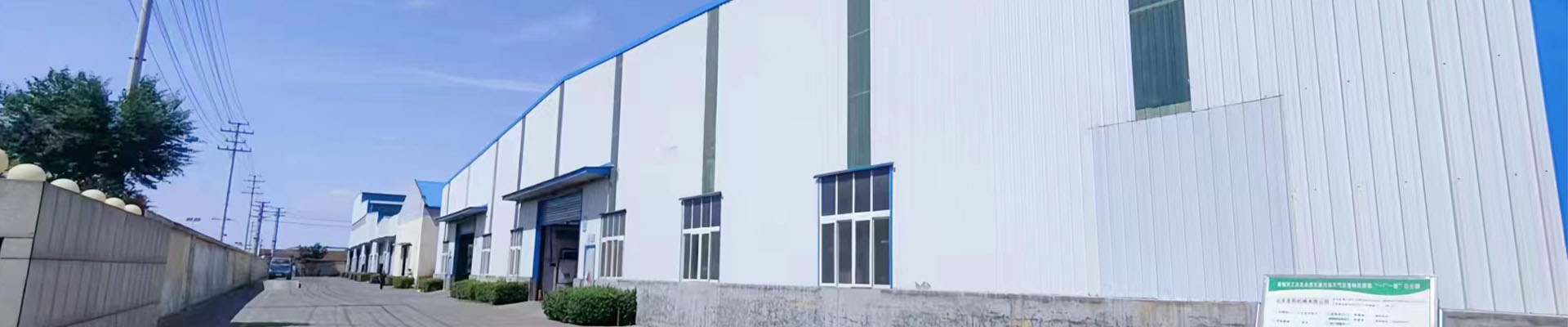
The third echelon consists of companies that purposefully enter the international level with quality close to European ones. They play less with marketing terms and speak more in the language of parameters: rolling force, accuracy, roll life, degree of automation. They have a ?hammer? is not just an impact unit, but a controlled hydraulic or electromechanical CNC press. There are fewer such manufacturers, but they exist. By the way, if you look at the siteShandong Shenyang Mechanical Equipment Co.,Ltd (https://www.shengyangjxgroup.ru), it is clear that the company positions itself precisely ashigh-tech enterprise. Judging by the descriptions, their product range includes not just individual machines, but complex solutions for chain production, where the link forming stage (that same “impact” processing) is part of the technological cycle. This is already a second or third echelon approach.
Take a break from the big name. When evaluating any ?ring rolling machine with a hammer? go into detail. The first is the rollers. What material are they made of, is there hardening, how is their replacement organized? Cheap machines have terrible runout and end up with different sized links. A hammer won't fix it later.
The second is the bar feed mechanism. Often the weakest point. Irregular filing is a guarantee of marriage. Look at the drive and control system.
And the third is the actual striking or forging unit. If it is pneumatic, what pressure is required, is there a stabilizer? If it’s hydraulics, what is the accuracy of the move, is there a cooling system? I saw a situation where, due to overheating of the oil during the summer shift, a hammer? began to be delayed, and the links could not be pressed. I had to install an additional heat exchanger.
And most importantly, request a video of work with exactly the type of chain you need to do. Not a demo video, but a long shoot. Look at the stability of the cycle, the ejection of finished links, and the actions of the operator. This will say more than any brochure.
I’ll tell you about one of our experiences about seven years ago. We purchased the line from a provincial Chinese factory. The specification stated “automatic rolling with calibration hammer”. They brought it. The rolling mill worked tolerably, but the “hammer”... It was connected to the general pneumatic system of the workshop. When other pneumatic tools were turned on at the same time, the pressure dropped and the blow was weak. The design did not include its own receiver. I had to redo it myself.
Another common problem is rigging. Rolls and dies for the hammer are consumables. Make sure that the manufacturer guarantees the supply of accessories for your chain profile for years to come. And that its price is adequate. It happens that the machine is sold almost at cost, and then three hides are torn for each new set of rolls.
And one more thing - electrics and controls. Cheap models have the simplest controllers and sensors. In our dusty and vibrating workshop, they failed within six months. We had to replace it with more reliable locally produced components. Now, when ordering, we always specify the option with Japanese or German electric filling, even if it is 10-15% more expensive.
There is no clear answer. If you need a machine for small-scale production of non-essential chains (say, for decoration or light fasteners) and the budget is limited, you can consider options from the first echelon, but with a willingness to make modifications. You act as a commissioning engineer.
For mass production of critical chains, I would only look at manufacturers from the second and third groups. Their equipment, especially like the sameShandong Shenyang, often already tested in the domestic market, where volumes and loads are enormous. The price will be higher, but the Total Cost of Ownership will be lower due to reliability. Here we can already talk about real integrationforging hammerinto the technological process as a controlled rather than random operation.
As a result, returning to the original question in the title: yes, Chinese manufacturers make ring rolling equipment with impact processing functions. But look not for the magic phrase, but for the essence: understand the process, demand detailed specifications, look at the actual work and consider the long-term costs. And then, even from the wide, and sometimes chaotic, Chinese market, you can find a machine that will produce a high-quality chain for you for decades. Without unnecessary magic and loud but empty names.