Email support
syjx@shengyangringrollingmachine.com

2026-01-10
When you hear this question, the first thought is often “well, yes, there are a lot of them?” But in reality everything is more complicated. Many people immediately imagine giants like those that make rolling mills for large-diameter pipes, and think that ring rolling mills are just a smaller version. This is the biggest misconception I have come across. The specifics here are colossal, and not every plant that declares itself as a manufacturer really understands what it is selling. I have worked for many years with the supply and adjustment of such equipment from China to the CIS, and I can say: the market is very varied, from outright rubbish to machines that honestly work out their service life. And the key point is to find not just a factory, but those who have delved into the process of rolling rings, and not just resell the drawings.
In China, this term can mean anything. There are real manufacturers with a full cycle - from casting the frame and processing the shafts to assembly and software. There are only a few of them. The so-called “integrators” are more common. or “assembly plants?”. They buy components: electric motors from Siemens or local brands, bearing units, hydraulics, CNC. They themselves make the body, the frame, and carry out the general assembly. The quality here strongly depends on what range of components they use and, most importantly, how the kinematics of the mill are designed. I’ve seen projects where everything seems to be based on well-known components, but the calculation of the rolling force was initially incorrect, and the shaft bent after the first hundred tons.
And there is a third type - trading companies. They find some small production, hang their sign on it and start selling. This is where the highest risk is. They often don't even have an engineer who can competently answer technical questions about crimping rollers or diameter measuring systems. They are selling a picture. I somehow received a tip from one such “manufacturer?” I arrived at the factory, and there in the workshop there was a single old mill, obviously bought from someone and slightly tinted. And it was shown to all clients as a “sample of our production”. After this, you understand that due diligence in this area is not an empty phrase.
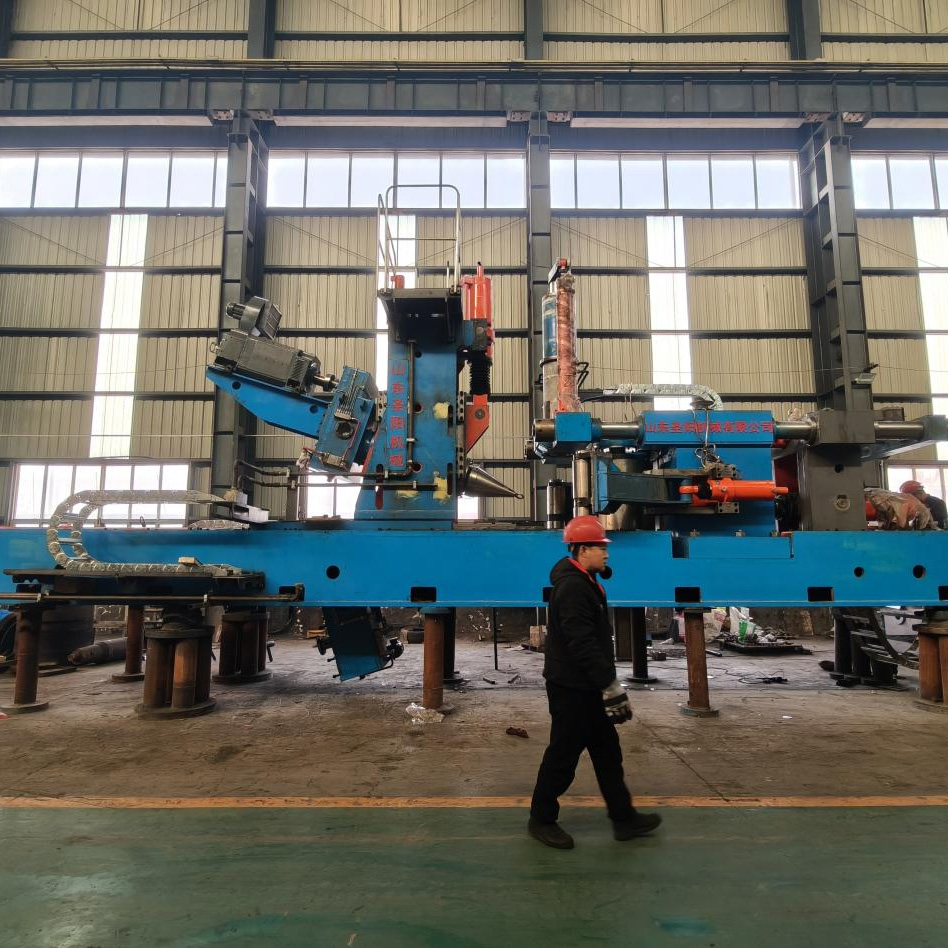
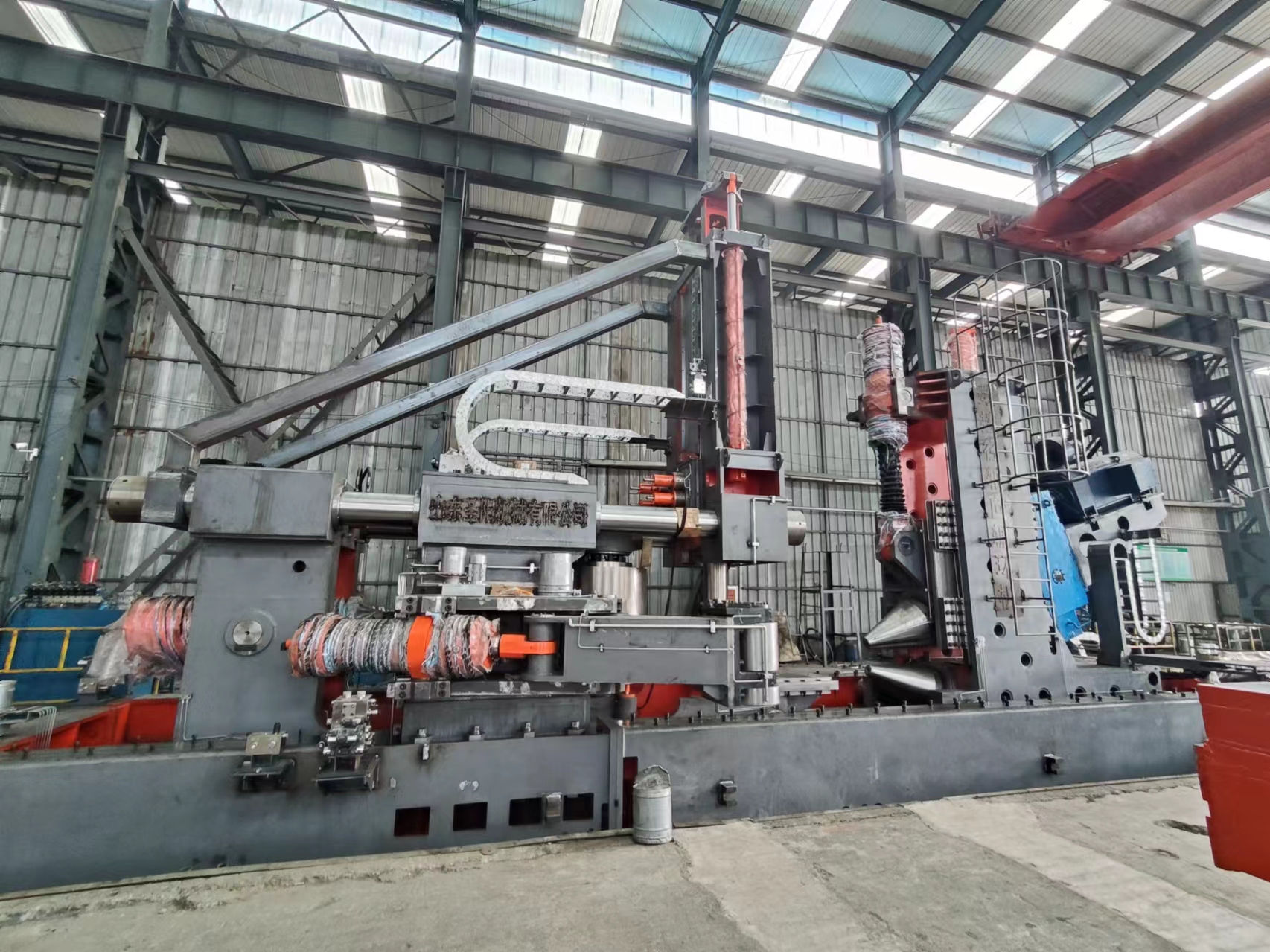
So the first question I always ask is: ?Show me your assembly shop and machining shop. And show us where you make the most important components - rolling stands and main shafts? If they start to refuse or are taken to another factory “under a cooperation agreement”, this is an alarm bell. A real manufacturer is proud of this and immediately shows it off.
Marketing aside, the reliability of a ring rolling mill is determined by three things. The first is the bed and its rigidity. It would seem, cast iron or welded construction, what’s so complicated? But the vibrations when rolling a heavy ring are colossal. If the frame “plays”, you can forget about the accuracy of the geometry of the finished ring. Chinese factories save on material and annealing time to relieve internal stresses in the casting. As a result, after six months of operation, microcracks appear, the mill “leads?” Good manufacturers make massive box-shaped structures with stiffening ribs and always conduct vibration tests.
The second is the control system and measuring complex. The range here is huge. Cheap mills install the simplest PLC and encoders, which get lost due to vibration. A modern mill is controlled via an industrial computer, laser diameter meters in real time and an adaptive system for adjusting roller pressure. The Chinese are now actively developing this area, but their own software is often “crude”, with glitches. Therefore, top series often come with Siemens Sinumerik controllers or similar ones, which immediately raises the price, but gives a predictable result.
Third, and most important -working rollers(crimp and support). They are made from special wear-resistant steels. Some unscrupulous assemblers install rollers from ordinary hardened steel 45 or 40X. They work, but the service life is several times shorter, especially when rolling heat-resistant alloys. A real manufacturer will always describe in detail the steel grade, hardness, heat treatment method, and even offer options for different workpiece materials. If this point is avoided in a catalog or conversation with an engineer, this is a reason to be wary.
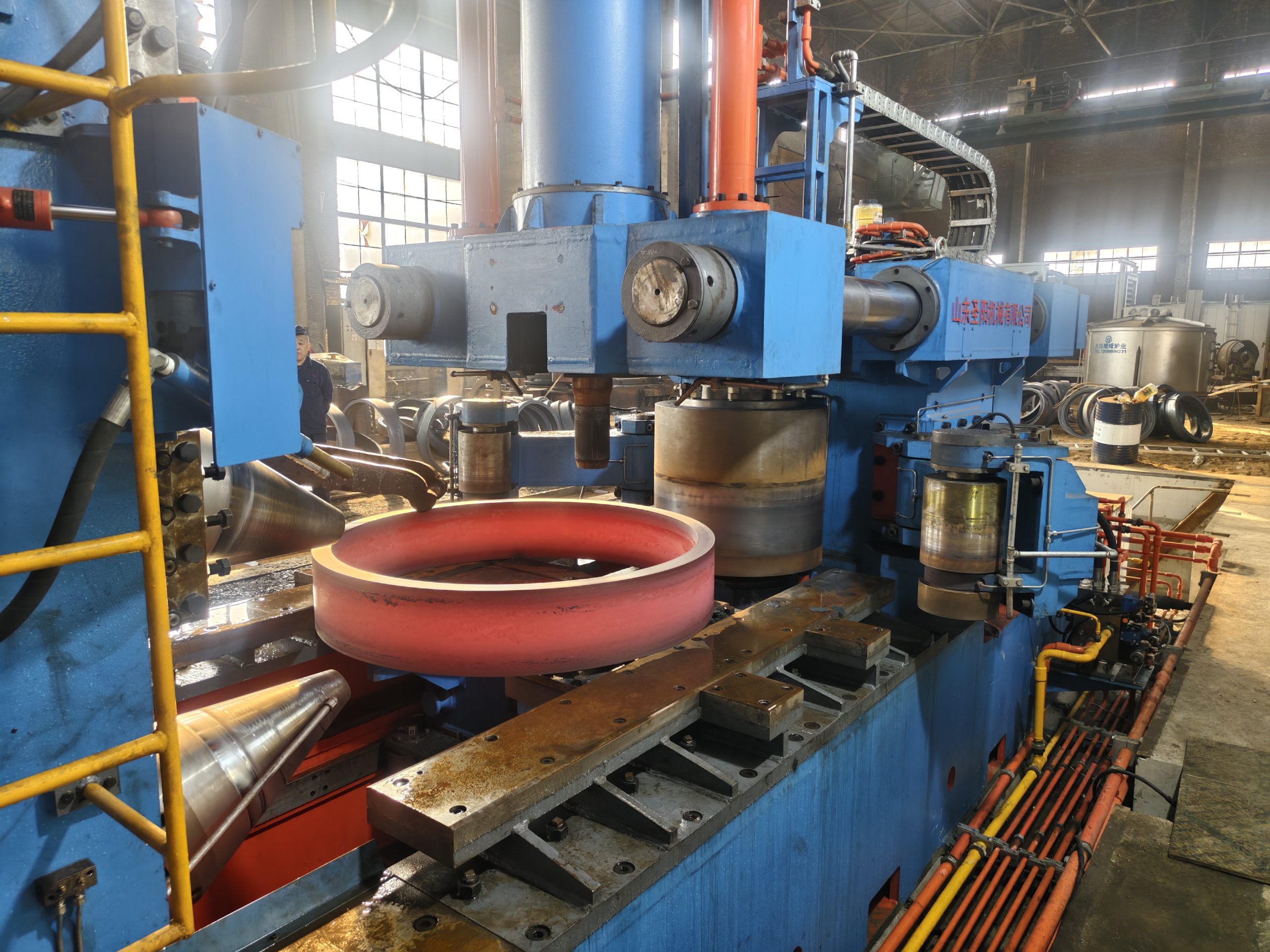
I would like to give an example that is not on the surface. We once purchased a couple of mills for rolling bearing rings from a seemingly trusted supplier. The mills came, assembled, and launched. The mechanics work, the controls are fine. But problems began at the stage of feeding the heated workpiece (blank) to the mandrel. The design of the feed mechanism (manipulator) was awkward and slow. The operator had to huddle between the racks, grab the red-hot blank with pliers, and push it onto the mandrel almost by touch. The loss of time is critical - the workpiece cools down.
It turned out that the manufacturer copied the basic design from an old European model, but did not take into account ergonomics and speed for modern traffic. We had to rework the manipulator console on the spot, with local engineers, and change the drive to a faster one. The manufacturer later admitted that they focus on the main process - rolling, and the "auxiliary" ones. mechanisms are often made to minimum requirements. This is an important lesson: when ordering, you need to discuss in detail androlling process, and all the periphery - supply, unloading, cooling system.
By the way, about unloading. Cheap models often have a simple inclined tray along which the ring rolls. If the ring is deformed (and it happens), it may get stuck. A good solution is a chain or roller conveyor with an outlet. Trifle? On paper yes. The work of the workshop is a source of constant downtime and the risk of injury.
Based on bitter and sweet experience, I created a list of mandatory items for myself when choosing a supplier. The first thing is not to believe the beautiful renderings on the site. Demand real photos and videos of the machine working in the workshop; it is advisable that there are people and other machines in the frame - this will confirm that the video is not staged. The second is to request a list of customers who have already purchased this model and try to contact them. The Chinese usually provide contact details of their most loyal clients, but you can also learn a lot of useful information about the service from them.
Third, technical dialogue. Ask specific, “inconvenient” questions. questions: what is the safety margin of the main drive? What is the real runout accuracy of the finished ring (not according to the passport, but according to test results)? How is the cage lubrication system organized? If the answers are vague or are given by a sales manager rather than a technologist, this is a bad sign. You need to request an online meeting with the project engineer.
Fourth - service and training. It is necessary to stipulate in the contract not only the guarantee, but also the conditions for the service engineer to visit, the presence of a spare parts warehouse in the region (at least in Moscow), and translation of documentation and instructions into Russian. Many Chinese companies now provide this, but it is better to record it. I remember how an engineer from China came to us for commissioning. He knew the camp brilliantly, but spoke neither Russian nor English. All exchanges are done through a translator on your phone. Now some advanced manufacturers already have Russian-speaking specialists or work closely with local engineering companies.
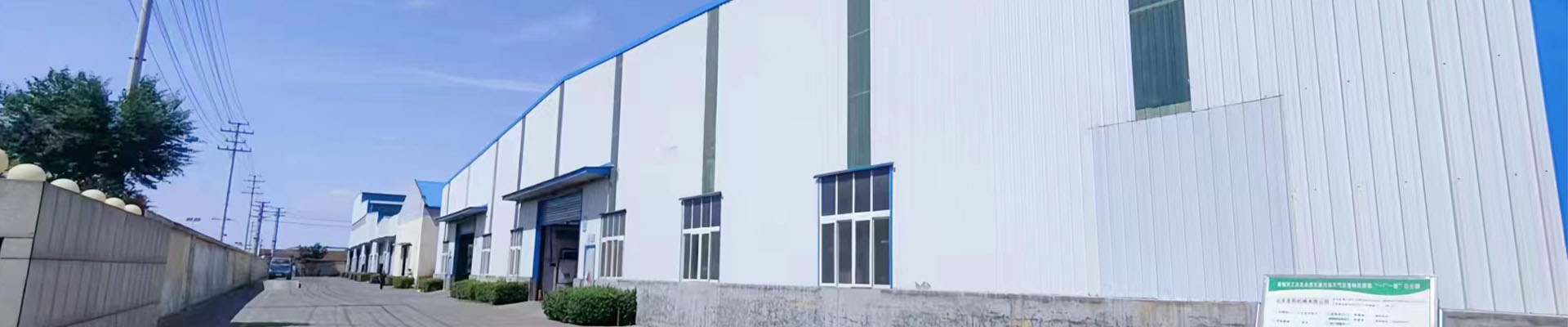
I won’t talk about all manufacturers, it’s too long. But if we take as an example a company that positions itself in the Russian-speaking segment, you can look atShandong Shenyang Mechanical Equipment Co.,Ltd. They are not a giant, but they specialize specifically in forging and rolling equipment, including ring rolling mills. Their website (https://www.shengyangjxgroup.ru) is made in Russian, which already indicates a focus on our market. The description states the status of a high-tech enterprise, which, of course, requires verification.
What is important to check in their case? Exactly the moments I was talking about. They most likely belong to the category of “integrators?” or have their own assembly plant. You need to look at what brands of CNC and drives they offer by default. Often such companies have flexibility: you can order a basic package with Chinese components or upgrade to European and Japanese ones. The price will vary significantly. It is also clear from their website that they offer different types of mills - radial forging, piercing. This can be a plus if you need a complex for the workshop, and they can coordinate the interaction of the lines.
But, again, this is just an example of many. The key is not the name, but the depth of technical development. I saw machines from unknown small factories that were made on a turnkey basis. for a specific type of ring (for example, only for wind turbine rings), and they worked better than universal solutions from popular brands. Because there the engineers sat and thought about one problem. Therefore, my main advice: formulate your technical specification in as much detail as possible - what rings (dimensions, weight, material), what the planned volume is, what integration into the line is needed. And with this technical specification we can already enter into dialogue. Then the choice will become more obvious.
Chinese equipment has ceased to be synonymous with “cheap and low-quality”. Now this is a huge spectrum from the budget "worker" options to high-tech machines. But the paradox is that outwardly they can look almost the same. The whole difference is in the details that are not visible in the photo: in the processing tolerances, in the logic of the control program, in the grade of steel for the same rollers. The risk of buying a “pig in a poke?” is still high, but there is also an opportunity to get a mill for adequate money that will properly produce products.
The main thing is to spend time studying, and don’t spare money on a trip to the factory (at least one, a key one) if we are talking about a serious purchase. And remember that even after perfect commissioning, the mill is just a tool. Its efficiency is 50% dependent on those who work on it and maintain it. Therefore, staff training and the availability of clear documentation is not an item on the wish list, but a must-have. Without this, even the best German or Japanese mill will turn into a pile of metal. What can we say about Chinese?
So, returning to the title question... Yes, there are Chinese manufacturers of ring rolling mills. There are many of them. But you need to look not for a manufacturer, but for a partner who is ready to delve into your process. There are already significantly fewer of them. This is where you should focus.