Email support
syjx@shengyangringrollingmachine.com

2026-02-05
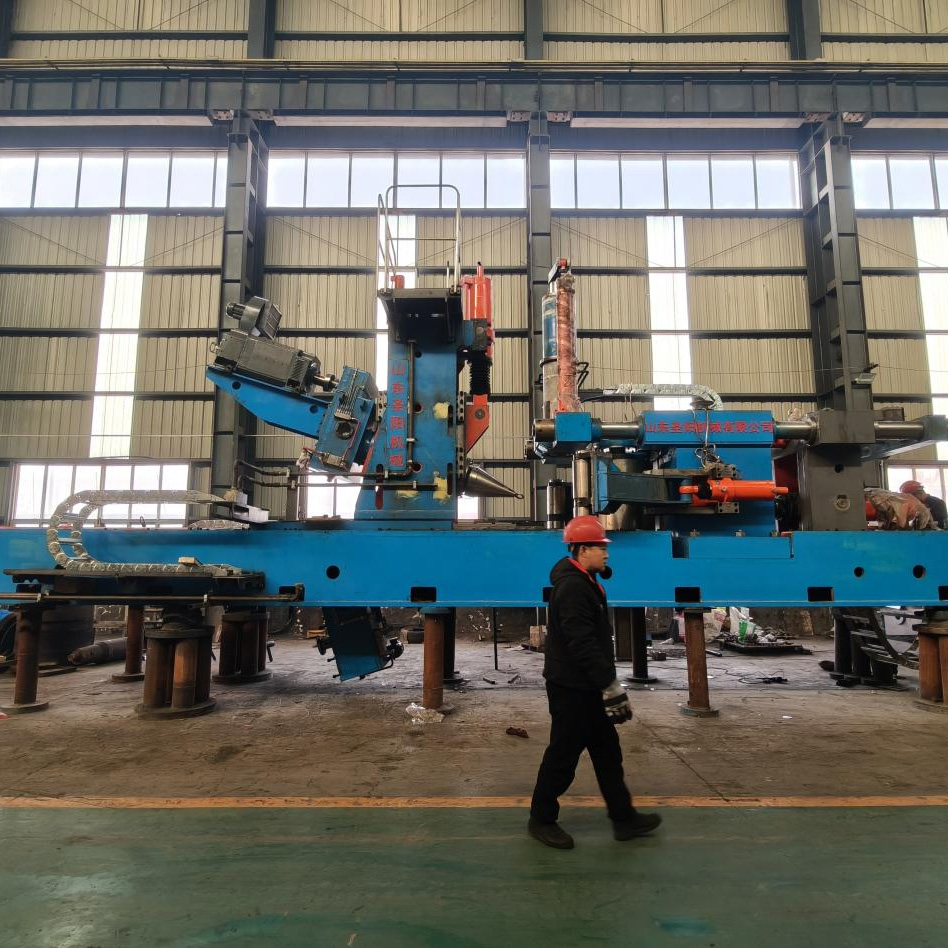
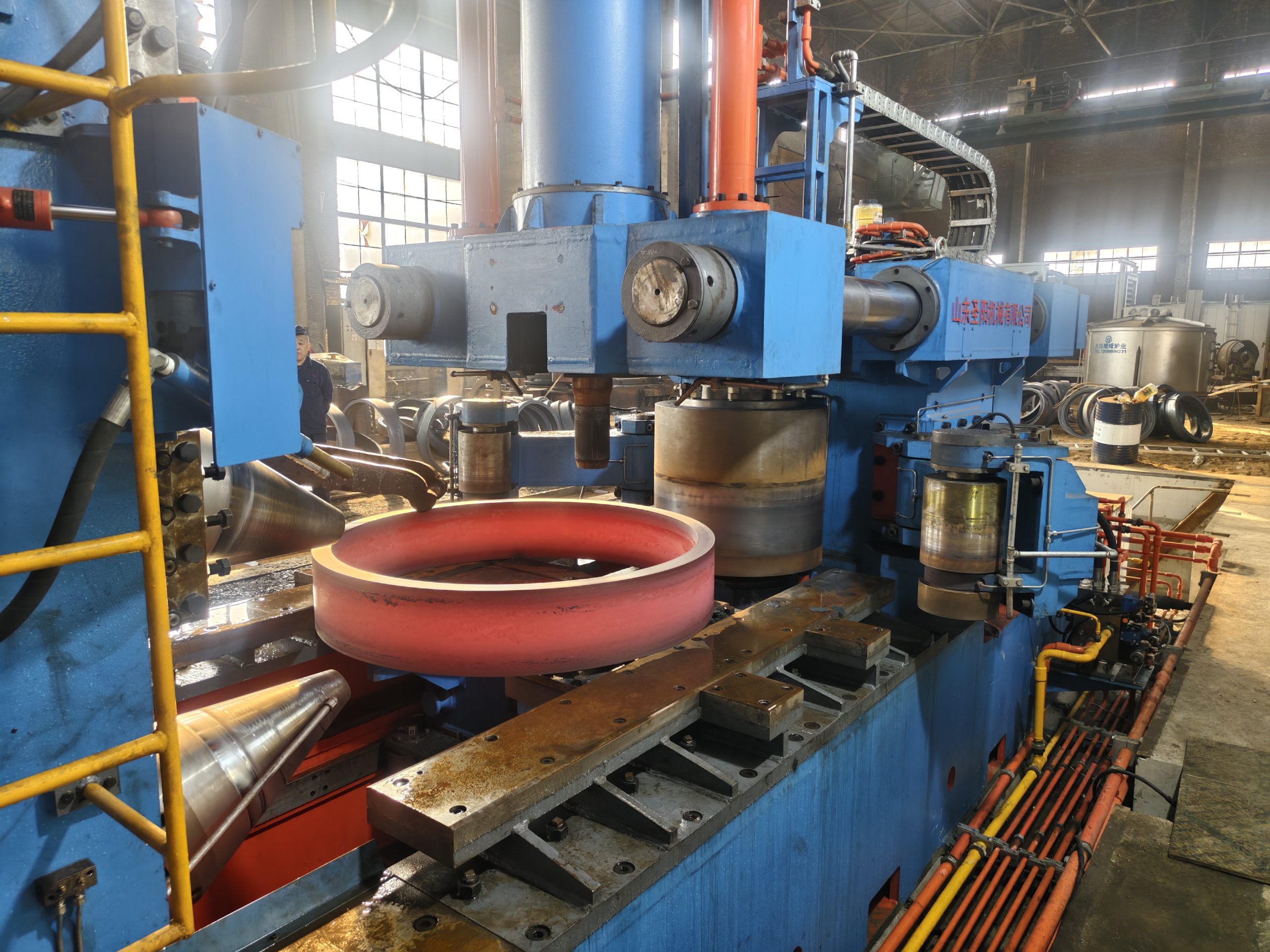
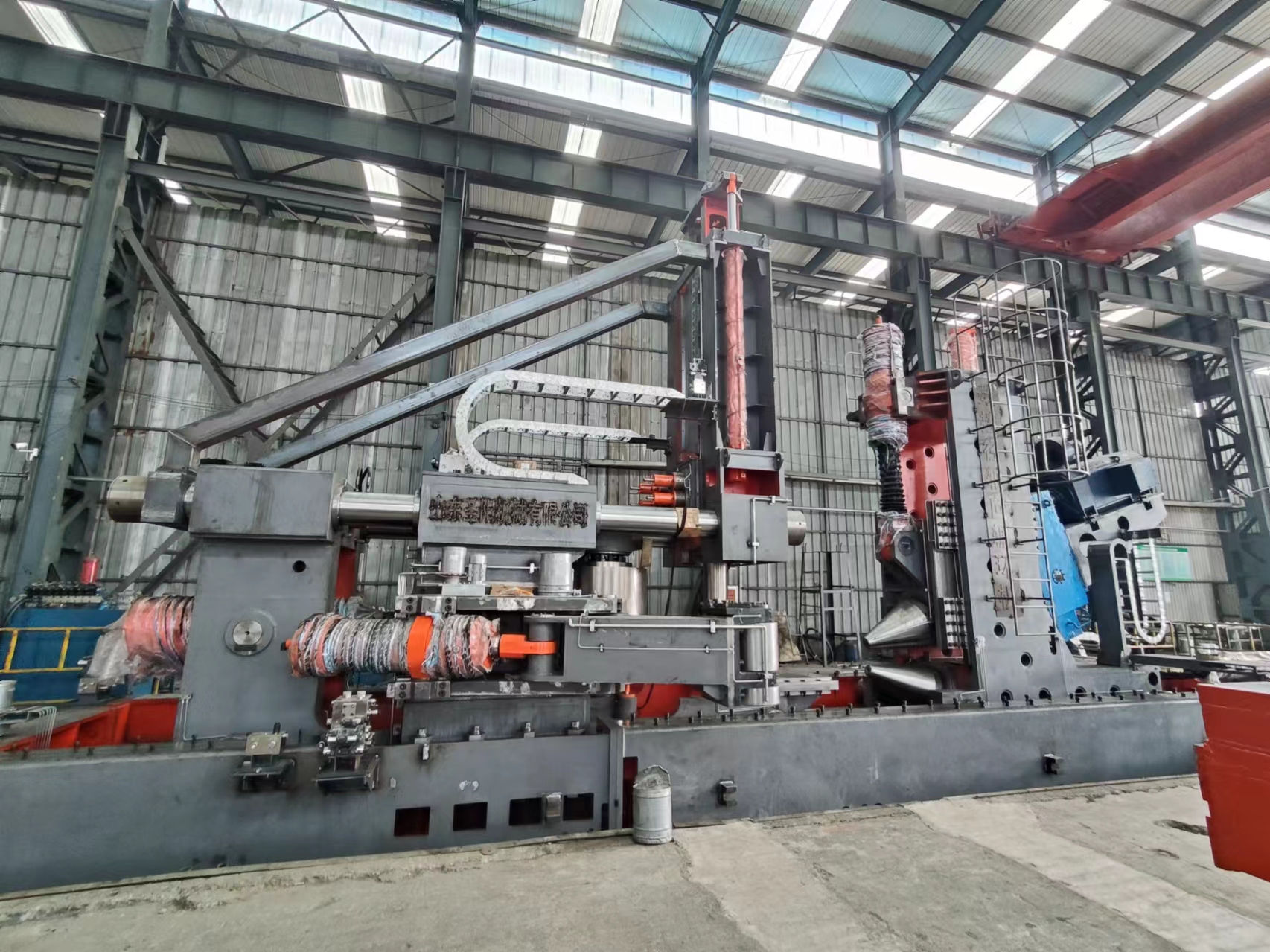
When you hear about Chinese vertical ring mills, the first thing that comes to mind is, of course, the price. Many people immediately think: “Well, yes, it’s cheap, but what about the quality?” This is the most common stereotype we come across. But if you dig deeper, over the past five to seven years the picture has changed a lot. It is no longer just about copying old Soviet or European schemes. Their own developments are appearing, especially in terms of control systems and adaptation of equipment to specific, “non-ideal” ones. terms of Use. But is this innovation in the full sense of the word? Or rather pragmatic improvements? This is what I would like to speculate on, based on what I saw myself at the sites and in negotiations with suppliers.
Previously, about ten years ago, the Chinese camp was, roughly speaking, a very strong blank. The mechanics could be heavy and reliable, but when it came to CNC systems, sensors, and software, problems began. The interfaces are inconvenient, the documentation is machine translated, and the service support is zero. This is perhaps the most noticeable shift right now. Take, for example, several manufacturers from Shandong. They no longer just purchase Siemens or Fanuc controllers, but are actively working on their own software shells that simplify customization for a specific type of rental product - say, for wind generator rings or large bearings.
But there is an important nuance here. Often these ?innovations? - not breakthrough technologies, but competent integration and adaptation. They take proven components and “sharpen” them. them for frequently encountered tasks of clients from the CIS or Southeast Asia, where the requirements for accuracy may be slightly lower, but the requirements for equipment survivability in conditions of voltage surges or imperfect foundations are prohibitive. This is no less valuable than inventing something fundamentally new. This is an innovation in application.
At one of the exhibitions in Yekaterinburg I spoke with a technologist who was just launching a line with a Chinese vertical milling complex. He noted that the key for them was not the presence of a state-of-the-art function, but the ability to quickly change calibers and flexibly adjust temperature conditions directly from the remote control, without lengthy programming. According to him, the European analogue offered more bells and whistles, but it was precisely this flexibility in everyday work that the Chinese implemented better. This is such a paradox.
When talking about innovation, we cannot ignore the other side of the coin. The most painful moment that I have seen more than once is thisvertical ring mills, which work great at the manufacturer’s stand in China, but begin to be capricious. in real production in Russia or Kazakhstan. The reason is often trivial - the quality of the original workpiece. Chinese engineers can include certain tolerances on the chemical composition of steel or temperature into control algorithms. But in practice, the workpiece arrives “as it is?”, with fluctuations that the system does not expect.
This leads to an interesting phenomenon. The most advanced manufacturers now not only sell the machine, but first clarify in detail the conditions for future operation. Sometimes they even ask you to send samples of typical test pieces. For example, the companyShandong Shenyang Mechanical Equipment Co.,Ltd(their website isshengyangjxgroup.ru) in the description of the projects it is clear that they focus on adaptation to local materials. Their description says that this is a high-tech enterprise, and this is not just a cliche. Their technical support is ready to remotely adjust the program for a specific batch of metal, which is a lifesaver for many of our factories.
Another practical problem is service. An innovation system is great, but what to do when it fails? It used to be a nightmare. Now many major players, including the aforementioned Shenyang, have created a network of service engineers in key regions. But it is important to understand: the level of these engineers is different. Someone can replace the board, but in-depth diagnosis of an error in the program still sometimes requires a specialist from China. Downtime is money. Therefore, real innovation for the end customer is not only ?smart? machine, but also a “smart”, fast system for supporting it. The battle is just heating up on this field.
I would like to give an example from reality that well illustrates the essence of today's “Chinese innovations”. One of our friends, a metallurgical plant, purchasedvertical ring millfor the production of large rings from special steels. During the run-in process, it was discovered that the main drive cooling system could not cope with the long rolling cycles required for their products. The machine paused to cool down, which disrupted the technological cycle.
Contacted the manufacturer. Instead of sending the standard operating instructions, an engineer came to them. Together with local mechanics, they rebuilt the cooling circuit within a week, adding an additional external heat exchanger and changing the circulation pattern. The modification was ugly and the welds were visible, but it worked. Moreover, the manufacturer then made these design changes for models supplied to regions with similar requirements. This is that same innovation in action - not in the laboratory, but in the workshop, born from a specific breakdown or inconsistency.
This flexibility is a huge plus. European manufacturers are often bound by strict regulations and standards. Making a design change on an existing machine is bureaucratic hell. Chinese companies, especially those like Shenyang, which position themselves as flexible high-tech enterprises, often have more freedom to carry out such operational hacks. For the end user, this is sometimes more valuable than an ISO certificate on a beautiful stand.
Now everyone is talking about Industry 4.0, IoT, data collection. Chinese manufacturers have actively picked up this wave. Almost every new machine is offered with the possibility of integration into a plant monitoring system. On paper it looks impressive: vibration, temperature, roll wear sensors, all data in the cloud, predictive analytics.
But in practice... At one of the recent launches, we were faced with the fact that this digital interface was made, as they say, “for show”. Data poured into the system, but there was no one and no time to analyze it. The plant did not have a full-time IT specialist capable of setting up alerts or extracting useful information from this array. As a result, the expensive option was idle. Innovation was useless without innovation in the minds and processes on the customer's side.
On the other hand, there are also positive developments. Some vendors have begun to offer not just a “box with sensors”, but ready-made cloud services with basic reporting templates and automatic notifications of critical deviations. That is, they are not selling a function, but a solution. This is the next level. This is still rare, but the direction of thought is correct. The potential is huge, especially for remote service: an engineer in Jinan can see that the vibration of a machine in Chelyabinsk is starting to increase at a certain speed, and suggest checking the balancing in advance.
So are Chinese manufacturers the source of innovation for vertical ring mills? If we understand innovation as the creation of a fundamentally new physics of the rolling process, perhaps not. Breakthroughs here are rare and occur mainly in the research centers of world giants.
But if we talk about innovations in the field of accessibility, adaptability, speed of implementation and customization, then yes, of course. Their strength lies in their quick response to market demand and their willingness to refine the product together with the client, sometimes right on their site. This is pragmatic, down-to-earth engineering, which for many enterprises with limited budgets and specific tasks is much more important than fundamental research.
Companies likeShandong Shenyang Mechanical Equipment Co.,Ltdis a good example of this trend. They don't just sell equipment, they offer a technological solution backed by deep customization capabilities. Their website and materials are increasingly shifting towards describing cases and solved problems, rather than just a list of technical characteristics. This is their main innovation - a change in the very approach to the client. I think in the coming years we will see how this approach will make not only other Asian, but also European players in the mid-segment market nervous. The battle will not be about nanotechnology, but about understanding the real pains of production and the speed of eliminating them. This is something worth watching.