Email support
syjx@shengyangringrollingmachine.com

2026-01-19
When you hear this combination, the first thought is about “green” again. technologies and cheap equipment. But in reality everything is more complicated. Many, especially those who purchased ten years ago, are still convinced that the Chinese forging press is loud, dusty and of dubious accuracy. In terms of ecology, there is generally silence there. I myself thought so for a long time, until I had to work closely with several factories from Shandong and Jiangsu. It turned out that the gap between rumors and real samples of recent years is colossal. But there shouldn’t be blind delight either: there are nuances that are not written in brochures, but you only find out when starting up or, worse, when it breaks down.
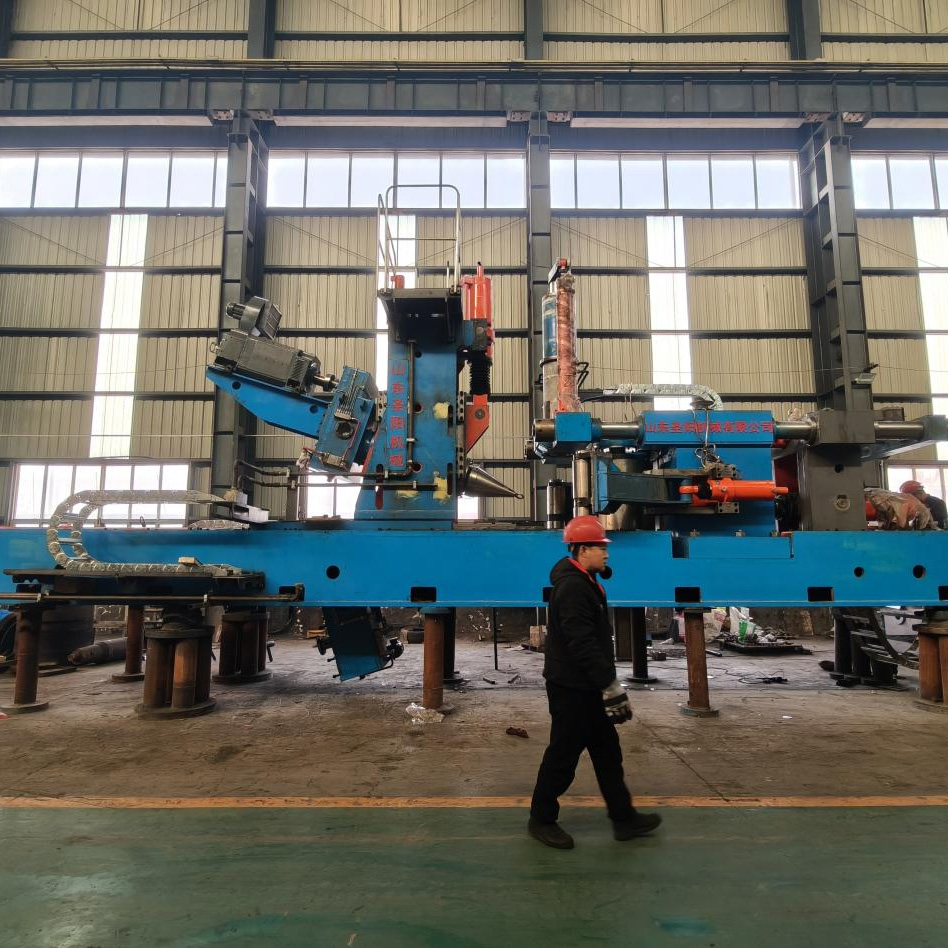
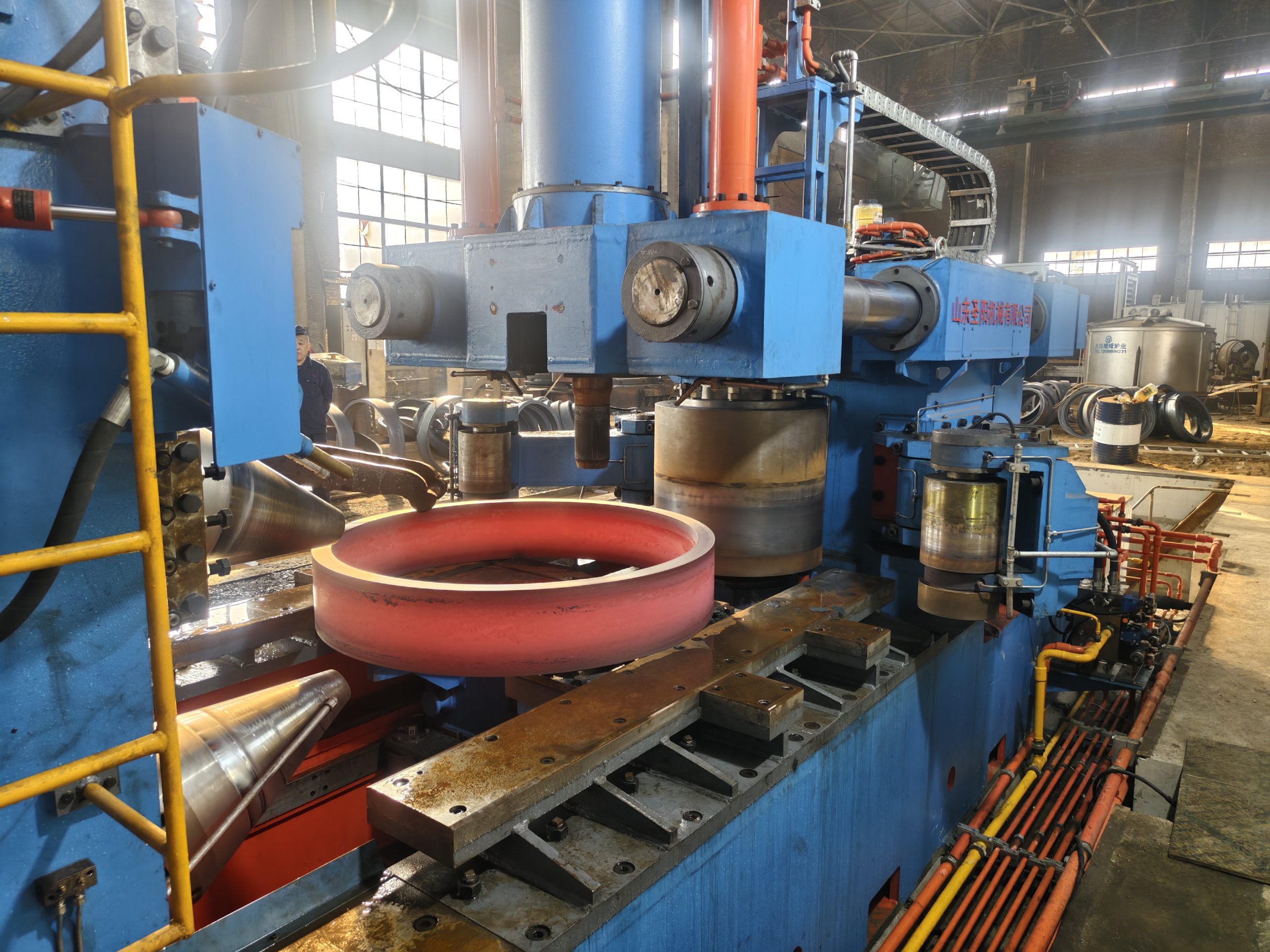
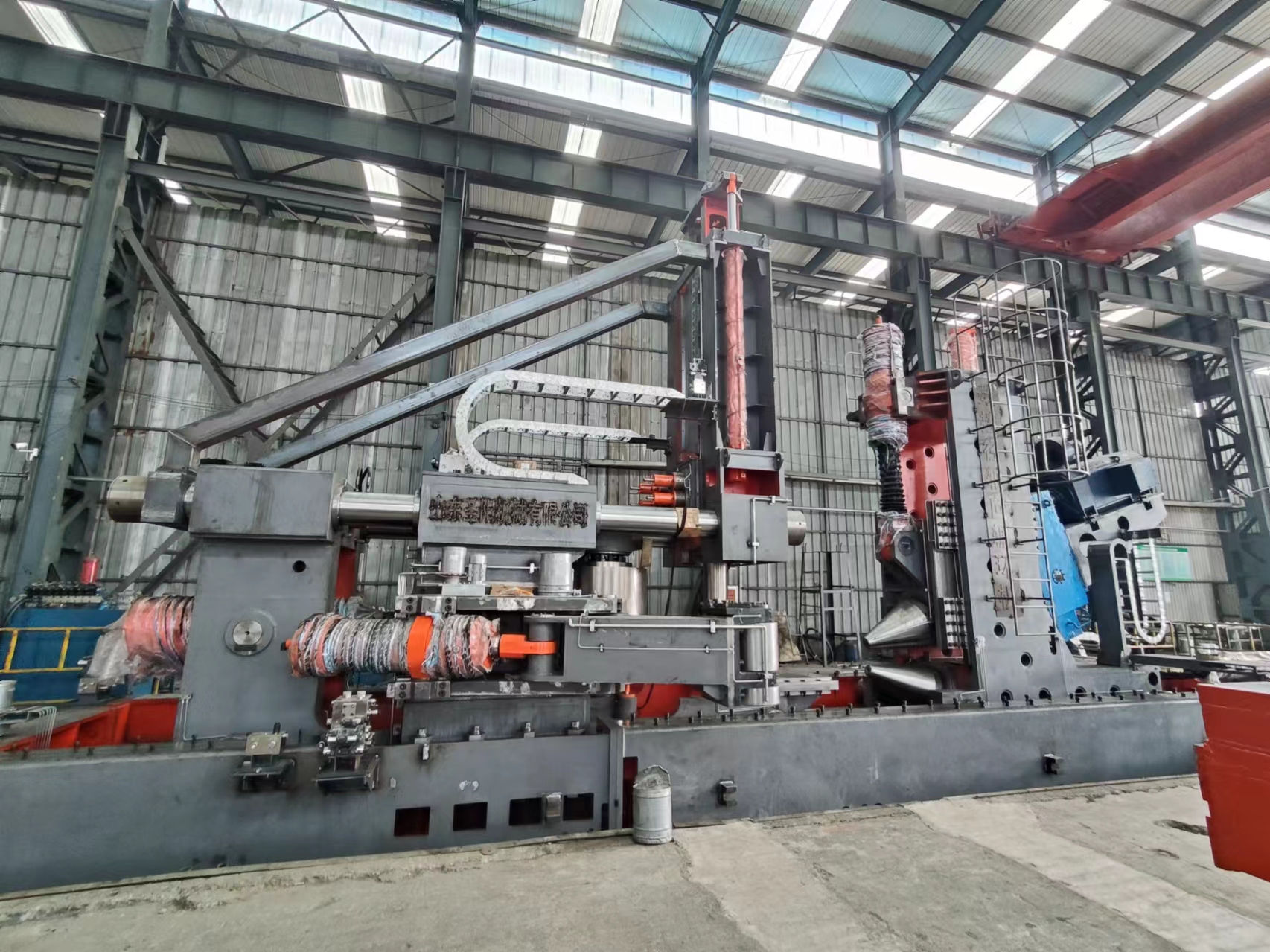
Previously, the main argument was cost. Now it’s often technological flexibility. Take, for example, modernforging presseswith CNC. Yes, servos and control systems are often Japanese or German, but the frame itself, the slider design, and the cooling system are already local developments, and quite mature. At one of the factories near Jinan I saw a press with a force of 16,000 tons, which was assembled for a specific order for stamping parts for wind generators. The engineers there did not hesitate to talk about problems: for example, about how they had to redo the lubrication system for the guides, because during long-term continuous operation under high loads the original circuit began to leak. This is not fatal, but it takes time to fine-tune it in place.
The key shift is in electronics and software. The control panel on a good machine now is not three buttons and a dial gauge, but a full-fledged touch screen with logic that allows you to build complex forging cycles. But here’s what’s important: interface localization. Previously, it was a problem - a crooked translation from Chinese to English, and there’s nothing to say about Russian. Now many serious manufacturers who work for export do normal Russification and, what is critical, adequate technical documentation. This is a sign that they are thinking about the market seriously.
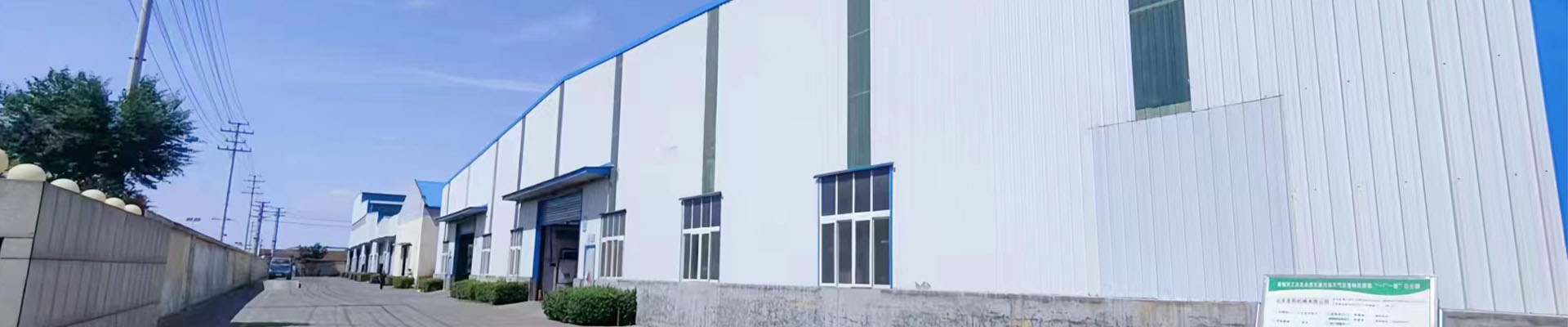
Here you can remember about the companyShandong Shenyang Mechanical Equipment Co.,Ltd. I came across their equipment indirectly, through colleagues who purchased a line for hot die forging. They noted the thoughtfulness of the energy-saving system on hydraulic presses - there is a variable-frequency drive on the main pump, which is not a tribute to fashion, but real savings. Their websiteshengyangjxgroup.ruis a typical example of a modern approach: the information is structured, there are catalogs, but most importantly, there is a visible technical emphasis on accuracy and efficiency, and not just on size and power. This is no longer just a “factory that makes machine tools?”, but an enterprise positioning itself ashigh-tech enterprise, which, judging by some implemented projects, is close to the truth.
There is an interesting story about ecology. Previously, the issue was solved simply: we’ll put the hood over the stove and that’s it. Now the approach is different. It’s not just about compliance with regulations (which in China, by the way, have become radically stricter), but about overall production efficiency.Ecologyin a modern forge shop, this is primarily about saving resources.
For example, heat recovery. At one of the sites in Hebei province, I saw how the heat from the cooling of the hydraulic system of a 10,000-ton press and from the exhaust gases of an induction furnace is used to heat water, which goes into the heating system of the administrative building in winter and into the air conditioning system (through absorption chillers) in summer. The technology itself is not new, but its integration into the line is an indicator of systems thinking.
Another point is noise and vibration. Chinese manufacturers have begun to actively use floating foundations with vibration isolation, especially for heavy hammers and presses. This is not only environmental protection, but also the protection of precision measuring equipment in the same workshop. Previously, this was considered an excess for “iron production”. Now a standard option for export models.
But there’s nowhere without a fly in the ointment. Often ?environmentally friendly? depends on the quality of components. The same bag filter is used to clean the air from scale and oil mist. It may be of excellent design, but if the fabric of the filter bags quickly becomes clogged or cannot withstand the temperature, the entire system stops. Or an oil recirculation system in hydraulics. In theory, there is a minimum of waste. In practice, if the seals are of poor quality, leaks begin, and the soil around the press is saturated after six months. This is the scourge not only of Chinese cars, but also of them, due to the desire to save money on “invisible” ones. details, appears more often. You need to study the specifications for the components very carefully.
Often they buy one press or malt to integrate into an old line. This is where the fun begins. Chineseforging machineslatest generation are designed for a high degree of automation. Their sensors, workpiece positioning systems, data exchange interfaces (OPC UA, for example) are waiting for the same advanced neighbor on the conveyor.
There was an incident at our old plant: we bought an excellent high-speed press for cold stamping. And the feed mechanism is old, pneumatic, with rattling noise. As a result, the press either ran idle or stopped due to a positioning error from its own laser sensor. We had to almost completely redo the feed unit, which negated all the savings from the purchase. Conclusion: Chinese equipment is now often “system-forming”, it entails the modernization of the entire site. This needs to be clearly understood and calculated.
Service and documentation are a separate issue here. Previously, the schemes were conditional, and the service engineer would fly in a month later, if he arrived. Now many large manufacturers, including the one mentionedShandong Shenyang Co.,Ltd, organize remote diagnostics and have partners or representative offices in key countries. But it is important to discuss in advance: who will carry out the commissioning and how, in what language the instructions for critical maintenance will be (replacing hydraulic filters, calibrating temperature sensors), and what spare parts are considered “hot”? stock and must be in the buyer's warehouse immediately.
An old stereotype: beds made of low-quality steel that “float?” over time. They are struggling with this. The finite element method (FEA) for calculating stresses is being widely implemented, castings made of high-strength nodular cast iron are used, and forged blanks are used for critical parts. But again, there is a nuance: heat treatment. I saw a batch of sliders where microcracks appeared after hardening - not immediately critical, but the service life is reduced. The manufacturer, when a claim was made, recognized the batch as defective and replaced it. This shows maturity: a willingness to take responsibility.
Wear of guides and bushings is another indicator. We switched from babbitt to polymer composite materials with high wear resistance and low friction coefficient. This increases the accuracy and requires less lubrication. But such bushings are sensitive to oil purity. If the hydraulic filtration system fails, they fail faster than traditional bronze ones. Requires a more service culture from staff.
I think integration will deepen furthertechnologiesand environmental solutions. A digital twin of the forging area that optimizes energy consumption and predicts tool wear in real time is no longer science fiction. Chinese companies are actively investing in such R&D.
The second trend is hybridization. For example, a combination of a hydraulic drive for main force and a servo drive for precise positioning. This gives power, accuracy, and savings. There are already working samples.
And most importantly, the philosophy is changing. They used to sell the machine. Now they sell a technological process with guaranteed parameters: accuracy, yield, specific energy consumption per ton of forging, noise level. This is another level of dialogue. And in this dialogue it is no longer possible to dismiss Chinese manufacturers as makers of cheap copies. They have become serious players, with their strengths (speed of innovation, configuration flexibility, price/quality) and weaknesses (sometimes unpredictability of quality in the “budget” segment, the need for very detailed technical specifications). There is a choice, but now you need to choose with an even greater understanding of the matter, and not just according to the price list. And the question is “technology or ecology?” loses its meaning. Now it is one whole.