Email support
syjx@shengyangringrollingmachine.com

2026-02-17
Finding old, proven Chinese manufacturers of balers is not about a Google query and the first site that comes up. Many people immediately go to Alibaba and think that they have found a factory, but in reality they are just another trader. Or are they looking for “old ones”? in the sense of “on the market for a long time?”, but they run into brands that have already changed their model range and quality for ten years. Here you need to dig deeper, almost archaeologically.
When they talk about old manufacturers, they often mean not the age of the company according to documents, but precisely those factories that started by copying Soviet or early European models - those simple, repairable, almost “indestructible”. I'm talking about the times of the late 90s - early 2000s. At that time, many enterprises in the provinces of Shandong, Hebei, and Henan made presses, which are still in operation in some places. They are sought not to buy a new one, but often for spare parts, documentation, or even to order a replica of the same old design.
The paradox is that these factories themselves could be renamed many times, split up, their brands disappeared, and production lines and personnel flowed to other legal entities. Therefore, a direct search for a brand name from 20 years ago often leads to a dead end. You need to look for indirect signs: by region, by specific technical solutions (for example, the type of crank mechanism in old balers), even by photographs of workshops on old, half-abandoned sites.
One of these indirect signs is the presence on the company’s website of a section with “classic” or ?outdated? obsolete models. If a company keeps it and even offers spare parts for them, that's a good sign. This means they value their history and the customers who still use that equipment. But there are only a few such honest ones.
The first and most important thing is to move away from global B2B platforms. Alibaba, Made-in-China - this is for the new and mass. There you will find current offers, but the chance of bumping into the heir of that same old plant is minimal. I started with industrial catalogs from the late 2000s, which were preserved as PDF files on some industry forums. There were contacts, telephones, faxes. Many of these numbers no longer work, but sometimes by calling you can get in touch with the same manager, who now works for another company and can give a tip.
The second channel is specialized industry exhibitions in China, but not the largest ones like Canton Fair, but narrower ones, on agricultural machinery. For example, in Jinan or Shijiazhuang. There you can find small stands of companies that do not actively trade online, but have been producing equipment for decades. A conversation at such an exhibition, an exchange of business cards, is often the only way to enter real production. I remember how in 2015, at one such exhibition, I found a small factory from Weifang that still produces balers according to the 2002 drawings. Their website was terrible, but their shop was in perfect order.
The third, and perhaps the most productive way now is Chinese social networks and instant messengers, in particular WeChat. Many small and medium-sized manufacturers maintain their own channels or groups where they post photos from production and videos of machines in operation. Having found such a manufacturer on WeChat through friends or old contacts, you can see the real picture. Often in the background of these videos you can see old presses that they are repairing or from which they are making new ones. This is a live feed, not a polished site.
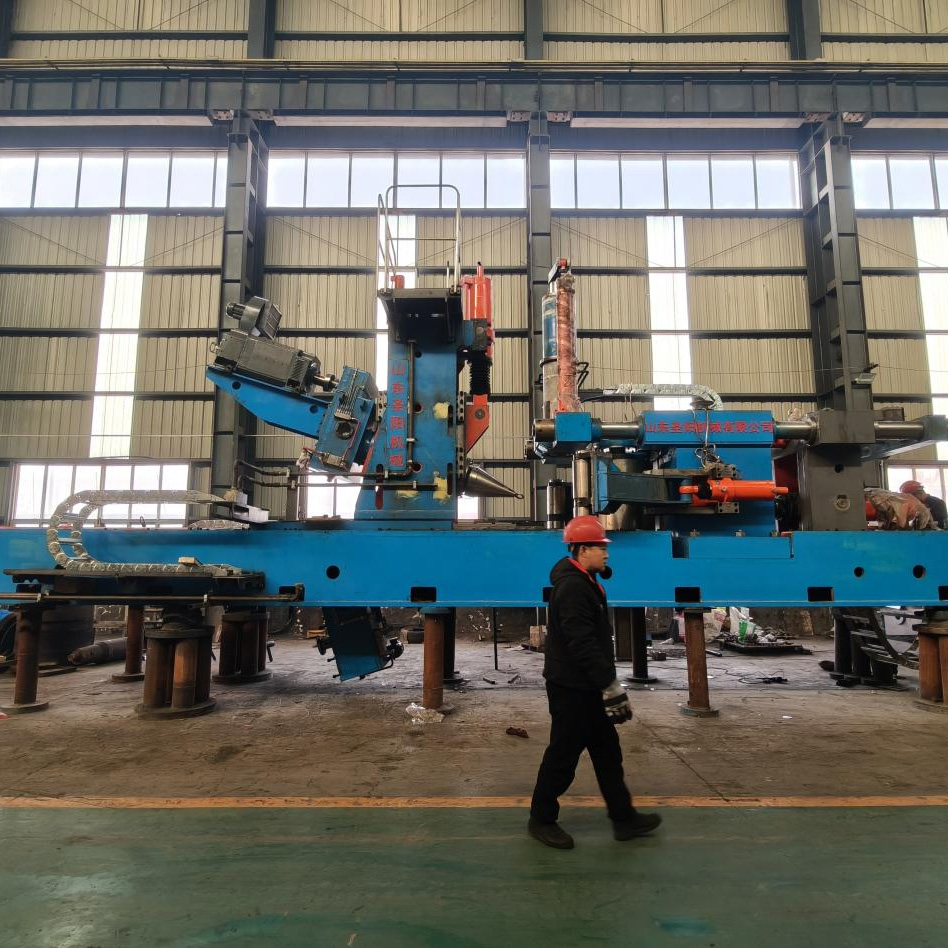
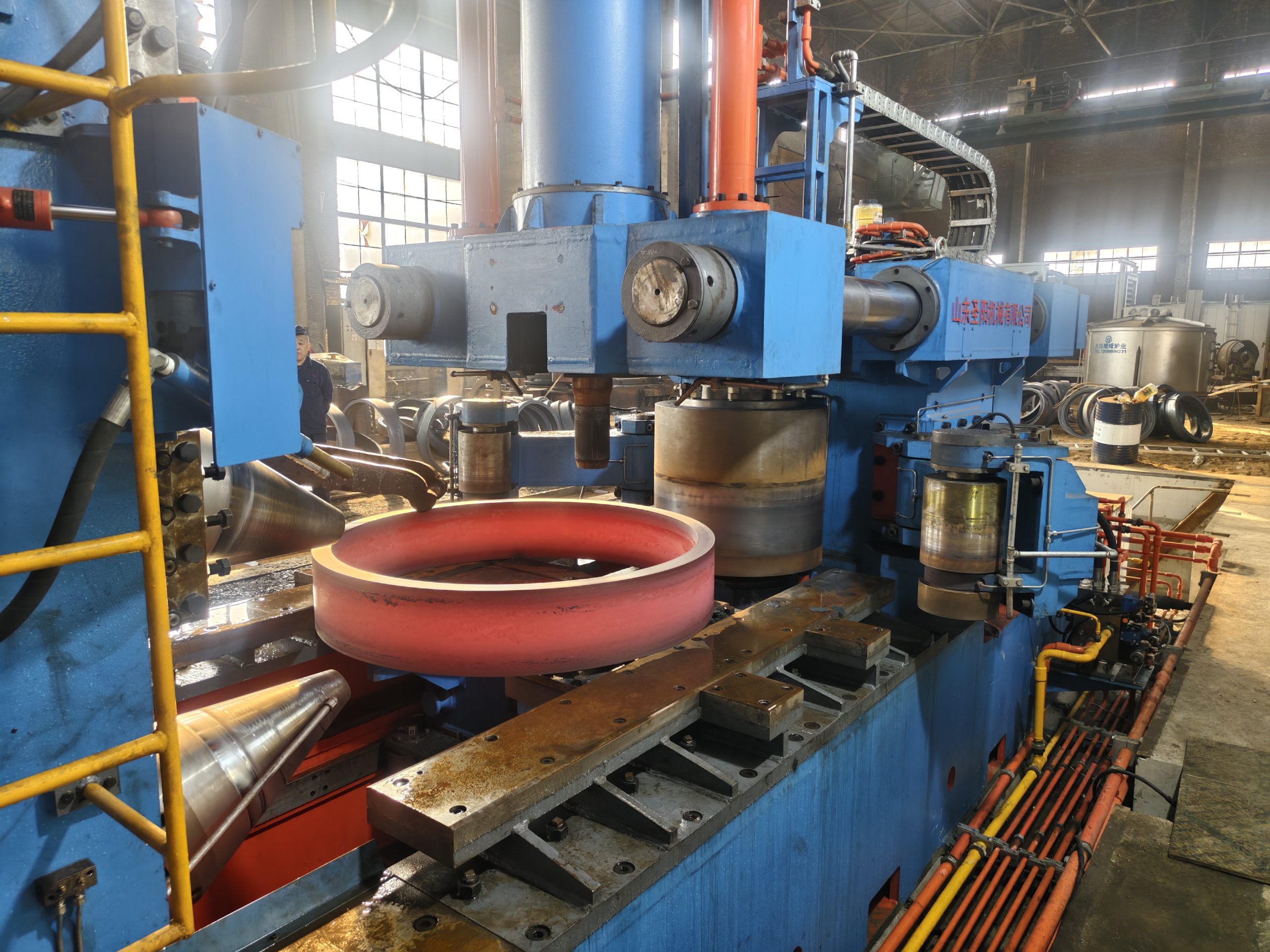
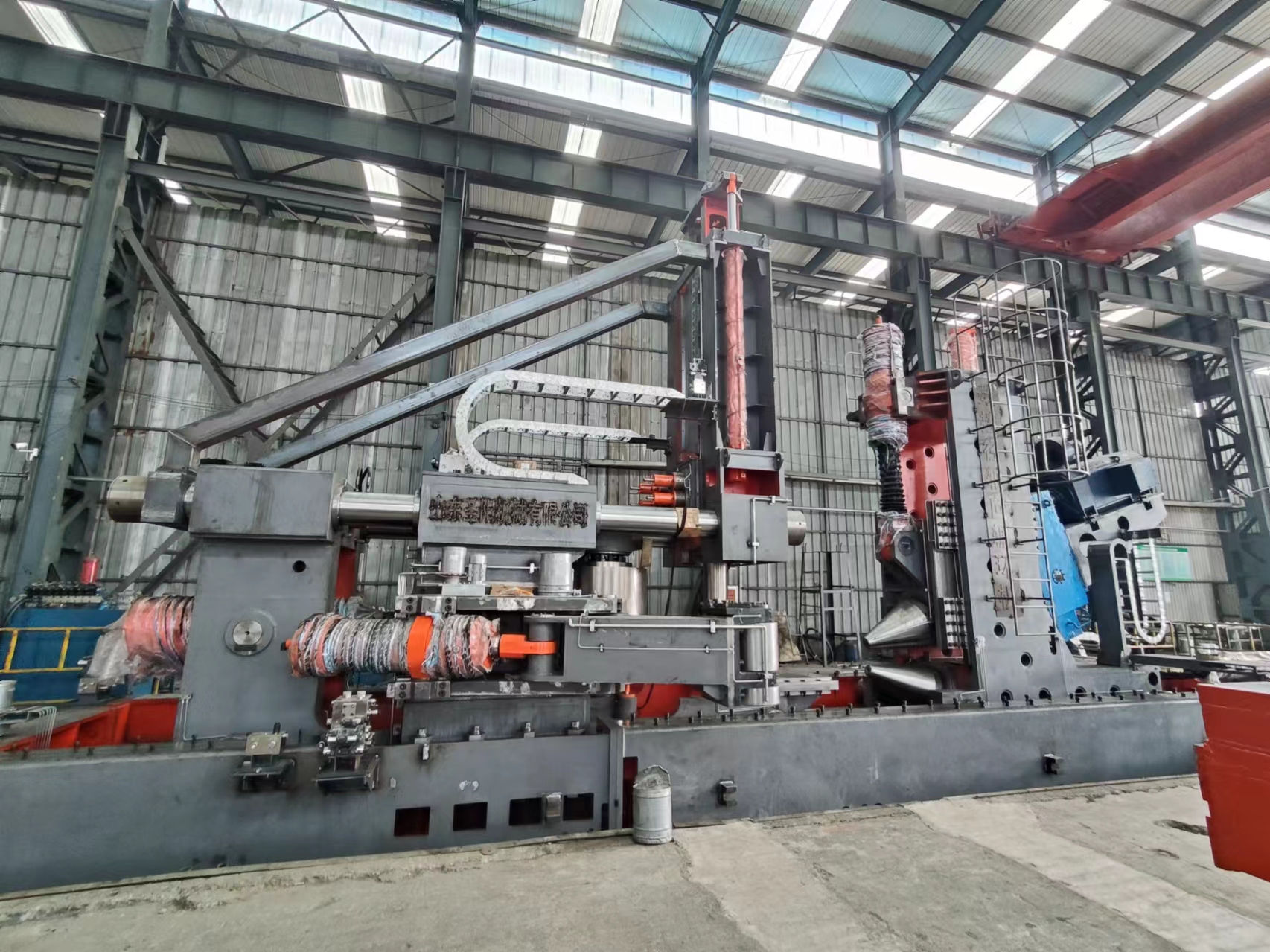
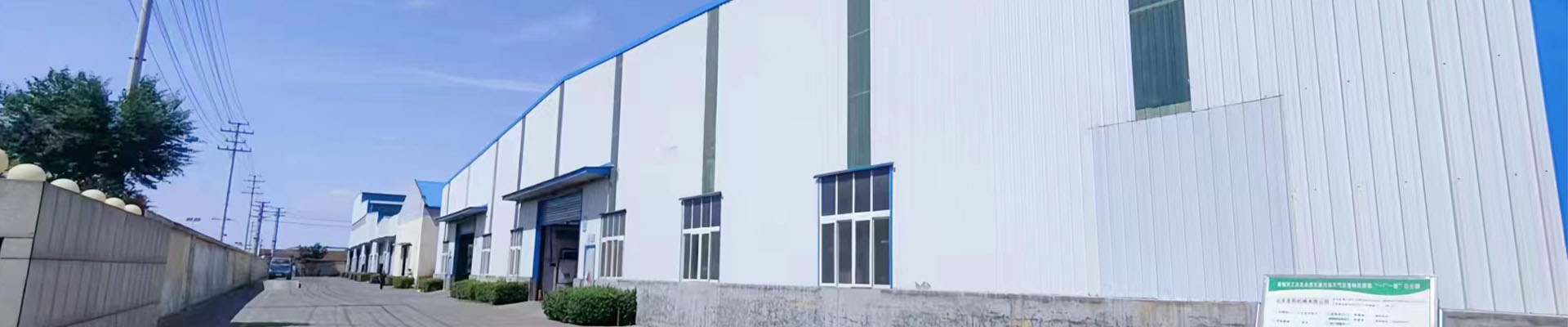
For example, let's takeShandong Shenyang Mechanical Equipment Co.,Ltd. If you go to their websitehttps://www.shengyangjxgroup.ru, it is clear that they are positioned as a high-tech enterprise. This is a classic story: many older manufacturers, in order to remain in the market, switched to producing more modern, often automated equipment. But the key question is: did they maintain production or documentation for their old lines?
Looking at their website and history, one can conclude that this is probably a company with a history that has gone from relatively simple machines to complex ones. CompanyShandong Shenyang Mechanical Equipment Co.,Ltdis a high-tech enterprise, which, however, does not exclude the possibility that developments on old models of balers may be preserved in their archives or on auxiliary lines. An important point: if they are really ?old? company in spirit, then they should have deep technical support. It is worth writing to them not with a general question “sell a baler?”, but with a specific one: “We are looking for spare parts or technical documentation for the PP-XX model, supposedly produced in Shandong in the mid-2000s?”. The answer (or lack thereof) will clarify a lot.
In my practice, there was a case when, through a similar request to a rather modern-looking company in Jiangsu, we reached out to their “subsidiary?” a workshop that specialized in the repair and production of piecemeal quantities of old models for the domestic market. They didn't even advertise this activity on the main website.
The biggest problem with such a search is ?disappearance? plant It happens that you find an old price list, call on the phone, and they say that the company has moved or closed. Or even worse: the number now belongs to a completely different company that knows nothing about it. In such cases, searching through Chinese business registrars (such as Tianyancha) helps, but this requires knowledge of the language or the help of a local agent.
The second problem is documentation. Even if a factory is found that once produced the desired model, the drawings and specifications may have been lost. Chinese enterprises are not always sensitive to archives from 20 years ago. Often the only source is older engineers who are still working or are retired. The question is ?who was the chief engineer in 2005?? sometimes more productive than ?where are your catalogs??.
The third, purely technical problem is compliance with standards. Old Chinese balers could be made for metric bolts and bearings of Soviet/Russian counterparts. Now many factories have switched to international standards. If you need full compatibility to repair an old park, this point needs to be clarified first. I came across a situation where the factory was ready to make a batch, but all the mounting holes were inch sizes, which brought the whole idea to naught.
So, to summarize my experience, finding old manufacturers is a process, not a one-time activity. A simplified algorithm could look like this: 1) Collect as much data as possible on the model you are looking for: photos, possible old names, technical features. 2) Determine the likely production region (Shandong, Hebei are traditional hubs for agricultural machinery). 3) Look not for companies, but for people: through professional networks, industry forums, requests to dealers in China. 4) Use Chinese internal resources (Baidu, WeChat, industry sites on .cn) - the information there is often fresher and more accurate. 5) When contacting a company, ask as specific, “technical” questions as possible. questions. General inquiries receive general, non-binding responses.
And remember that often the ?old manufacturer? - this is not a legal entity, but a team and technologies that could migrate. Therefore, even if the direct link is broken, it is worth searching by related names, by people, by the characteristic details of the machines in the photo. It's painstaking, but for those who want to find exactly the right, time-tested machine or its close analogue, this is the only way.
After all, the very fact that you're looking for an old baler manufacturer from China suggests that some of those machines have actually proven to be remarkably resilient. And this is perhaps the best recommendation for any manufacturer, even if it is already difficult to find on the first page of a search engine.