Email support
syjx@shengyangringrollingmachine.com

2026-02-04
To be honest, when you first come across this question, it seems that the answer lies on the surface - Alibaba, B2B portals, and here they are, dozens of factories. But in reality, searching for a reliable manufacturer is preciselyradial-axial ring rolling machines- this is not a simple purchase, it is rather a search for a technology partner. Many people immediately look to Shanghai or Guangzhou, but key competencies are often hidden in industrial clusters that are not written about in tourist guides.
The biggest deception is to think that all Chinese manufacturers do the same thing. I saw beautiful pictures on the website, identical performance characteristics - and it seems like there is a choice. In fact, the difference is in the approach toradial-axialrolling crankshafts or large rings - colossal. One plant can ideally make mills for bearing rings up to a meter long, but will completely fail at forgings for power engineering. There are no longer general phrases here, but specifics: what kind of drive, CNC system (Siemens, Fanuc or local analogues?), axis positioning accuracy, cooling system... There are no trifles.
Personal experience: we once ordered a machine from a factory in Jiangsu, which boasted of its “versatility”. As a result, when rolling rings made of a heat-resistant alloy, the feed system could not withstand constant thermal loads and backlash began. I had to redo the whole unit on the spot, already at home. The plant, of course, denied it - they say you are operating it incorrectly. Conclusion: their ?versatility? often means “average performance in all parameters”, and for serious problems this is death.
Therefore, the first filter is not even price, but specialization. You need to look at what exactly has been the backbone of their production for the last 5-7 years. If your portfolio contains mostly small rings for cars, and you need a machine for wind generator rings, these are two different worlds.
Forget Guangzhou for this equipment. The main clusters are Shenyang and surrounding areas of Liaoning (a traditional heavy engineering bastion), Wuxi in Jiangsu, and certain enterprises in Shandong. It was there that historically research institutes and factories producing forging and pressing equipment were concentrated. There you can find not just assembly shops, but production facilities with their own foundry and machining area.
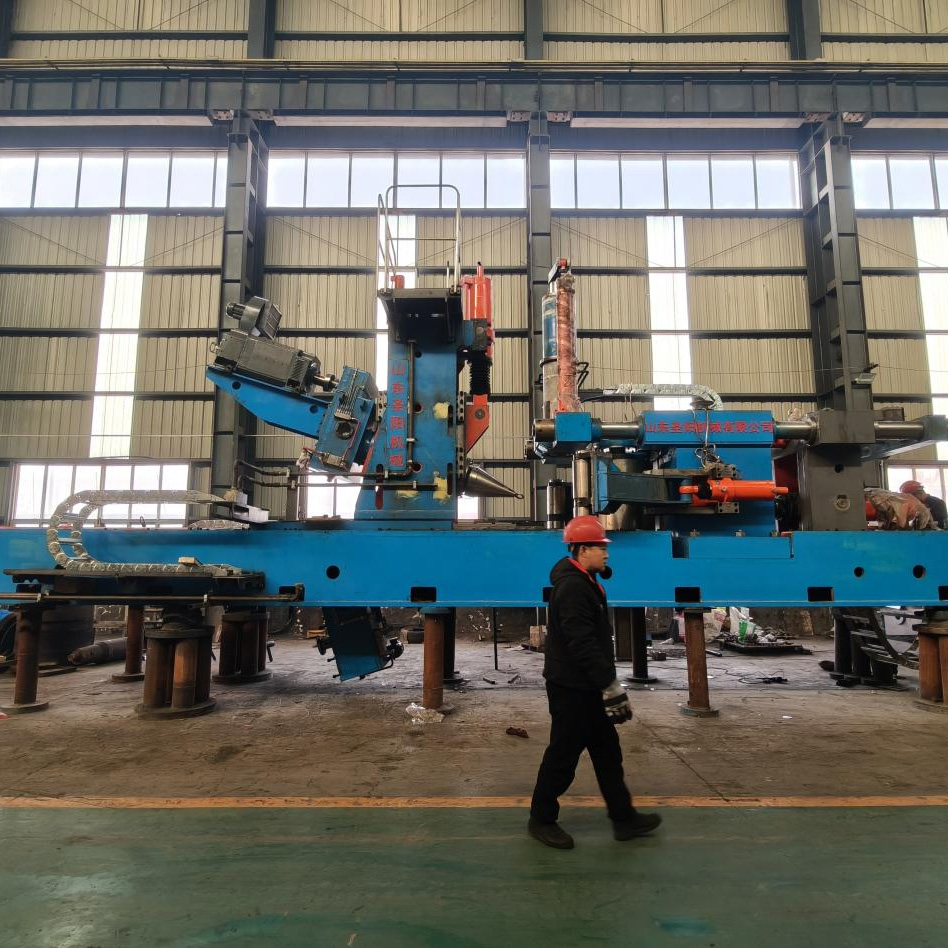
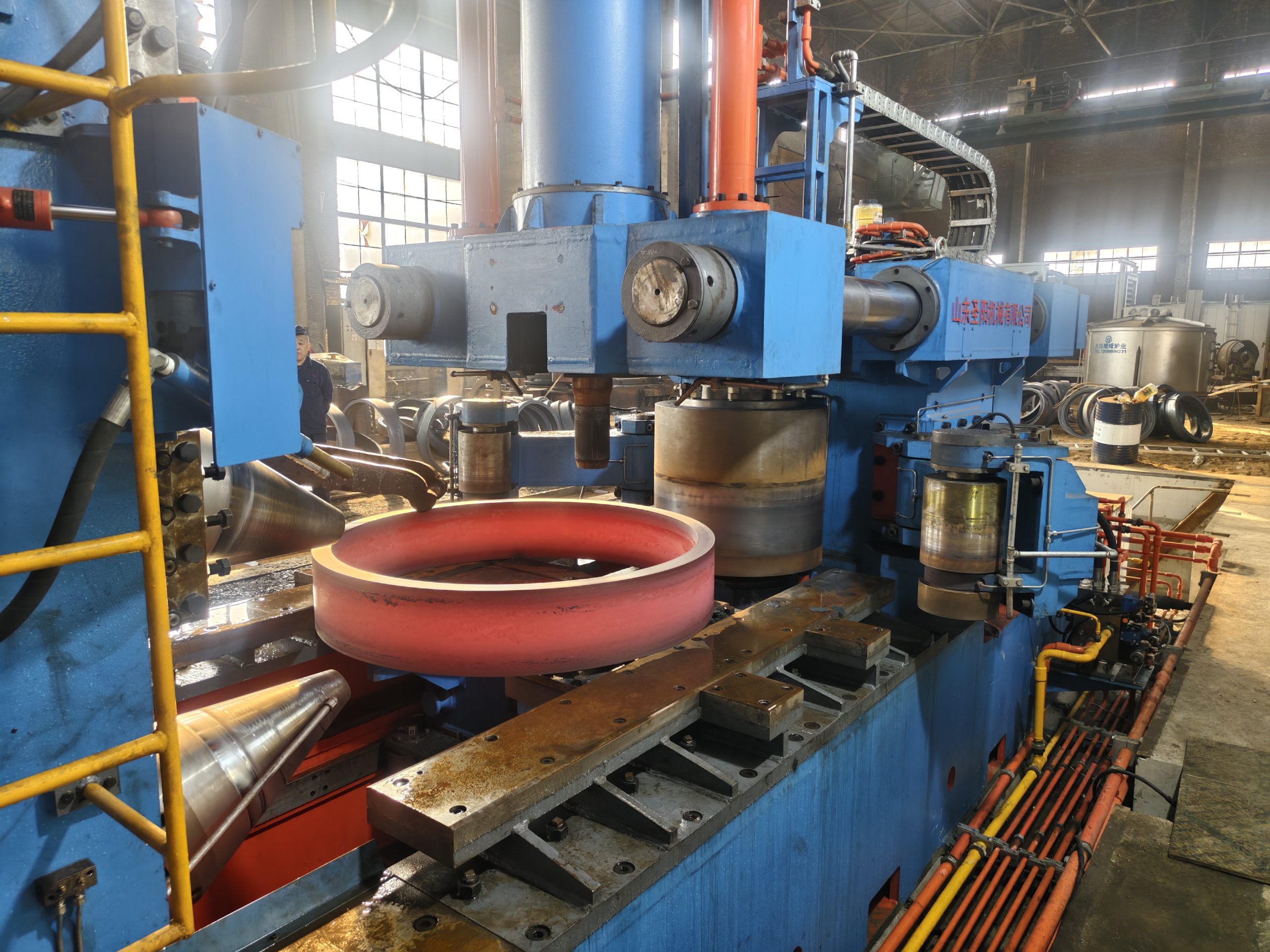
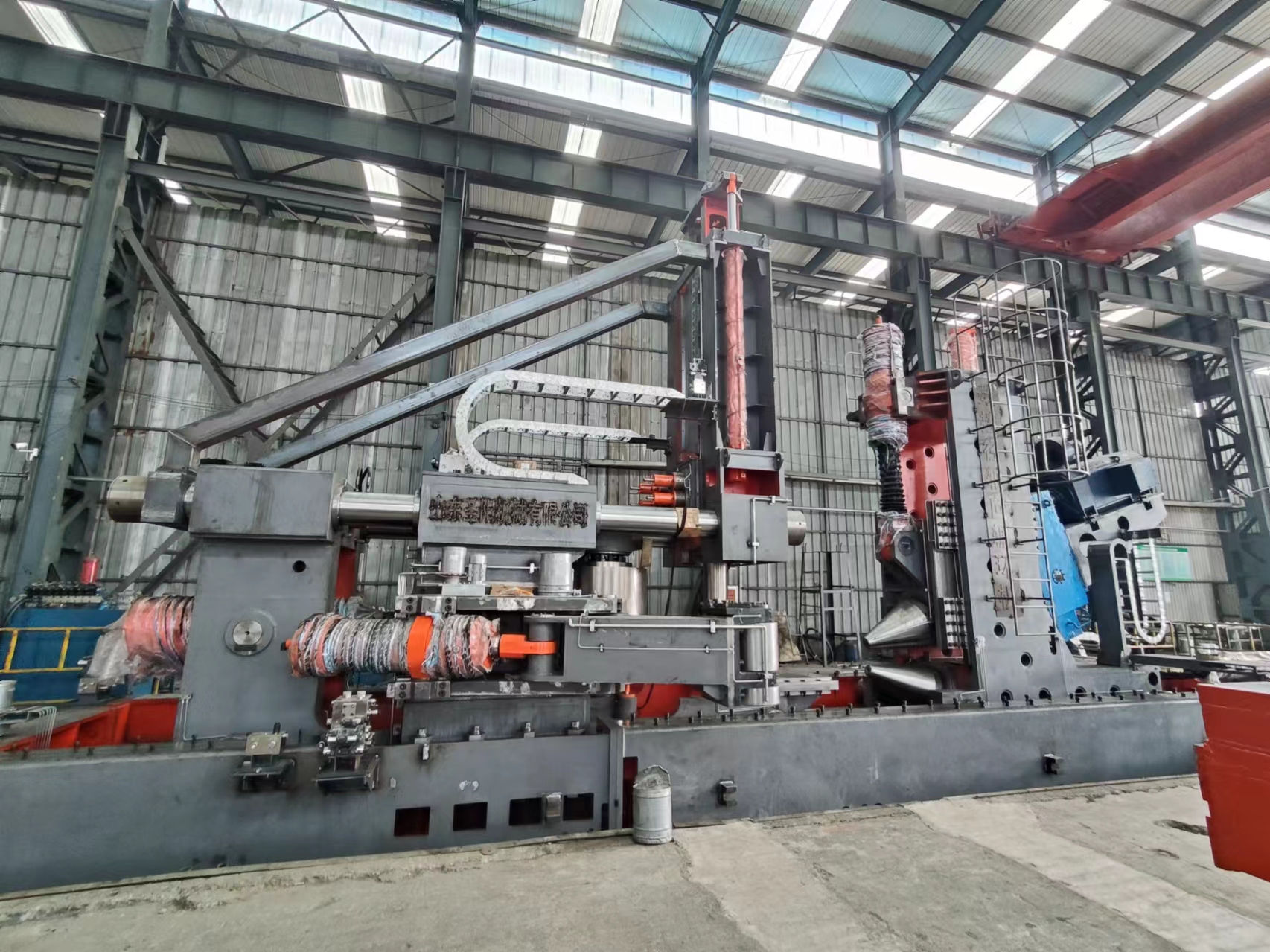
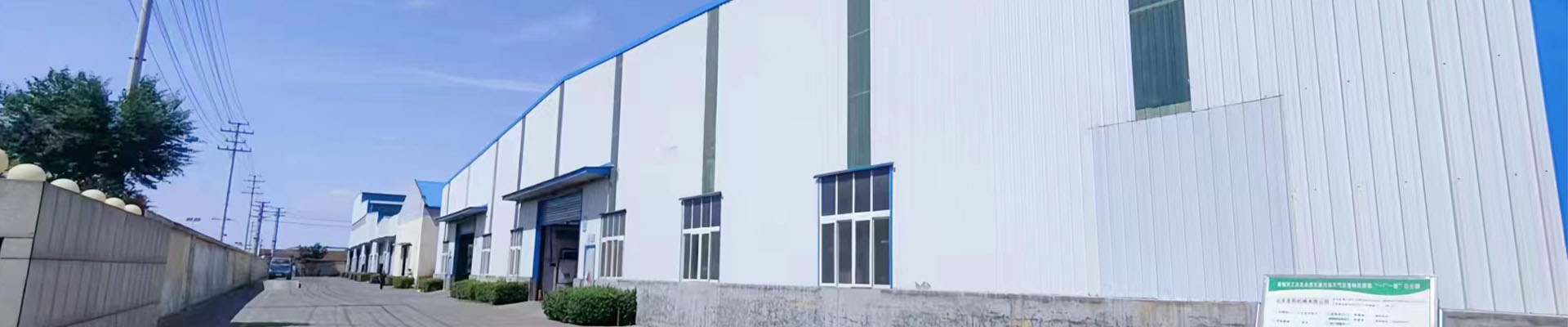
For example, in Shandong there are enterprises that grew out of branches of large state-owned holdings. They kept the engineering school, but work more flexibly. For example, I came acrossShandong Shenyang Mechanical Equipment Co.,Ltd. I won’t hide that I was skeptical at first—there are many who call themselves a “high-tech enterprise?” But when I started digging, I saw interesting details on their websiteshengyangjxgroup.ru. They position themselves specifically as a manufacturer of rental equipment, and what is important is that they focus on development for specific customer tasks, and not just on selling a catalog. This is already better than “we have a machine, model X?”. Their description ashigh-tech enterprise- this, of course, is a mandatory wording for China, but judging by the descriptions of some projects, they are investing in the control system and accuracy.
But even here one cannot take his word for it. Any website, even a good one, is a showcase. The key stage is to request not a commercial proposal, but a list of reference objects, preferably outside China. And it’s better not those that are “in process”, but those that have been working for 2-3 years. Ask for contacts of technologists from these factories - a real manufacturer who has nothing to hide will give them.
Price is the last issue. The first questions should be technical and almost tricky. Not “what is the accuracy?”, but “what is the kinematic positioning accuracy of the radial and axial headstocks after 500 hours of continuous operation at maximum load?”. Not “what kind of warranty?”, but “what is a typical list of spare parts that you recommend having in stock in the first year, and which of them are weak points in the design?” The answer to the second question is very revealing. If they start saying that everything is absolutely reliable, this is an alarming sign. Any complex machine has components with a limited resource.
You should definitely ask about post-warranty service and training. Are they willing to send an engineer for commissioning? For how long? How is the supply of spare parts organized? It would be ideal if they have logistics hubs in Europe or the CIS, but this rarely happens. Most often, spare parts travel by sea for 30-45 days, this needs to be factored into logistics.
And most importantly, who makes the key components? Electric motors, bearing units, CNC. If everyone is a local no-name brand, the price will be low, but the risks will be high. A good sign is to use recognized brands (Siemens, SKF, NSK, etc.) even if this increases the cost. This indicates that the manufacturer cares about the reputation and long-term performance of the machine.
If the volume of the order justifies the costs, the trip is required. But this is not a tour, but a technical audit. No need to look at the presentation workshop with painted machines. Ask to go to the assembly shop where the current assembly is taking place. Look at the production culture: how the tool is laid, how the wiring is organized, cleanliness in the hydraulic assembly area (the smallest chips in the hydraulic system are future failures).
Pay attention to the test stands. This manufacturer conducts idle and load runs before shipment. Do they have a maximum torque test bench? How are the results recorded? Ask for test logs for similar machines (with the customer’s consent, of course).
And the most important conversation is with the chief designer or leading engineer, and not just with the sales manager. His reaction to your technical questions, willingness to discuss possible modifications, understanding of the physics of the rolling process - this is what the real level will show. If he remains silent or refers all questions to the manager, this is a bad signal.
The first and main thing is to chase the lowest price. Cring rolling machinesthis is guaranteed to backfire. Savings of 15-20% at the purchase stage will result in downtime, expensive repairs and low quality rings. Chinese manufacturers perfectly feel when the buyer wants “cheaper”, and can offer a simplified, “lightweight” version. version, which they won’t say directly.
The second is to rely only on documentation. The drawings and specifications may be perfect, but the assembly... It's all about execution. Therefore, the factory acceptance test (FAT - Factory Acceptance Test) is critically important. It is necessary to stipulate in the contract your right to come and check all key parameters before shipment. And not just “make sure”, but with your devices or those rented on site.
The third is to underestimate logistics and customs. The dimensions and weight of such a machine are enormous. It is necessary in advance, together with the manufacturer, to work out a disassembly, packaging, and labeling scheme. Otherwise, you may end up with damaged guides or bent power elements during unloading at your port.
Returning to the original question. You need to look not just for a “manufacturer in China”, but for a highly specialized enterprise with proven experience in the segment of diameters and materials you need. The search begins with an in-depth analysis of industrial clusters (Liaoning, Shandong, Jiangsu), continues with a scrupulous study of real cases, and ends only after a personal visit and technical negotiations.
Companies like the one mentionedShandong Shenyang Mechanical Equipment Co.,Ltd(their website, I repeat,shengyangjxgroup.ru), can be one of the starting points in Shandong. But this is precisely the entry point. Their claims about high technology need to be verified by action - request a 3D model of the unit, a hydraulic diagram for evaluation, chat on Zoom with their technologist in Russian or English (often there are translators).
Ultimately, the right manufacturer is one that is not afraid of difficult questions, is open to audit, and understands that it is not just selling hardware, but a workable technological solution. Finding one is difficult, but possible. And this will always be a compromise between price, time and technical reliability, where you cannot save on the last point at all.