Email support
syjx@shengyangringrollingmachine.com

2026-02-20
To be honest, when you hear innovative Chinese suppliers for such specific equipment as ring rolling mills, the first thought is probably Alibaba or large industrial exhibitions. But in practice this is often a dead end. There is a lot of noise there, but only a few actually work with advanced technologies. Many simply resell outdated models or assemble something from standard components, passing it off as new. I went through this myself.
The concept of innovation for ring rolling equipment often comes down not to revolutionary discoveries, but to a deep modernization of existing solutions: rolling accuracy, roll durability, CNC system, energy efficiency. The key is who really invests in R&D, and not just packages the catalog beautifully. One of the indicators is the presence of its own design bureau and testing workshop. Without this, any talk about technology is water.
For example, about five years ago we worked with a plant from Hebei. On paper, everything looked solid: modern lines, certificates. But when the question arose about customizing the mill for a special alloy, it turned out that their engineers could not deviate from the three standard drawings. There was no innovation there, just assembly production. The experience is expensive, but instructive.
Now I look first of all at the portfolio of completed non-standard projects. If a supplier shows real cases where he has adapted a mill to complex profiles or materials, and is ready to talk in detail about technical solutions, this is already a serious signal. Empty general phrases like high-tech equipment without details - I immediately eliminate them.
Exhibitions like Metalworking in Beijing or Shanghai - yes, they are useful, but you need to go there with a clear filter. Large pavilions are often occupied by well-known brands, whose innovations may be beyond our means or redundant. And real interesting developments are sometimes hidden in the corners of medium-sized enterprises that do not spend millions on stands, but have a strong engineering school. You need to go around everything, talk to technologists, not sales managers.
One of the non-obvious but effective ways is professional forums and industry communities on WeChat (but for a Russian-speaking specialist this is a barrier). An alternative is to follow publications in Chinese-language industry magazines, where businesses sometimes share implementation cases. If you see an article about the successful launch of a mill for rolling titanium rings, you can contact the authors. It takes a long time, but it gives direct contact with the engineering staff.
Another point - recommendations from the metal manufacturers themselves. Those who work with complex alloys usually know what equipment can handle it. Their technologist can tell us: This plant in Shandong did the installation for us, they came up with something of their own with the cooling system. Such contacts are priceless.
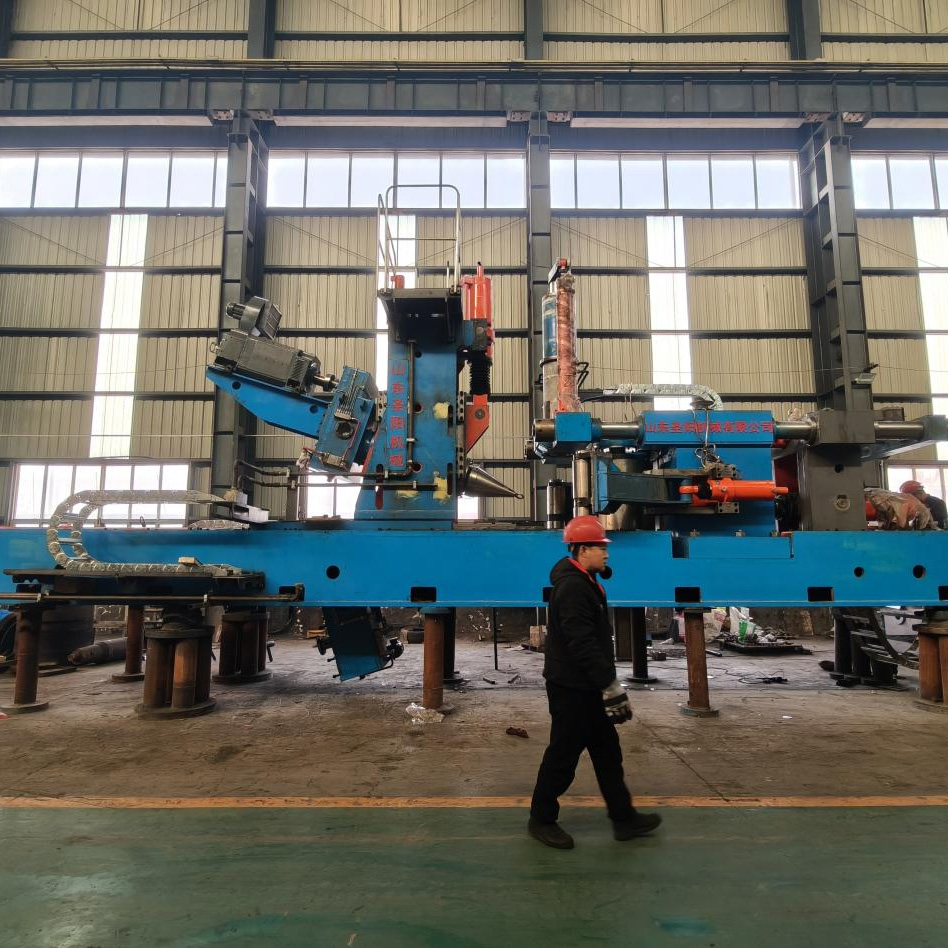
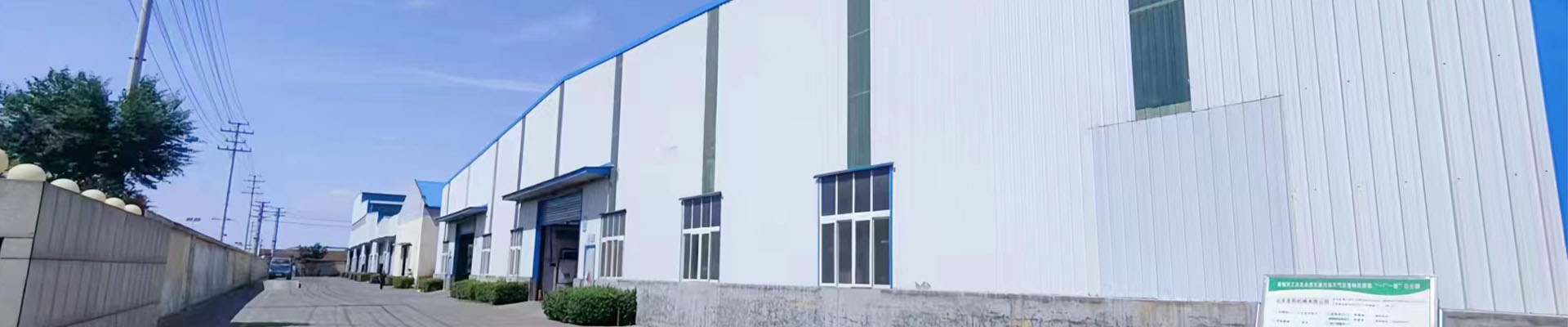
Let's take, for example, a companyShandong Shenyang Mechanical Equipment Co.,Ltd. I came across them not through a search engine, but through a review in a narrow telegram chat about metalworking. I went to their website -https://www.shengyangjxgroup.ru. The first thing that caught my eye was not just a catalog, but a section describing technological processes. They stated that thishigh-tech enterprise, specializing in the development and production of rolling equipment. But that's what everyone writes.
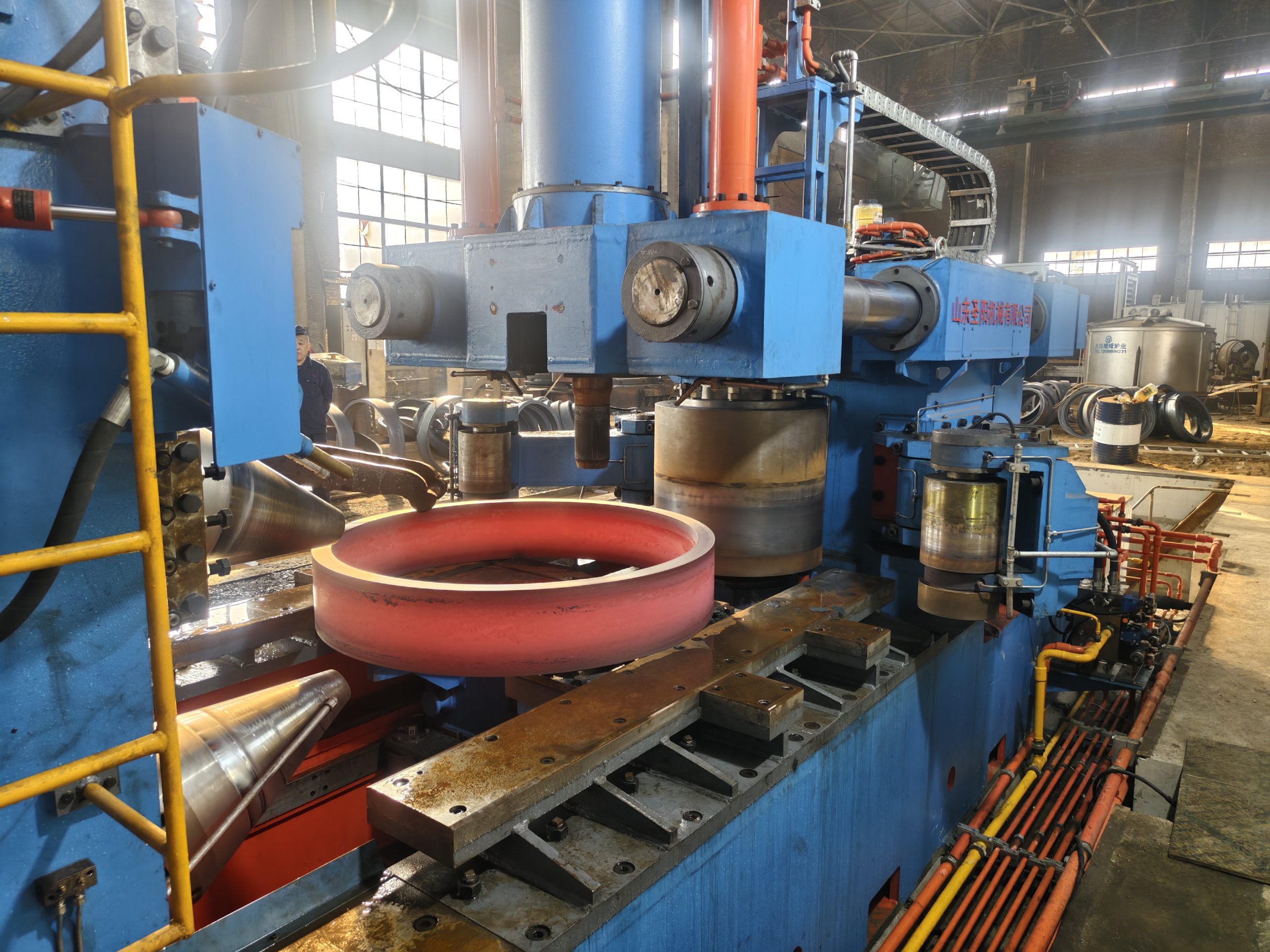
I began to dig deeper. In the Projects section I found a photo and a brief description of a mill for rolling large rings for wind energy. What was important was what was specified: increased accuracy of radial runout and an adaptive temperature field control system. These are specific engineering tasks, not marketing. This means there is something to work on.
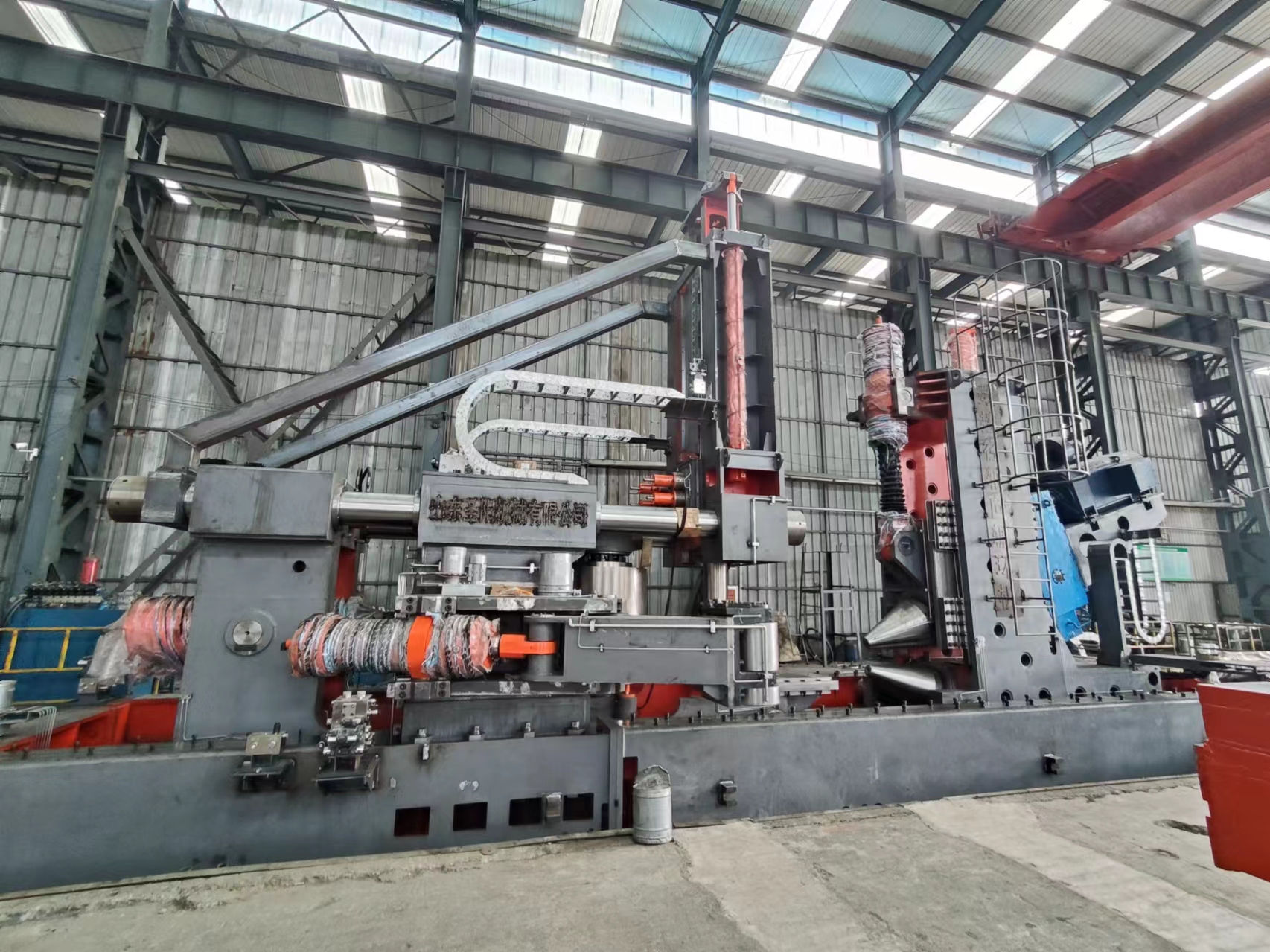
Then I looked for patents. Not on their website, of course, but in Chinese databases. Mentions of this company are associated with a patent for a cage design forring rolling millswith improved frame rigidity. This is a serious argument. This means that innovation is not just words, but fixed decisions. Although, of course, a patent is not a guarantee that everything works perfectly in the series, but it shows the direction of thought.
I wrote to them through the form on the website. The answer did not come instantly, a day later, but not a template thank you for your request, but a letter from a senior manager with technical clarifications: for what ring diameters, what materials, required accuracy. Already good. Next - the exchange of drawings and long-term correspondence on the details of the main movement drive. Their engineer asked questions that showed an understanding of the problem of roll fatigue under cyclic loads.
Here is an important nuance: realinnovative suppliersThey don’t try to name the price right away. They immerse themselves in the task first. If from the first letters they send you a price list without asking questions, this is most likely a reseller. Shenyang, in my case, first sent a diagram of the proposed layout with options for placing auxiliary equipment - it was clear that they were thinking.
But problems also surfaced. When I requested a video of the operation of a working machine of similar power, they sent a video, but with imperfect quality. It was obvious that the filming was in a workshop, not staged. On the one hand, this is even a plus - it’s not glossy. On the other hand, it was difficult to consider some of the nuances of the feed mechanism. I had to ask for additional angles. This is a normal operating situation.
Even with a good impression from the negotiations, the main risk forsuppliers from China- this is the correspondence of the declared characteristics to the real ones. Especially in terms of accuracy and reliability. Innovation often means that the equipment does not yet have a long operating history. It is imperative to request contacts of other clients, preferably not from China, who have already purchased and launched the line. And talk to them directly, ask about childhood diseases.
Another point is service and availability of spare parts. Advanced design is great, but if a unique bearing assembly breaks and you have to wait three months for it, production will stop. You need to discuss the issue with a set of spare parts and training of your staff in advance. It’s a good sign if the supplier himself raises this topic and offers options.
If things are heading towards a visit to the factory - and without this I would not have dared to make a large purchase - you need to prepare your own testing program. Not only look at the new assembled mill, but also walk through the machining shop: on what equipment are key parts (beds, rolls) made? Do you have your own heat treatment area? How is quality control organized? Often innovation lies precisely in the depth of the production cycle, and not in the final product.
So where can you find them, these sameinnovative suppliers? Not in the top ten search results, that's for sure. The search turns into an investigation: from industry references to a website, from patents to living engineers, from correspondence to checking references. The company seemsShandong Shenyang Mechanical Equipment Co.,Ltd- just one of the possible examples that came across in this process. Their advantage is visible technical depth and willingness to discuss non-standard problems.
But it is important to remember that there are no perfect suppliers. There will always be some trade-off between the newness of the technology, reliability, timing and price. Innovation is always a bit of a risk. The task is not to find someone who will say we can do anything, but someone who will honestly explain what exactly they can do differently, where they use proven solutions, and how they will solve problems if they arise.
Ultimately, the surest sign is when communication moves from the buyer-seller level to the engineer-engineer level. When you are discussing not payment terms, but rolling curves or CNC system algorithms. That’s when you realize that maybe you’ve found the right people. The rest is a matter of technique and careful legal elaboration of the contract. But that's a completely different story.